
Table of Contents
Magnolia is a beautiful, nature-inspired name that has gained popularity in recent decades. Derived from the flowering tree known for its stunning blossoms, this name carries botanical elegance and natural charm. While relatively modern as a given name, it connects to centuries of botanical history through its namesake, French botanist Pierre Magnol. Today, Magnolia represents both natural beauty and a connection to the natural world.
Meaning of Magnolia
The name Magnolia has a clear and well-documented etymology. It originates from the botanical genus name ‘Magnolia,’ which Swedish botanist Carl Linnaeus established in 1737 to honor French botanist Pierre Magnol. Magnol was renowned for his work in plant classification and his contributions to botanical science. The surname Magnol itself may derive from Occitan ‘magnol,’ meaning ‘magnificent’ or ‘great,’ though this connection is less certain than the direct botanical reference. As a given name, Magnolia directly refers to the flowering tree known for its large, fragrant, and often white or pink blossoms that symbolize dignity, nobility, and perseverance in various floral traditions.
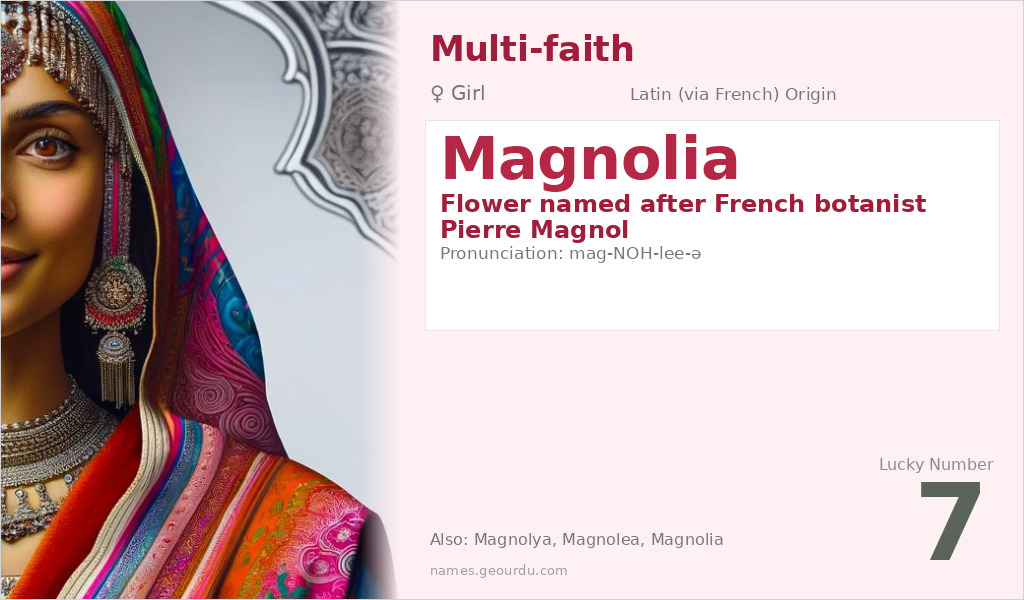
| 📛 Name | Magnolia |
| 💎 Meaning | Flower named after French botanist Pierre Magnol |
| 👤 Gender | Girl |
| 🕌 Religion | Multi-faith |
| 🌍 Origin | Latin (via French) |
| 🗣 Pronunciation | mag-NOH-lee-ə |
| ✍️ Urdu | میگنولیا |
| ✍️ Arabic | ماغنوليا |
| 🔢 Numerology | 7 |
| ✨ Spellings | Magnolya, Magnolea, Magnolia |
Origin & Cultural Significance
Magnolia’s origin as a given name is relatively modern, emerging in English-speaking countries in the late 19th and early 20th centuries as part of the trend toward botanical names. The name gained particular popularity in the American South, where magnolia trees are native and culturally significant. Unlike many traditional names with religious or linguistic roots, Magnolia is a straightforward botanical name without specific religious associations—it’s used by people of various faiths and cultural backgrounds. The name’s connection to French botanist Pierre Magnol gives it a European scientific heritage, while its association with the flowering tree makes it universally appealing across cultures.
Personality Traits
Those named Magnolia are often perceived as graceful, natural, and resilient individuals. The name evokes images of the magnolia tree—beautiful yet strong, delicate yet enduring. People with this name may be drawn to artistic pursuits, nature, and environments that value aesthetic beauty. The name suggests someone who combines traditional elegance with modern sensibility, much like how the magnolia flower has been appreciated for centuries while remaining popular in contemporary gardens and floral arrangements.
Similar Names
If you like Magnolia, consider: Dahlia, Azalea, Camellia, Lily, Rose
Famous People Named Magnolia
- Magnolia Shorty (1985-2010) — American rapper from New Orleans
- Magnolia Crawford — American drag performer and contestant on RuPaul's Drag Race
Frequently Asked Questions About Magnolia
What does Magnolia mean?
Magnolia means 'flower named after French botanist Pierre Magnol.' It's a botanical name referring to the flowering tree genus named in honor of the 17th-century French botanist.
Is Magnolia a boy or girl name?
Magnolia is almost exclusively used as a feminine name, though botanical names can sometimes be unisex. In practice, it's overwhelmingly given to girls in English-speaking countries.
What is the origin of Magnolia?
Magnolia originates from Latin via French as a botanical name. Swedish botanist Carl Linnaeus named the magnolia genus after French botanist Pierre Magnol in 1737, and it later became used as a given name.





