Table of Contents
Maharani is a name that echoes through the halls of Indian royalty and Hindu tradition. Meaning ‘Great Queen’ or ‘Empress’ in Sanskrit, this name carries centuries of regal heritage and feminine power. Today, it remains a popular choice for girls in Hindu families, symbolizing strength, dignity, and leadership. With its noble origins and beautiful sound, Maharani continues to inspire parents seeking a name with historical significance and modern appeal.
Meaning of Maharani
Maharani derives from the Sanskrit language, combining two elements: ‘Maha’ (महा), meaning ‘great, mighty, or supreme,’ and ‘Rani’ (राणी), meaning ‘queen, princess, or female ruler.’ This compound construction follows classical Sanskrit naming patterns where ‘Maha’ intensifies the following noun, creating terms of elevated status. Historically, Maharani was primarily used as a royal title for the wife of a Maharaja or for a female sovereign in Hindu kingdoms across the Indian subcontinent. The name entered common usage as a given name during the 19th and 20th centuries, particularly among families with royal connections or those valuing traditional Sanskrit names. Unlike some names that reference specific deities, Maharani is secular in its linguistic construction while carrying deeply cultural connotations of authority and nobility.
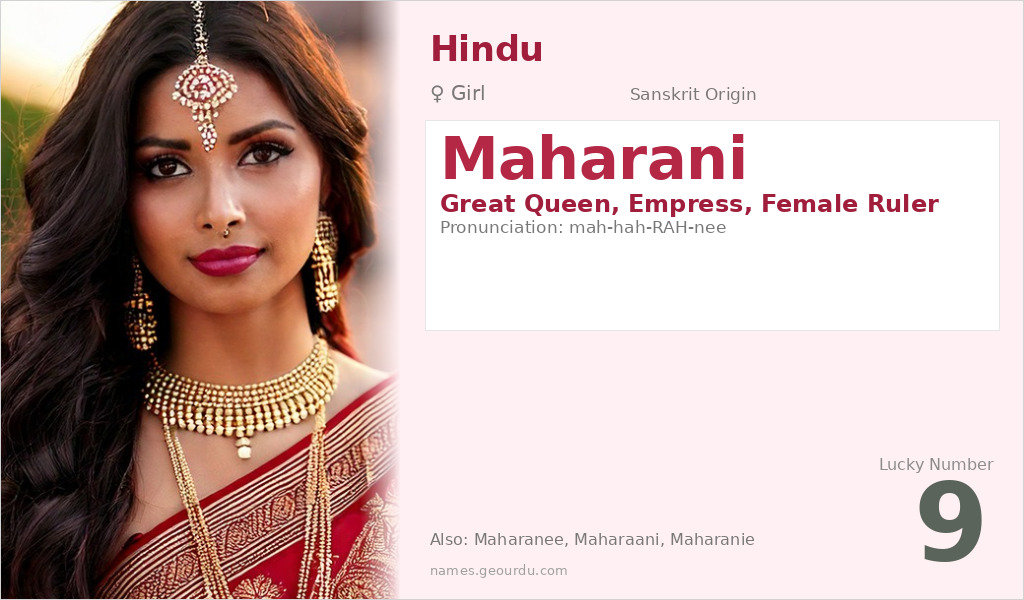
| 📛 Name | Maharani |
| 💎 Meaning | Great Queen, Empress, Female Ruler |
| 👤 Gender | Girl |
| 🕌 Religion | Hindu |
| 🌍 Origin | Sanskrit |
| 🗣 Pronunciation | mah-hah-RAH-nee |
| ✍️ Urdu | مہارانی |
| ✍️ Arabic | ماهاراني |
| 🔢 Numerology | 9 |
| ✨ Spellings | Maharanee, Maharaani, Maharanie |
Origin & Cultural Significance
The name Maharani originates from Sanskrit, the classical language of ancient India that has influenced numerous South Asian languages including Hindi, Bengali, Marathi, and Gujarati. As a title, it appears in historical texts, inscriptions, and royal records dating back to medieval Hindu kingdoms where women held positions of power. Culturally, the name is most closely associated with Hindu traditions, particularly among communities in northern and western India, though it has spread across the diaspora. While primarily Hindu in usage, the name’s secular meaning has made it occasionally used by non-Hindu families appreciating its regal sound. The transition from royal title to personal name reflects broader trends in Indian naming where occupational and honorific terms become given names.
Personality Traits
Those named Maharani are often associated with leadership qualities, confidence, and a natural grace. They may exhibit strong organizational abilities and a protective nature toward family and community. The name’s royal connotations suggest someone who carries themselves with dignity and commands respect in social and professional settings. While these associations are cultural rather than deterministic, many parents choose the name hoping to instill these noble characteristics in their daughters.
Similar Names
If you like Maharani, consider: Rani, Rajkumari, Devi, Lakshmi, Indira
Famous People Named Maharani
- Maharani Gayatri Devi — Former Maharani of Jaipur and Indian politician
- Maharani Jind Kaur — Last ruler of the Sikh Empire in Punjab
Frequently Asked Questions About Maharani
What does Maharani mean?
Maharani means 'Great Queen' or 'Empress' in Sanskrit, combining 'Maha' (great) and 'Rani' (queen).
Is Maharani a boy or girl name?
Maharani is exclusively a girl's name, as 'Rani' specifically means 'queen' or 'female ruler' in Sanskrit.
What is the origin of Maharani?
Maharani originates from Sanskrit, the classical language of ancient India, and was historically used as a royal title in Hindu kingdoms before becoming a personal name.