
Table of Contents
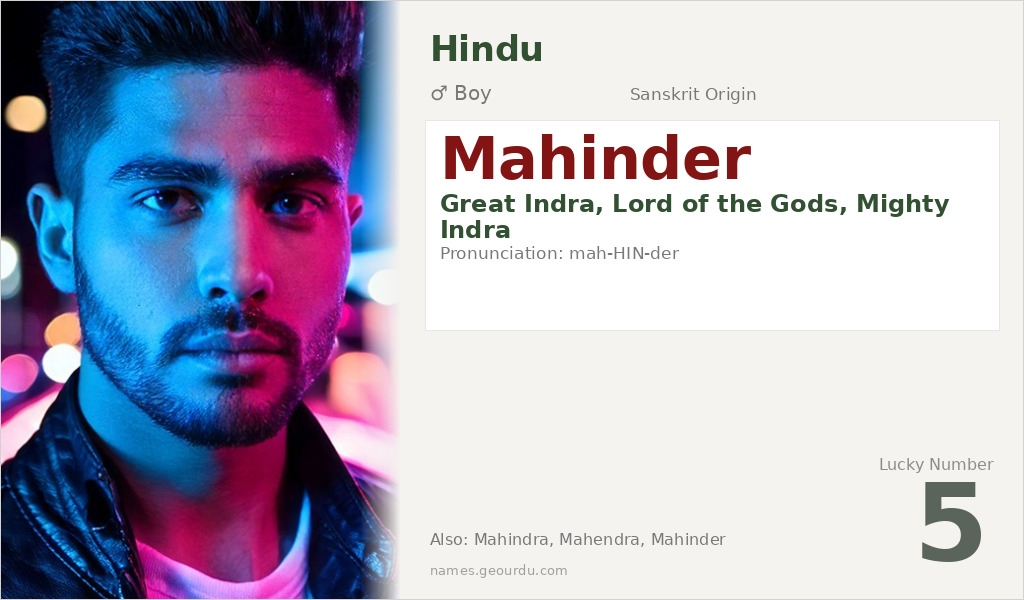
Mahinder is a powerful Sanskrit name that carries centuries of cultural and religious significance. Derived from ancient Hindu mythology, this name combines ‘Maha’ (great) with ‘Indra’ (king of gods) to create a name meaning ‘Great Indra.’ Popular in Hindu communities across South Asia, Mahinder represents divine strength, leadership, and protection. Whether you’re considering this name for your child or researching its origins, understanding its rich background reveals why it remains meaningful today.
Meaning of Mahinder
Mahinder originates from Sanskrit, one of the world’s oldest languages, specifically combining two elements: ‘Maha’ (महा) meaning ‘great, mighty, or supreme,’ and ‘Indra’ (इन्द्र), the name of the principal Vedic deity who rules over the heavens. In Hindu mythology, Indra is the king of the gods (Devas), associated with rain, thunder, storms, and warfare. Thus, Mahinder literally translates to ‘Great Indra’ or ‘Mighty Indra,’ emphasizing enhanced divine qualities. This compound structure follows common Sanskrit naming patterns where ‘Maha-‘ prefixes intensify the meaning of the following element. The name appears in various ancient texts and continues to be used in modern Hindu communities, maintaining its connection to Vedic traditions.
| 📛 Name | Mahinder |
| 💎 Meaning | Great Indra, Lord of the Gods, Mighty Indra |
| 👤 Gender | Boy |
| 🕌 Religion | Hindu |
| 🌍 Origin | Sanskrit |
| 🗣 Pronunciation | mah-HIN-der |
| ✍️ Urdu | مہندر |
| ✍️ Arabic | مهيندر |
| 🔢 Numerology | 5 |
| ✨ Spellings | Mahindra, Mahendra, Mahinder, Mahender |
Origin & Cultural Significance
Mahinder has its roots in ancient India, specifically within the Sanskrit linguistic and Hindu religious traditions. The name gained prominence through Vedic literature where Indra was worshipped as the supreme deity before later developments in Hindu theology. While primarily associated with Hindu culture, variations of the name appear across South Asia due to Sanskrit’s historical influence on regional languages. In contemporary usage, Mahinder remains popular among Hindu families in India, Nepal, and the diaspora, often chosen for its strong mythological associations and traditional resonance. The name reflects the enduring importance of Vedic deities in Hindu naming practices, connecting modern bearers to ancient spiritual heritage.
Personality Traits
Those named Mahinder often embody qualities associated with their namesake deity—leadership, strength, and protective instincts. They tend to be ambitious individuals who aren’t afraid to take charge in difficult situations, much like Indra who leads the gods against demons in Hindu myths. While confident and determined, they also typically show generosity toward those in their care, balancing authority with compassion. These traits make Mahinders natural in roles requiring decision-making and responsibility.
Similar Names
If you like Mahinder, consider: Indra, Mahavir, Mahadev, Vishnu, Krishna
Famous People Named Mahinder
- Mahinder Singh Dhoni — Former Indian cricket captain and one of India's most successful sports figures
- Mahinder Amarnath — Former Indian cricketer and member of the 1983 World Cup winning team
Frequently Asked Questions About Mahinder
What does Mahinder mean?
Mahinder means 'Great Indra' or 'Mighty Indra' in Sanskrit, combining 'Maha' (great) with 'Indra' (the Hindu king of gods).
Is Mahinder a boy or girl name?
Mahinder is exclusively a boy's name in Hindu naming tradition, derived from masculine deity Indra and following masculine Sanskrit grammar patterns.
What is the origin of Mahinder?
Mahinder originates from Sanskrit, the classical language of ancient India, specifically from Hindu Vedic mythology referencing the god Indra.





