
Table of Contents
Malateesh is a beautiful and meaningful Sanskrit name for boys, deeply rooted in Hindu culture and floral symbolism. Combining ‘Malati’ (jasmine flower) with ‘Ish’ (lord), it evokes images of purity, beauty, and divine connection. This name carries a sense of grace and authority, making it a distinctive choice for parents seeking a traditional yet elegant name. Explore the rich etymology and cultural significance of Malateesh in this comprehensive guide.
Meaning of Malateesh
Malateesh derives from Sanskrit, an ancient Indo-Aryan language central to Hindu scriptures and Indian culture. The first component, ‘Malati’ (मालती), refers specifically to the Arabian jasmine (Jasminum sambac), a fragrant white flower revered in Hinduism for its purity and use in religious offerings. The second component, ‘Ish’ (ईश), comes from the Sanskrit root ‘īś’ meaning ‘to own, rule, or be master of’. Thus, Malateesh literally translates to ‘lord of Malati flowers’ or ‘possessor of Malati flowers’, implying someone who embodies or commands the qualities associated with these blossoms—such as beauty, devotion, and serenity. This compound structure is common in Sanskrit names, where floral elements combine with divine or authoritative suffixes to create meaningful appellations.
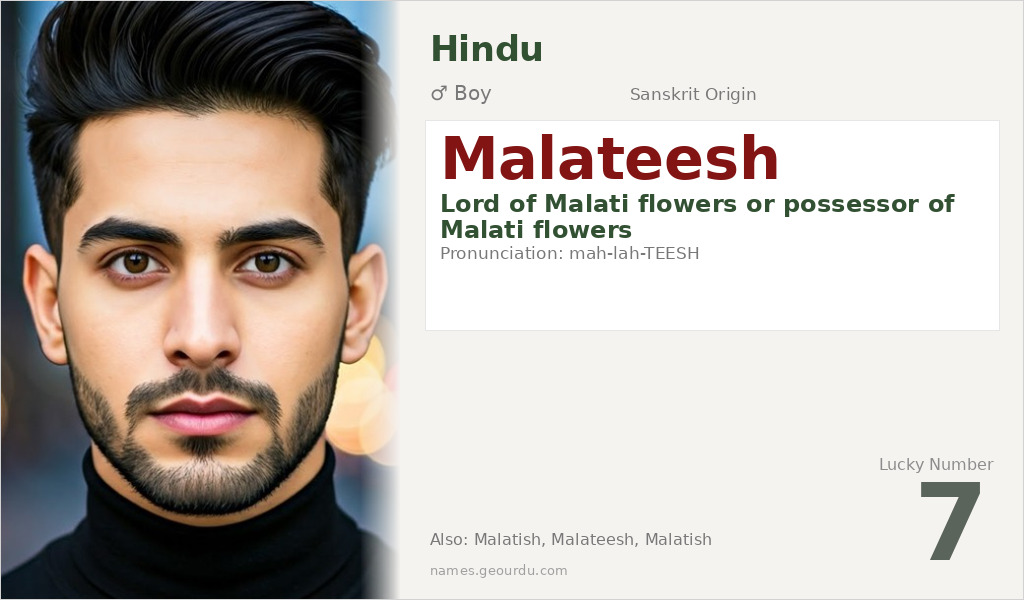
| 📛 Name | Malateesh |
| 💎 Meaning | Lord of Malati flowers or possessor of Malati flowers |
| 👤 Gender | Boy |
| 🕌 Religion | Hindu |
| 🌍 Origin | Sanskrit |
| 🗣 Pronunciation | mah-lah-TEESH |
| ✍️ Urdu | مالتیش |
| ✍️ Arabic | مالاتيش |
| 🔢 Numerology | 7 |
| ✨ Spellings | Malatish, Malateesh, Malatish, Malateesh |
Origin & Cultural Significance
The name Malateesh originates from Sanskrit, the classical language of India and a primary source for Hindu names. It is predominantly used within Hindu communities, particularly in India and among the diaspora, reflecting the cultural importance of flowers in Hindu symbolism. Malati flowers are often linked to deities like Vishnu and Lakshmi, and are used in rituals, garlands, and decorations, making names incorporating ‘Malati’ culturally resonant. While not among the most common names, Malateesh appears in regions with strong Sanskrit traditions, such as parts of North India, and is chosen for its aesthetic and spiritual connotations. It does not have verified origins in Arabic, Persian, Pashto, or other languages listed, remaining distinctly Sanskrit/Hindu in its etymology and usage.
Personality Traits
Those named Malateesh are often perceived as calm, graceful, and spiritually inclined, mirroring the purity of jasmine flowers. They may exhibit leadership qualities (‘Ish’ meaning lord) combined with a gentle, nurturing nature, making them respected and admired in social circles. Their connection to floral symbolism suggests an appreciation for beauty, tradition, and harmony, often leading them to pursue creative or devotional paths in life.
Similar Names
If you like Malateesh, consider: Malati, Malavika, Malay, Ishwar, Ishaan, Malhar, Malik, Tejas, Rajneesh, Hrithik
Famous People Named Malateesh
- No widely known public figures with this exact name found in records
- The name appears occasionally in Indian/Hindu communities, particularly in regions with Sanskrit naming traditions
Frequently Asked Questions About Malateesh
What does Malateesh mean?
Malateesh means 'lord of Malati flowers' or 'possessor of Malati flowers' in Sanskrit, combining 'Malati' (Arabian jasmine) and 'Ish' (lord/ruler).
Is Malateesh a boy or girl name?
Malateesh is traditionally a boy's name in Hindu culture, as indicated by its masculine suffix 'Ish' and common usage for males.
What is the origin of Malateesh?
Malateesh originates from Sanskrit, an ancient Indian language, and is used primarily in Hindu naming traditions, with no verified roots in other languages like Arabic or Persian.





