Table of Contents
Mandodari is a name steeped in ancient Hindu mythology and Sanskrit linguistic heritage. As the wise and virtuous queen of Lanka in the epic Ramayana, this name carries centuries of cultural resonance. While its literal meaning might seem unusual, it represents a fascinating example of how mythological names preserve linguistic and narrative traditions. Today, Mandodari remains a distinctive choice with deep historical roots.
Meaning of Mandodari
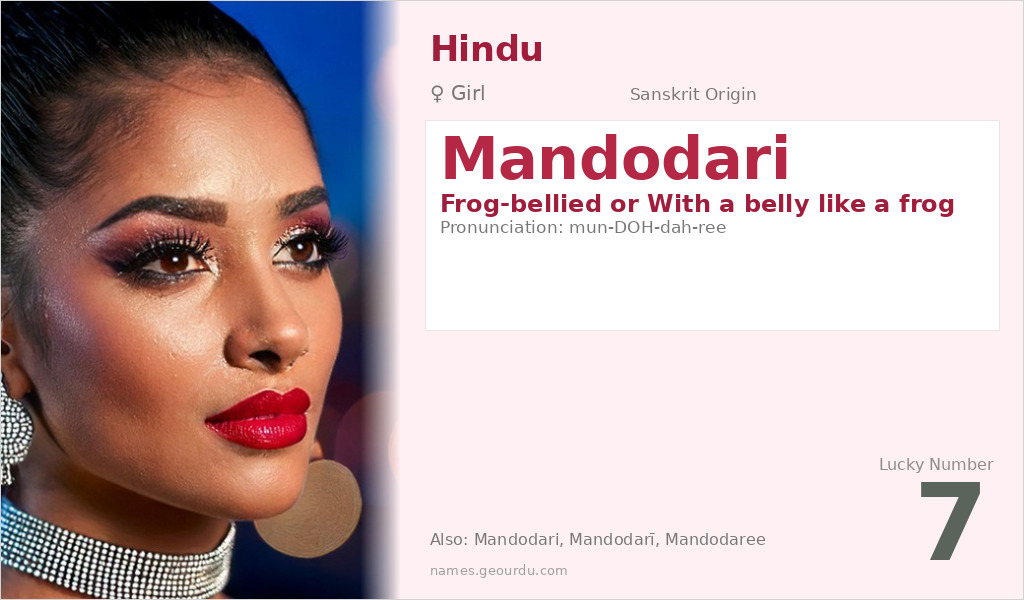
The name Mandodari originates from classical Sanskrit, combining two distinct elements: ‘mandūka’ (मण्डूक), which means ‘frog’, and ‘udara’ (उदर), meaning ‘belly’ or ‘abdomen’. This creates the literal translation ‘frog-bellied’ or ‘having a belly like a frog’. In Sanskrit compound formation, this type of descriptive name follows established grammatical patterns. The mythological context suggests this might reference physical characteristics or symbolic attributes within the epic narrative. Unlike many modern names, Mandodari maintains its original linguistic composition without semantic evolution, making it a direct window into ancient naming conventions.
| 📛 Name | Mandodari |
| 💎 Meaning | Frog-bellied or With a belly like a frog |
| 👤 Gender | Girl |
| 🕌 Religion | Hindu |
| 🌍 Origin | Sanskrit |
| 🗣 Pronunciation | mun-DOH-dah-ree |
| ✍️ Urdu | منڈودری |
| ✍️ Arabic | مندوداري |
| 🔢 Numerology | 7 |
| ✨ Spellings | Mandodari, Mandodarī, Mandodaree |
Origin & Cultural Significance
Mandodari emerges from the rich tradition of Hindu mythology, specifically from the Ramayana, one of ancient India’s foundational epics. As the principal wife of Ravana, the demon king of Lanka, she represents wisdom, virtue, and moral counsel in contrast to her husband’s destructive ambitions. The name appears in Valmiki’s Sanskrit Ramayana and subsequent adaptations across South and Southeast Asia. While primarily associated with Hindu tradition, the character appears in some Buddhist and Jain versions of the Ramayana narrative. The name’s preservation in classical texts demonstrates how mythological figures continue to influence naming practices centuries after their literary creation.
Personality Traits
Those named Mandodari often inherit associations with the mythological queen’s characteristics: wisdom, moral integrity, and diplomatic skill. The name suggests a personality that values counsel and mediation, potentially with a calm exterior masking strong convictions. While individual personalities vary, the name carries connotations of traditional wisdom combined with practical insight, reflecting the character who attempted to guide her husband toward righteousness despite his destructive path.
Similar Names
If you like Mandodari, consider: Mandakini, Mandira, Madhavi, Matsya, Urvashi
Famous People Named Mandodari
- Mandodari — Mythological queen of Lanka and wife of Ravana in the Hindu epic Ramayana, known for her wisdom, virtue, and attempts to counsel her husband against wrongdoing
- Mandodari — Character in various adaptations of the Ramayana including television series, films, and literary works across South and Southeast Asia
Frequently Asked Questions About Mandodari
What does Mandodari mean?
Mandodari means 'frog-bellied' or 'with a belly like a frog' in Sanskrit, derived from 'mandūka' (frog) and 'udara' (belly).
Is Mandodari a boy or girl name?
Mandodari is exclusively a feminine name, as it refers to the mythological queen and wife of Ravana in Hindu tradition.
What is the origin of Mandodari?
Mandodari originates from Sanskrit and Hindu mythology, specifically from the ancient Indian epic Ramayana where she appears as Ravana's principal wife.