Table of Contents
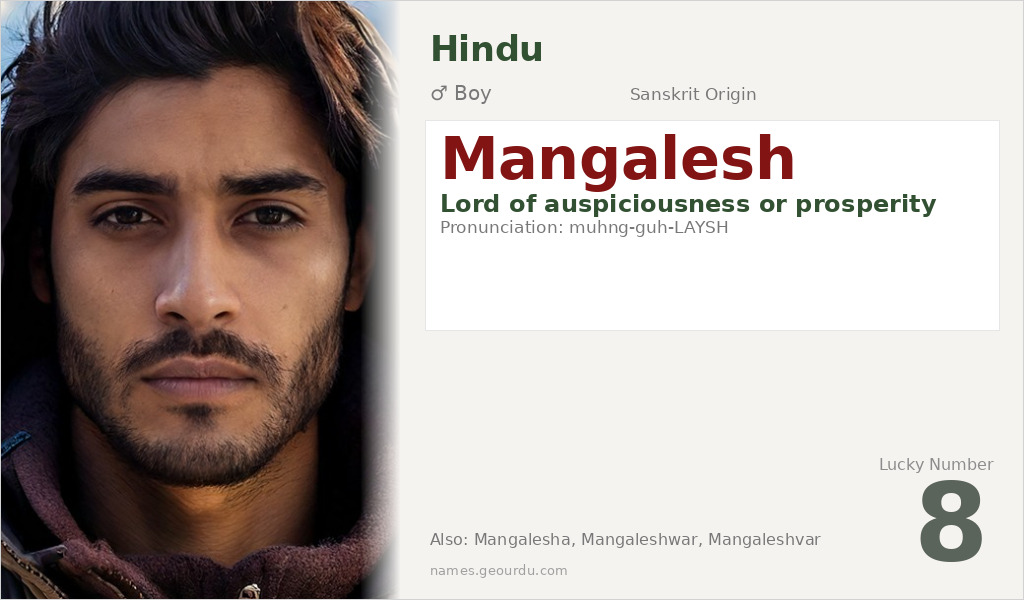
Mangalesh is a powerful Sanskrit name that carries deep cultural and spiritual significance in Hindu tradition. Meaning ‘Lord of Auspiciousness’, this name embodies the hope for prosperity and good fortune. With roots in ancient Indian languages, Mangalesh represents more than just a personal identifier—it’s a blessing for the child’s future. This comprehensive guide explores the etymology, cultural context, and modern usage of this meaningful name.
Meaning of Mangalesh
Mangalesh is a classical Sanskrit compound name with precise linguistic construction. The first component ‘mangala’ (मङ्गल) has multiple related meanings including auspiciousness, happiness, prosperity, and good fortune. In Hindu astrology, Mangala is also the name for Mars, the planet associated with energy and vitality. The second component ‘īśa’ (ईश) means lord, master, or ruler, and appears in many Sanskrit names and titles (as in Mahesh, Hrishikesh). When combined, Mangalesh literally means ‘lord or master of auspiciousness’, suggesting someone who commands or embodies prosperity. This name follows the tatpurusha compound pattern in Sanskrit grammar, where the modifying element (mangala) qualifies the head element (īśa).
| 📛 Name | Mangalesh |
| 💎 Meaning | Lord of auspiciousness or prosperity |
| 👤 Gender | Boy |
| 🕌 Religion | Hindu |
| 🌍 Origin | Sanskrit |
| 🗣 Pronunciation | muhng-guh-LAYSH |
| ✍️ Urdu | منگلش |
| ✍️ Arabic | مانجاليش |
| 🔢 Numerology | 8 |
| ✨ Spellings | Mangalesha, Mangaleshwar, Mangaleshvar |
Origin & Cultural Significance
Mangalesh originates from classical Sanskrit, the liturgical language of Hinduism, Buddhism, and Jainism. As a Sanskrit name, it has been used for centuries in the Indian subcontinent, particularly within Hindu communities. The name reflects the importance of auspiciousness (mangala) in Hindu culture, where many rituals, ceremonies, and life events are timed according to auspicious moments. While primarily a Hindu name, its Sanskrit origin means it could theoretically be used by anyone appreciating Indian linguistic heritage. The name appears in various regions of India, though it’s particularly common in Maharashtra, Karnataka, and other areas with strong Sanskrit naming traditions.
Personality Traits
People named Mangalesh are often perceived as natural leaders who bring positive energy to their surroundings. The meaning of their name suggests they may develop qualities of responsibility and a tendency to foster prosperity in their personal and professional circles. They’re frequently described as optimistic individuals with a practical approach to challenges, balancing ambition with ethical considerations. The association with auspiciousness often creates expectations of them being fortunate or bringing good luck to endeavors they’re involved with.
Similar Names
If you like Mangalesh, consider: Mangal, Mangalya, Mangalnath, Mangalraj, Mangaldev
Famous People Named Mangalesh
- Mangalesh Dabral — Renowned Hindi poet and journalist from Uttarakhand, India
- Mangalesh S. Kambale — Indian researcher and academic in agricultural sciences
Frequently Asked Questions About Mangalesh
What does Mangalesh mean?
Mangalesh means 'Lord of Auspiciousness' or 'Master of Prosperity'. It's a Sanskrit compound name from 'mangala' (auspicious) and 'īśa' (lord).
Is Mangalesh a boy or girl name?
Mangalesh is exclusively a masculine name in Hindu naming tradition. The '-īśa' suffix in Sanskrit is typically masculine, and historical usage confirms it as a boy's name.
What is the origin of Mangalesh?
Mangalesh originates from Sanskrit, the classical language of ancient India. It's primarily a Hindu name with roots in Indian linguistic and cultural traditions dating back centuries.