Table of Contents
Manimekhala is a beautiful and ancient Sanskrit name that carries the poetic meaning of ‘jeweled girdle’ or ‘garland of jewels’. With roots in Hindu mythology and Buddhist literature, this name evokes images of divine adornment and celestial protection. While uncommon today, it represents a rich cultural heritage that spans multiple religious traditions in South Asia. The name’s melodic quality and profound meaning make it a distinctive choice for parents seeking a name with historical depth.
Meaning of Manimekhala
Manimekhala derives from classical Sanskrit, combining ‘mani’ (मणि) meaning ‘jewel, gem, or precious stone’ with ‘mekhala’ (मेखला) meaning ‘girdle, belt, waistband, or ornamental chain worn around the hips’. This creates the literal translation ‘jeweled girdle’, referring to a decorative belt adorned with gems. In Sanskrit literature, such ornaments were worn by deities, celestial beings, and royalty as symbols of beauty and status. The name appears in both Hindu and Buddhist texts, most notably in the Buddhist Jataka tales where Manimekhala is a sea goddess. The Tamil epic ‘Manimekalai’ (6th century CE) features a protagonist with this name, further cementing its literary significance across South Asian cultures.
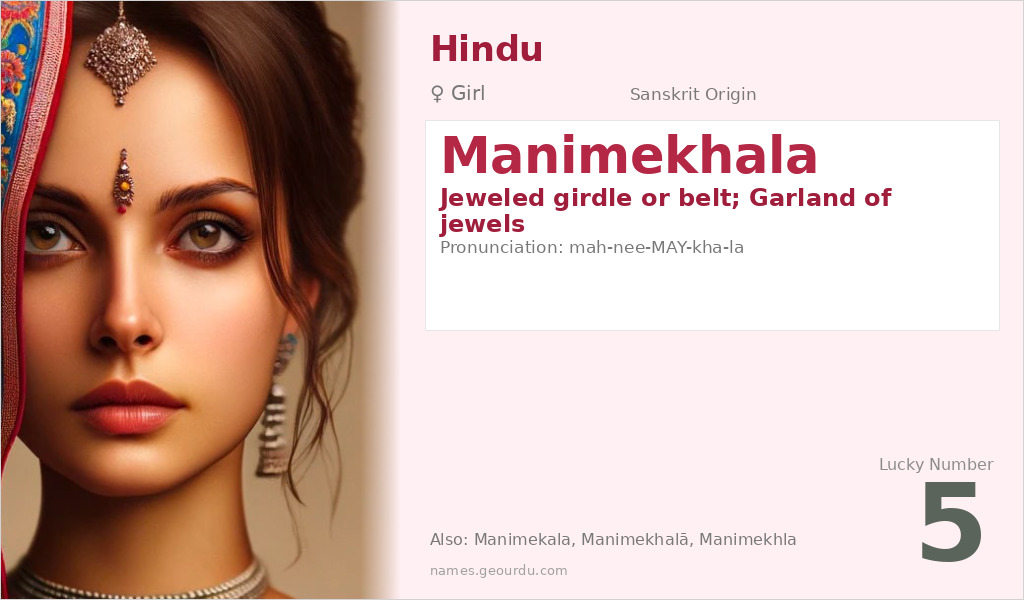
| 📛 Name | Manimekhala |
| 💎 Meaning | Jeweled girdle or belt; Garland of jewels |
| 👤 Gender | Girl |
| 🕌 Religion | Hindu |
| 🌍 Origin | Sanskrit |
| 🗣 Pronunciation | mah-nee-MAY-kha-la |
| ✍️ Urdu | مانیمیکھلا |
| ✍️ Arabic | مانيميكالا |
| 🔢 Numerology | 5 |
| ✨ Spellings | Manimekala, Manimekhalā, Manimekhla |
Origin & Cultural Significance
Manimekhala originates from ancient Sanskrit, the classical language of India that has influenced numerous South Asian languages and naming traditions. The name appears in early Hindu mythology as well as Buddhist literature, demonstrating its cross-religious appeal in ancient India. In Buddhist tradition, Manimekhala is specifically known as a protective sea goddess who rescues shipwrecked sailors—a role that adds layers of meaning about guardianship and salvation. The name traveled through Pali and Prakrit languages into regional traditions, including Tamil literature where it appears in one of the five great epics of Tamil literature. This cultural diffusion shows how Sanskrit names transcended religious and linguistic boundaries in historical South Asia.
Personality Traits
Those named Manimekhala often embody the qualities suggested by their name’s meaning—they tend to appreciate beauty, art, and elegance in their surroundings. With numerology number 5, they’re typically adventurous, adaptable, and excellent communicators who thrive on new experiences. The mythological associations with protection (as the sea goddess) suggest a nurturing, guardian-like quality in their personality. Their creative spirit and curiosity make them lifelong learners who often excel in artistic or humanitarian pursuits.
Similar Names
If you like Manimekhala, consider: Manimala, Manjari, Ratnamala, Harinakshi, Kankanalata
Famous People Named Manimekhala
- Manimekhala — Sea goddess in Buddhist Jataka tales who protects shipwrecked sailors
- Manimekhala — Character in ancient Tamil epic 'Manimekalai' (6th century CE), a Buddhist nun and daughter of Kovalan and Madhavi
Frequently Asked Questions About Manimekhala
What does Manimekhala mean?
Manimekhala means 'jeweled girdle' or 'garland of jewels' in Sanskrit, combining 'mani' (jewel) and 'mekhala' (girdle/belt).
Is Manimekhala a boy or girl name?
Manimekhala is exclusively a feminine name in all historical and cultural contexts where it appears, from Hindu mythology to Buddhist literature.
What is the origin of Manimekhala?
Manimekhala originates from classical Sanskrit and appears in both Hindu and Buddhist traditions, most notably as a sea goddess in Buddhist Jataka tales and in the Tamil epic 'Manimekalai'.