
Table of Contents
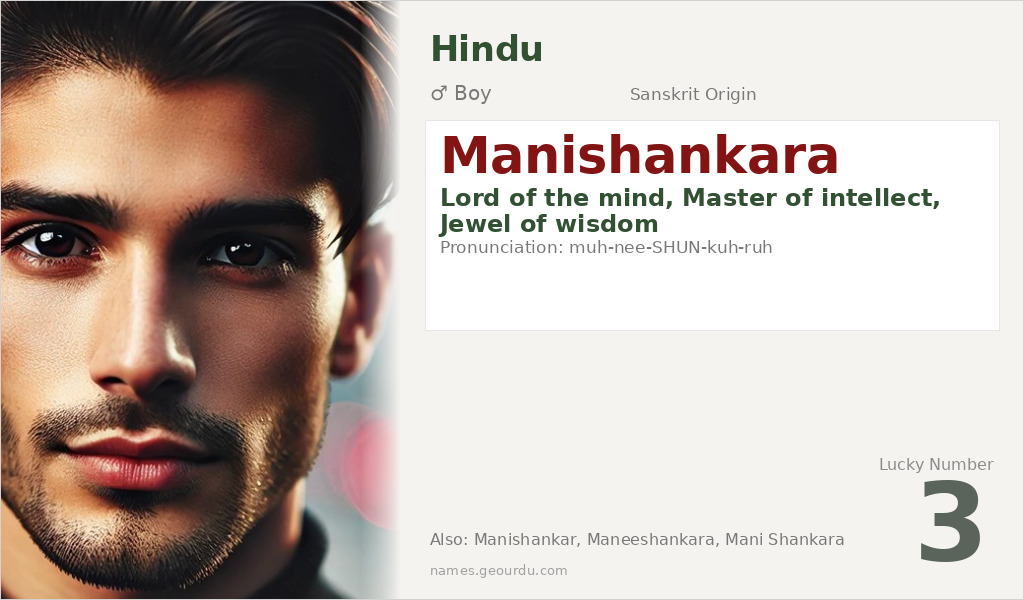
Manishankara is a profound Sanskrit name that carries deep spiritual and intellectual significance in Hindu tradition. Meaning ‘Lord of the mind’ or ‘Jewel of Shiva,’ this name embodies the qualities of wisdom, intellect, and divine connection. Given primarily to boys, it represents someone who possesses the precious attributes of Lord Shankara (Shiva) – the supreme consciousness and destroyer of ignorance. With roots in ancient Indian scriptures, Manishankara continues to be a meaningful choice for parents seeking a name with spiritual depth and cultural heritage.
Meaning of Manishankara
Manishankara is a classical Sanskrit compound name with rich etymological roots. It combines ‘Mani’ (मणि), meaning ‘jewel, gem, or precious stone,’ with ‘Shankara’ (शंकर), one of the primary names of Lord Shiva meaning ‘auspicious, beneficent, or giver of bliss.’ The complete name therefore translates to ‘Jewel of Shankara’ or ‘Gem of Shiva.’ Beyond the literal translation, it carries the metaphorical meaning of ‘one who possesses the precious qualities of Shiva’ – particularly intellectual brilliance, spiritual insight, and the ability to transcend worldly illusions. In Hindu philosophy, Shiva represents supreme consciousness and the destroyer of ignorance, making Manishankara a name that signifies mastery over the mind and intellect. The name appears in various Hindu texts and commentaries, often used to describe sages and learned individuals who embody Shiva’s wisdom.
| 📛 Name | Manishankara |
| 💎 Meaning | Lord of the mind, Master of intellect, Jewel of wisdom |
| 👤 Gender | Boy |
| 🕌 Religion | Hindu |
| 🌍 Origin | Sanskrit |
| 🗣 Pronunciation | muh-nee-SHUN-kuh-ruh |
| ✍️ Urdu | منیشنکر |
| ✍️ Arabic | مانيشانكارا |
| 🔢 Numerology | 3 |
| ✨ Spellings | Manishankar, Maneeshankara, Mani Shankara, Manishankara |
Origin & Cultural Significance
Manishankara originates from classical Sanskrit, the ancient liturgical language of Hinduism, Buddhism, and Jainism. As a compound name, it follows the traditional Sanskrit naming convention where meaningful elements are combined to create names with specific spiritual or philosophical significance. The name is deeply rooted in Shaivism, one of the major traditions within Hinduism that reveres Lord Shiva as the Supreme Being. Historically, such compound names were given to signify the child’s connection to divine qualities and to invoke the blessings of the deity. While primarily used in Hindu communities across India and the diaspora, the name’s Sanskrit origin gives it pan-Indian recognition. The name reflects the ancient Indian tradition of naming children after divine attributes, with the hope that the child will embody those qualities throughout their life.
Personality Traits
Those named Manishankara are often characterized by their intellectual depth, spiritual inclination, and analytical mindset. Drawing from the name’s connection to Shiva as the lord of meditation and consciousness, they typically exhibit calmness under pressure and the ability to see beyond surface appearances. Their personality combines the precious quality of a jewel (Mani) with the transformative power of Shiva, making them resilient individuals who can turn challenges into opportunities for growth. They tend to be thoughtful leaders who value knowledge and wisdom, often inspiring others through their insight and composed demeanor.
Similar Names
If you like Manishankara, consider: Manish, Shankara, Manikanta, Manindra, Shankar
Famous People Named Manishankara
- Manishankar Mukherjee — Indian author and diplomat known by pen name Shankar
- Manishankar — Sanskrit scholar and commentator on classical texts
Frequently Asked Questions About Manishankara
What does Manishankara mean?
Manishankara means 'Lord of the mind' or 'Jewel of Shiva' in Sanskrit. It is a compound name combining 'Mani' (jewel) and 'Shankara' (auspicious, another name for Lord Shiva), signifying someone who possesses the precious qualities of wisdom and spiritual insight.
Is Manishankara a boy or girl name?
Manishankara is traditionally a masculine name given to boys in Hindu culture. The name's association with Lord Shiva and its grammatical structure in Sanskrit make it predominantly male, though names can sometimes be adapted across genders in modern usage.
What is the origin of Manishankara?
Manishankara originates from Sanskrit, the ancient classical language of India. It is a Hindu name with roots in Shaivism (worship of Lord Shiva) and appears in traditional Hindu texts and naming conventions, reflecting the cultural practice of naming children after divine attributes.





