Table of Contents
Manjujyot is a captivating Sanskrit name that evokes imagery of radiant beauty and warm, glowing light. Primarily used for boys in Hindu communities, this name combines two poetic elements to create a meaning that’s both literal and deeply aesthetic. With roots in classical Indian literature, Manjujyot carries a timeless charm that continues to appeal to modern parents seeking meaningful names. Its lyrical quality and positive connotations make it a distinctive choice that stands out while honoring cultural heritage.
Meaning of Manjujyot
Manjujyot derives from Sanskrit, one of the world’s oldest languages with a rich literary tradition. The name is a compound of ‘Manju’ (मञ्जु) and ‘Jyot’ (ज्योत्). ‘Manju’ carries multiple nuanced meanings including ‘lovely, beautiful, charming, sweet, or reddish’—in poetic contexts, it often describes the crimson hue of dawn, flowers, or precious stones. ‘Jyot’ comes from ‘Jyoti’ (ज्योति), meaning ‘light, radiance, flame, or brightness’, a common element in Indian names symbolizing illumination and spiritual enlightenment. Together, they form ‘Manjujyot’, which literally translates to ‘lovely light’ or ‘beautiful radiance’, with specific emphasis on reddish or rosy tones. This creates imagery of a warm, crimson glow, reminiscent of rubies or sunset light, rather than the abstract ‘light of the mind’ sometimes mistakenly attributed to it.
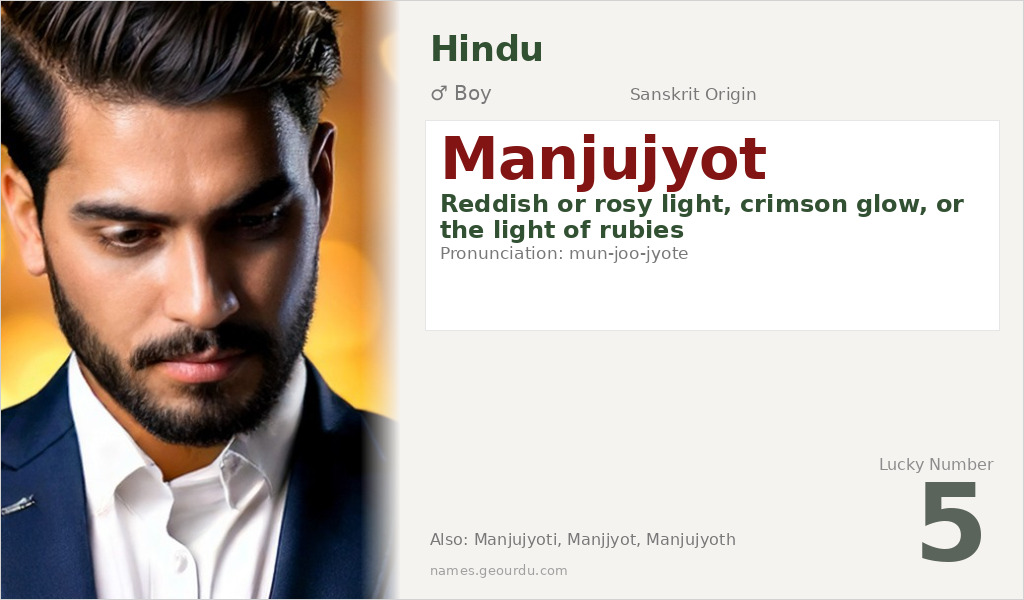
| 📛 Name | Manjujyot |
| 💎 Meaning | Reddish or rosy light, crimson glow, or the light of rubies |
| 👤 Gender | Boy |
| 🕌 Religion | Hindu |
| 🌍 Origin | Sanskrit |
| 🗣 Pronunciation | mun-joo-jyote |
| ✍️ Urdu | منجوجیوت |
| ✍️ Arabic | مانجوجيوت |
| 🔢 Numerology | 5 |
| ✨ Spellings | Manjujyoti, Manjjyot, Manjujyoth |
Origin & Cultural Significance
Manjujyot originates from Sanskrit, the classical language of ancient India that has influenced numerous modern South Asian languages. As a compound Sanskrit name, it follows traditional naming patterns where descriptive elements are combined to create meaningful appellations. The name appears in Hindu cultural contexts, particularly among communities that value Sanskrit’s linguistic heritage and its association with Vedic traditions. While not among the most common Sanskrit names, Manjujyot maintains presence in regions with strong Sanskrit scholarly traditions, including parts of North India and among diaspora communities. Its usage reflects the enduring appeal of poetic, nature-inspired names in Hindu naming practices, where light symbolism often carries spiritual significance.
Personality Traits
Those named Manjujyot are often perceived as having a warm, radiant personality that mirrors their name’s meaning. They typically exhibit creativity and artistic sensibility, with an appreciation for beauty in various forms. Their adaptable nature makes them comfortable in diverse situations, while their inherent charm helps them build positive relationships. Many display a balance of outward enthusiasm and inner contemplation, making them both engaging companions and thoughtful individuals.
Similar Names
If you like Manjujyot, consider: Manjula, Manju, Jyoti, Jyotish, Manjusha, Manjari, Prabhjot, Deepjyot
Famous People Named Manjujyot
- Manjujyot Singh — Indian classical musician specializing in tabla
- Manjujyot Kaur — Contemporary Punjabi poet and writer
Frequently Asked Questions About Manjujyot
What does Manjujyot mean?
Manjujyot means 'reddish light', 'crimson glow', or 'lovely radiance' in Sanskrit. It combines 'Manju' (lovely/beautiful/reddish) and 'Jyot' (light/radiance), creating imagery of warm, beautiful illumination.
Is Manjujyot a boy or girl name?
Manjujyot is primarily a boy's name in Hindu naming traditions. While Sanskrit names can sometimes be adapted, historical and contemporary usage strongly favors masculine gender assignment for this particular name.
What is the origin of Manjujyot?
Manjujyot originates from Sanskrit, the classical language of ancient India. It's a compound name following traditional Sanskrit word formation, used predominantly in Hindu cultural and religious contexts.