
Table of Contents
Maqdum is a distinguished Arabic name that carries centuries of cultural and spiritual significance. Primarily used in Muslim communities across South Asia and the Middle East, it evokes images of leadership, respect, and guidance. This name is not just a label but an honorific that has been borne by poets, scholars, and community leaders. Discover the rich etymology and modern relevance of this classic name.
Meaning of Maqdum
Maqdum originates from the Arabic trilateral root ق-د-م (q-d-m), which conveys the core ideas of preceding, coming before, or leading. As a passive participle (ism maf‘ūl), ‘maqdūm’ literally translates to ‘one who is preceded’ or ‘one who is served’, but through semantic shift in cultural practice, it came to mean ‘leader’, ‘chief’, or ‘master’. In South Asian Muslim contexts—especially among Pashto, Balochi, Sindhi, and Urdu speakers—the title ‘Maqdum’ or ‘Maqdoom’ was historically used for Sufi saints, religious scholars, and tribal elders. This reflects how the name evolved from a grammatical form to a term of reverence and authority within Islamic spiritual and social hierarchies.
| 📛 Name | Maqdum |
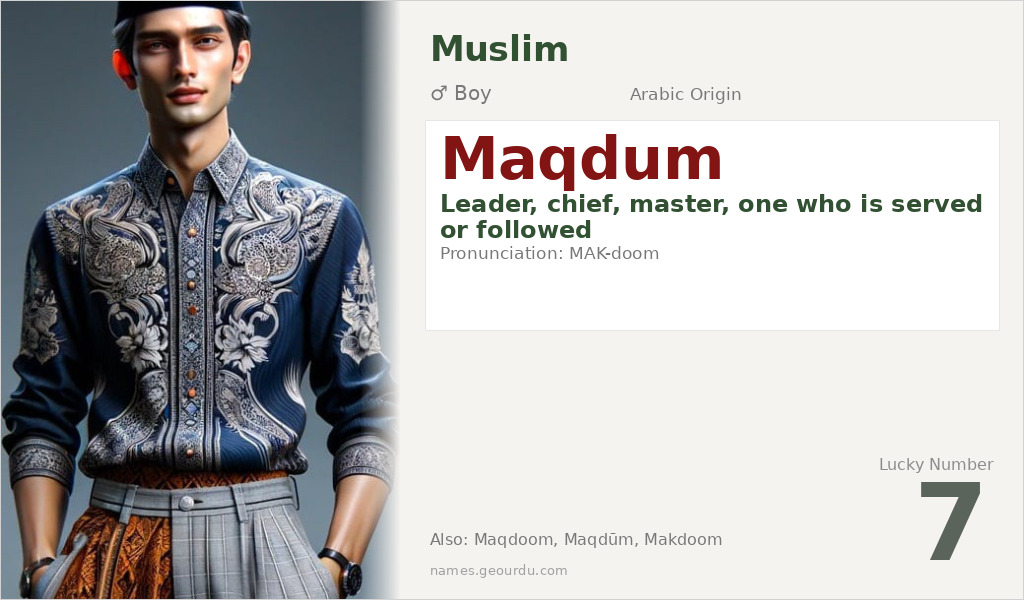
| 💎 Meaning | Leader, chief, master, one who is served or followed |
| 👤 Gender | Boy |
| 🕌 Religion | Muslim |
| 🌍 Origin | Arabic |
| 🗣 Pronunciation | MAK-doom |
| ✍️ Urdu | مقدوم |
| ✍️ Arabic | مَقْدُوم |
| 🔢 Numerology | 7 |
| ✨ Spellings | Maqdoom, Maqdūm, Makdoom, Maqdoom |
Origin & Cultural Significance
While the word is fundamentally Arabic, Maqdum as a personal name gained particular prominence in the Indian subcontinent and surrounding regions. It was adopted into languages like Urdu, Sindhi, Pashto, and Balochi, often as an honorific for pious figures or community leaders. In Sindh and Balochistan, many Sufi shrines are associated with saints titled ‘Maqdoom’, embedding the name in local devotional traditions. The name’s usage spread through Islamic scholarly networks and Sufi orders, making it a symbol of spiritual and social leadership. Today, it remains a meaningful choice for boys in Muslim families valuing heritage and moral authority.
Personality Traits
Named after the concept of leadership, a person called Maqdum is often perceived as dignified, responsible, and spiritually inclined. They may naturally assume roles where guidance and wisdom are required, whether in family, community, or professional settings. The name suggests a calm, respected individual who leads by example rather than force, embodying the traditional values of service and integrity associated with its historical bearers.
Similar Names
If you like Maqdum, consider: Qadir, Qasim, Mansoor, Rashid, Saeed
Famous People Named Maqdum
- Maqdoom Mohiuddin — Indian Urdu poet and communist leader from Hyderabad
- Maqbool Ahmed — Pakistani religious scholar and former senator
Frequently Asked Questions About Maqdum
What does Maqdum mean?
Maqdum means 'leader', 'chief', or 'master'. It comes from the Arabic root q-d-m, implying precedence and service, and is used as an honorific title in many Muslim cultures.
Is Maqdum a boy or girl name?
Maqdum is exclusively a boy's name. In all cultural contexts where it is used—from Arabic to South Asian languages—it is masculine and often associated with male religious or community leaders.
What is the origin of Maqdum?
Maqdum is of Arabic origin, derived from the root ق-د-م. It became particularly common in South Asia (Pakistan, India) through Islamic scholarship and Sufism, adopted into languages like Urdu, Sindhi, and Pashto as a title for respected figures.





