
Table of Contents
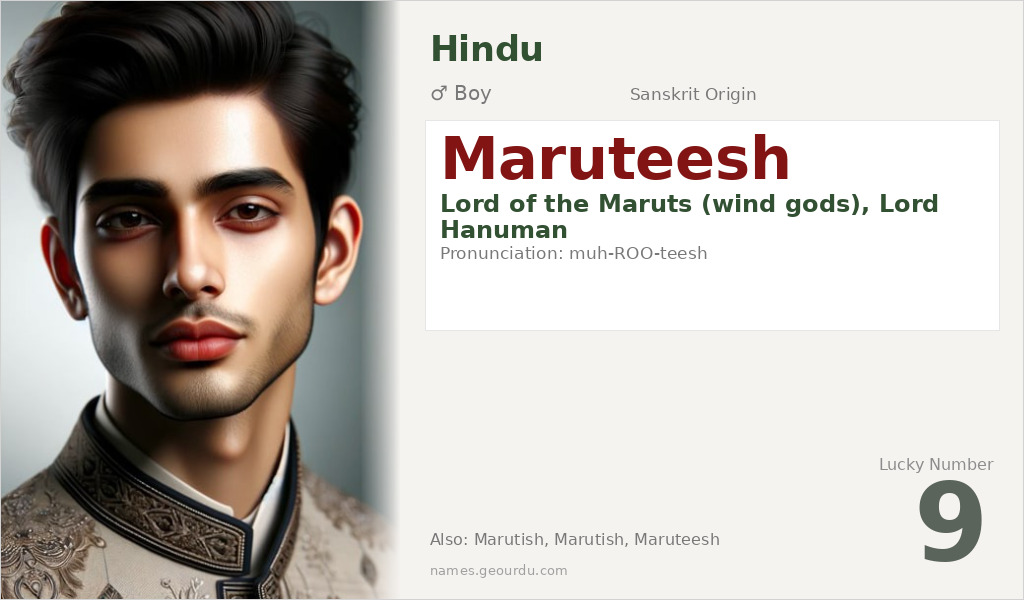
Maruteesh is a powerful and meaningful Sanskrit name deeply rooted in Hindu mythology and tradition. Primarily given to boys, this name carries divine connotations as it refers to ‘Lord of the Maruts’—the Vedic wind gods—and is famously associated with Hanuman, the beloved monkey god known for his devotion, strength, and loyalty. With its rich etymological background and spiritual significance, Maruteesh represents more than just a name; it embodies qualities of leadership, protection, and divine connection. This comprehensive guide explores the origins, meanings, and cultural context of this distinctive Hindu name.
Meaning of Maruteesh
Maruteesh derives from classical Sanskrit, combining two significant elements: ‘Marut’ (मरुत्) and ‘Ish’ (ईश). ‘Marut’ refers specifically to the Maruts, a group of storm deities in Vedic mythology who are described as attendants of Indra, the king of gods. These deities represent the roaring winds, storms, and atmospheric forces. The suffix ‘Ish’ means ‘lord’, ‘master’, or ‘ruler’, creating the complete meaning ‘Lord of the Maruts’ or ‘Master of the Wind Gods’. In Hindu tradition, this epithet is most commonly applied to Hanuman, who is celebrated for his ability to fly with wind-like speed and his association with the wind god Pavan (another name for Vayu). The name thus carries both literal meteorological significance and profound mythological resonance, connecting the bearer to divine forces of nature and spiritual power.
| 📛 Name | Maruteesh |
| 💎 Meaning | Lord of the Maruts (wind gods), Lord Hanuman |
| 👤 Gender | Boy |
| 🕌 Religion | Hindu |
| 🌍 Origin | Sanskrit |
| 🗣 Pronunciation | muh-ROO-teesh |
| ✍️ Urdu | ماروتیش |
| ✍️ Arabic | ماروتيش |
| 🔢 Numerology | 9 |
| ✨ Spellings | Marutish, Marutish, Maruteesh, Marutish |
Origin & Cultural Significance
Maruteesh originates from ancient Sanskrit, the classical language of Hindu scriptures, philosophy, and literature. The name appears in various Hindu texts and mythological narratives, particularly those related to Hanuman and the Ramayana epic. As a compound Sanskrit name, it follows traditional naming patterns where divine epithets become personal names, especially within Hindu communities. The name is predominantly used in India and among Hindu diaspora communities worldwide, maintaining its religious and cultural significance across generations. While not among the most common Hindu names, Maruteesh retains special importance for families seeking names with specific mythological connections and spiritual meanings, particularly those devoted to Hanuman or interested in Vedic traditions.
Personality Traits
Those named Maruteesh are often believed to embody qualities associated with their namesake—strength, devotion, loyalty, and dynamic energy. Like Hanuman, they may display protective instincts toward loved ones and a strong sense of duty. The wind element in the name’s meaning suggests personality traits of adaptability, movement, and the ability to navigate challenges with grace. In social contexts, Maruteesh individuals might be perceived as natural leaders who inspire others through their determination and spiritual depth.
Similar Names
If you like Maruteesh, consider: Maruti, Hanuman, Pavanputra, Anjaneya, Kesari
Famous People Named Maruteesh
- Maruteesh — Indian classical musician specializing in devotional music
- Maruteesh Sharma — contemporary Hindu spiritual teacher and author
Frequently Asked Questions About Maruteesh
What does Maruteesh mean?
Maruteesh means 'Lord of the Maruts' (wind gods) in Sanskrit. It's an epithet for Hanuman, the monkey god in Hindu mythology, representing mastery over wind and storms.
Is Maruteesh a boy or girl name?
Maruteesh is exclusively a boy's name in Hindu naming tradition, as it refers to male deities (the Maruts and Hanuman) and follows masculine Sanskrit grammatical structure.
What is the origin of Maruteesh?
Maruteesh originates from Sanskrit, the classical language of ancient India. It's a compound name from Hindu mythology, specifically from Vedic traditions involving storm deities and later associated with Hanuman worship.





