
Table of Contents
Matsendra is a distinctive Sanskrit name that carries the powerful meaning ‘Lord of the fishes’ or ‘King of aquatic creatures’. Rooted in Hindu tradition and mythology, this name combines two ancient elements to create an image of sovereignty over water realms. While not extremely common today, it holds cultural significance and appears in historical and religious contexts. Let’s explore the rich linguistic heritage and symbolic depth of this unique name.
Meaning of Matsendra
Matsendra is a classical Sanskrit compound name formed from ‘Matsa’ (fish) and ‘Indra’ (lord/ruler). The component ‘Matsa’ derives from the Sanskrit root √mad, which conveys joy and gladness, possibly reflecting the lively nature of fish in water. ‘Indra’ is one of the most important deities in Vedic literature, the king of gods associated with thunder, rain, and sovereignty. When combined, Matsendra literally means ‘fish-lord’ or ‘master of fishes’, suggesting authority over aquatic domains. This name appears in Hindu texts and traditions, sometimes as an epithet for figures connected to water or as a symbolic representation of protection and rule over natural elements. The construction follows standard Sanskrit compounding rules for creating meaningful names with divine or noble connotations.
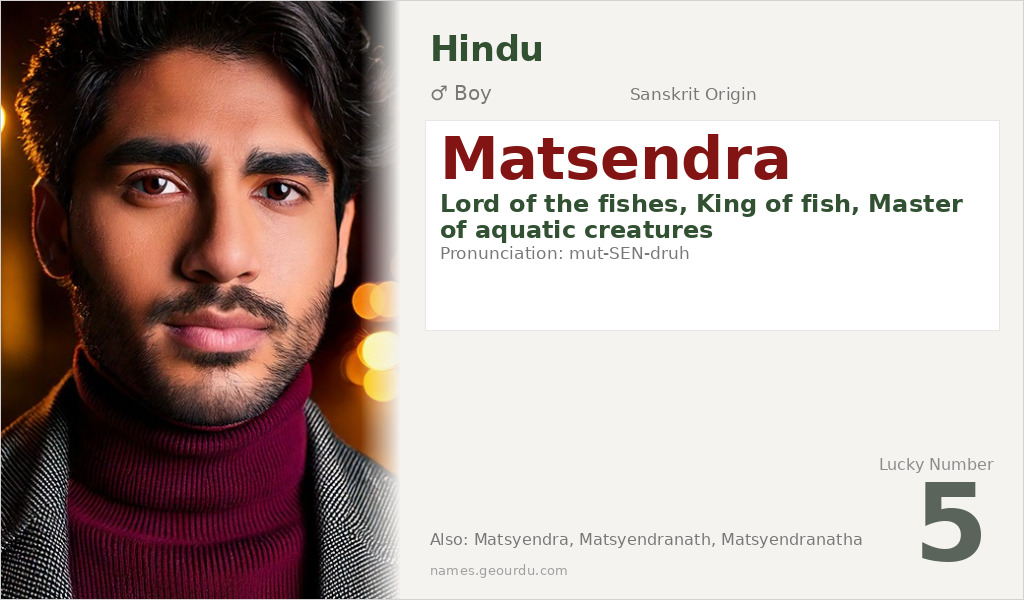
| 📛 Name | Matsendra |
| 💎 Meaning | Lord of the fishes, King of fish, Master of aquatic creatures |
| 👤 Gender | Boy |
| 🕌 Religion | Hindu |
| 🌍 Origin | Sanskrit |
| 🗣 Pronunciation | mut-SEN-druh |
| ✍️ Urdu | متسیندرا |
| ✍️ Arabic | متسيندرا |
| 🔢 Numerology | 5 |
| ✨ Spellings | Matsyendra, Matsyendranath, Matsyendranatha, Machhendra |
Origin & Cultural Significance
Matsendra originates from classical Sanskrit, the ancient liturgical language of Hinduism. It emerges from India’s rich tradition of creating meaningful names through compound words, particularly those combining natural elements with divine titles. The name appears in Hindu mythology and religious texts, sometimes associated with figures who have connections to water or aquatic symbolism. In the Nath tradition of Hinduism, Matsyendranath is revered as an important saint and yogic master, though the name Matsendra itself may appear in various contexts. Unlike many modern invented names, Matsendra has documented usage in historical and religious sources, giving it authentic cultural roots within Hindu naming practices that value both meaning and spiritual resonance.
Personality Traits
Names often carry symbolic associations, and Matsendra’s connection to water and rulership suggests certain personality traits. Those bearing this name might be seen as intuitive and emotionally perceptive, with the adaptability of water. The ‘Indra’ component implies leadership qualities, confidence, and a protective nature. This combination could indicate someone who navigates life’s currents with both flexibility and authority, potentially excelling in roles requiring both empathy and decisiveness.
Similar Names
If you like Matsendra, consider: Matsya, Indra, Varuna, Neeraj, Jaladhipa, Samudra, Sagara, Nirupama, Matsyagandha, Jalendra
Famous People Named Matsendra
- Matsyendranath — 10th century Hindu saint and yogi, considered one of the founders of Hatha Yoga and the Nath tradition
- Matsyendra — Mythological figure in some Hindu texts, sometimes associated with aquatic deities or avatars
Frequently Asked Questions About Matsendra
What does Matsendra mean?
Matsendra means 'Lord of the fishes' or 'King of aquatic creatures'. It's a Sanskrit compound name from 'Matsa' (fish) and 'Indra' (lord/ruler).
Is Matsendra a boy or girl name?
Matsendra is exclusively a boy's name in Hindu naming tradition. The '-endra' suffix and the name's mythological associations are masculine in Sanskrit grammar and cultural context.
What is the origin of Matsendra?
Matsendra originates from Sanskrit, the ancient language of Hinduism in India. It's a compound name that appears in Hindu texts and traditions, with documented usage in religious and historical contexts.





