
Table of Contents
Mishri is a delightful feminine name that evokes images of sweetness and purity. Derived from South Asian culinary traditions, this name literally means ‘crystal sugar’ or ‘rock sugar’ – a cherished ingredient in sweets and religious ceremonies. Popular in Hindu communities, Mishri carries both literal and metaphorical sweetness, making it a charming choice for parents seeking a name with cultural resonance and positive connotations. Let’s explore the rich background of this sweet-sounding name.
Meaning of Mishri
Mishri originates from the Sanskrit word ‘miśra’ (मिश्र), meaning ‘mixed’ or ‘blended’, which evolved into the Hindi/Urdu ‘mishri’ (मिश्री/مشری) specifically referring to crystallized sugar. Unlike regular sugar, mishri is rock sugar or sugar candy that forms in crystalline lumps, traditionally used in Ayurvedic medicine, religious rituals, and as a natural sweetener. The name thus carries precise culinary and cultural significance beyond just ‘sweet’ – it represents a specific form of sweetness that’s pure, crystalline, and traditionally valued. In naming context, it symbolizes sweetness of character, purity of heart, and nourishing qualities, much like the substance itself is used to sweeten foods and medicines.
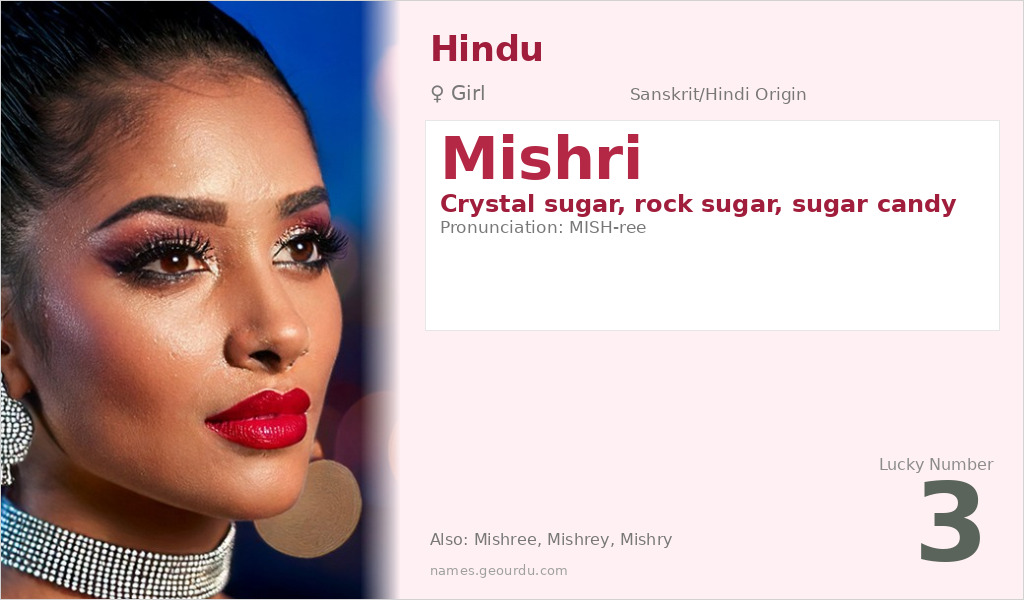
| 📛 Name | Mishri |
| 💎 Meaning | Crystal sugar, rock sugar, sugar candy |
| 👤 Gender | Girl |
| 🕌 Religion | Hindu |
| 🌍 Origin | Sanskrit/Hindi |
| 🗣 Pronunciation | MISH-ree |
| ✍️ Urdu | مشری |
| ✍️ Arabic | مشري |
| 🔢 Numerology | 3 |
| ✨ Spellings | Mishree, Mishrey, Mishry, Mishrie |
Origin & Cultural Significance
Mishri has its roots in the Indian subcontinent, primarily within Hindi-speaking regions and Hindu communities. The name draws directly from the culinary vocabulary of South Asia, where mishri (rock sugar) holds cultural importance in religious ceremonies, traditional sweets, and Ayurvedic practices. It’s particularly common in North India, where it’s used both as a given name and as a term of endearment similar to ‘sweetie’. While predominantly Hindu in usage, the word itself crosses religious boundaries in the subcontinent, appearing in Urdu and other regional languages with the same culinary meaning. The name gained popularity as parents sought meaningful names connected to positive, everyday aspects of their culture.
Personality Traits
Those named Mishri are often perceived as having sweet, gentle dispositions that brighten the lives of others. Like the crystalline sugar their name represents, they may exhibit clarity of thought and purity of intention in their actions. Typically sociable and affectionate, Mishris tend to create harmonious environments and resolve conflicts with their diplomatic nature. Their sweetness is not merely superficial but often reflects a genuine warmth and nurturing quality that draws people to them.
Similar Names
If you like Mishri, consider: Mishti (Bengali: sweet), Shakkar (Hindi/Urdu: sugar), Gulab (rose, sweet), Madhu (Sanskrit: honey, sweet), Rasna (Sanskrit: sweet-tasting)
Famous People Named Mishri
- Mishri Lal – Indian politician from Rajasthan
- Mishri Singh – Character in regional Indian folklore and literature
Frequently Asked Questions About Mishri
What does Mishri mean?
Mishri means 'crystal sugar', 'rock sugar', or 'sugar candy' in Hindi and Urdu, derived from Sanskrit. It specifically refers to the crystallized sugar lumps used in South Asian sweets and traditions, not just general sweetness.
Is Mishri a boy or girl name?
Mishri is predominantly a feminine name in Hindu naming traditions. While the word 'mishri' is gender-neutral as a culinary term, as a personal name it's almost exclusively given to girls in cultural practice.
What is the origin of Mishri?
Mishri originates from Sanskrit/Hindi language and culture, specifically from the Indian subcontinent. It comes from the Sanskrit root 'miśra' meaning 'mixed', evolving into the Hindi/Urdu word for crystallized sugar, which then became used as a feminine given name.





