Table of Contents
Mohsin Aziz is a distinguished Arabic name that resonates deeply within Islamic culture, blending virtues of charity with divine strength. As a compound name, it reflects both moral excellence and spiritual power, making it a meaningful choice for parents seeking a name with profound religious significance. This name has been borne by scholars, leaders, and individuals who embody its noble connotations. In this guide, we explore the rich etymology, correct usage, and cultural context of Mohsin Aziz.
Meaning of Mohsin Aziz
Mohsin Aziz is composed of two Arabic elements, each with clear linguistic roots. ‘Mohsin’ (محسن) comes from the trilateral root Ḥ-S-N (ح-س-ن), which relates to goodness, beauty, and excellence. As an active participle, it means ‘one who does good’ or ‘benefactor’, emphasizing proactive charity and virtue. ‘Aziz’ (عزيز) derives from the root ʿ-Z-Z (ع-ز-ز), conveying strength, might, and preciousness, and is famously one of the 99 Names of Allah (Al-Aziz), meaning ‘The All-Powerful’ or ‘The Beloved’. Together, the name signifies a person who is both charitable and powerful, often interpreted as ‘Charitable and Beloved’ or ‘Beneficent and Mighty’. This combination is common in Muslim naming traditions, where compound names highlight desirable attributes and divine qualities.
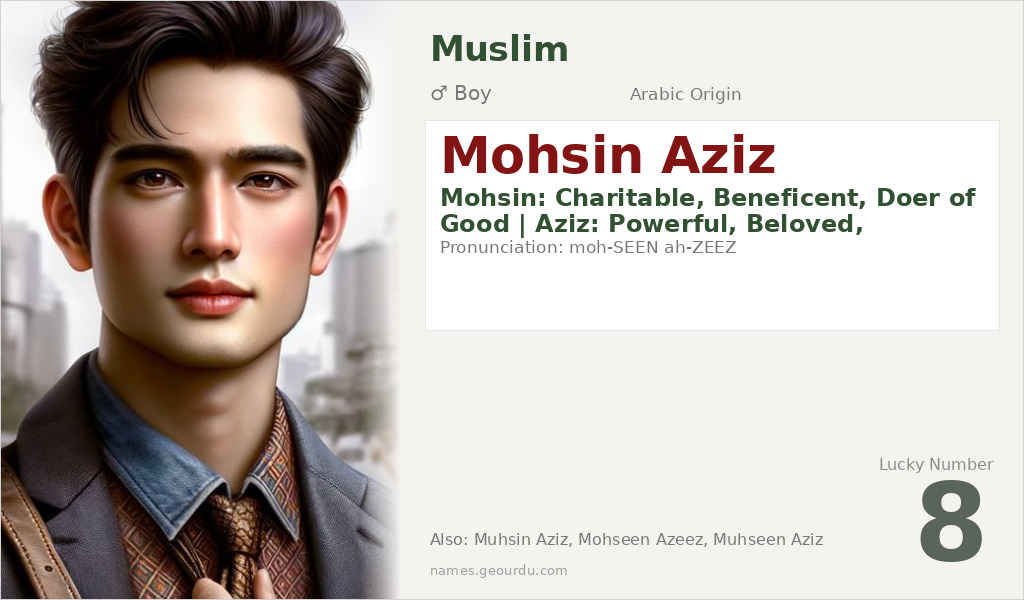
| 📛 Name | Mohsin Aziz |
| 💎 Meaning | Mohsin: Charitable, Beneficent, Doer of Good | Aziz: Powerful, Beloved, Precious |
| 👤 Gender | Boy |
| 🕌 Religion | Muslim |
| 🌍 Origin | Arabic |
| 🗣 Pronunciation | moh-SEEN ah-ZEEZ |
| ✍️ Urdu | محسن عزیز |
| ✍️ Arabic | محسن عزيز |
| 🔢 Numerology | 8 |
| ✨ Spellings | Muhsin Aziz, Mohseen Azeez, Muhseen Aziz |
Origin & Cultural Significance
Mohsin Aziz originates from classical Arabic and is deeply embedded in Islamic culture due to its religious and linguistic heritage. The name has been used for centuries across the Muslim world, from the Middle East to South Asia, where Arabic names are prevalent among Muslim communities. In regions like Pakistan, India, and Bangladesh, it is often chosen for boys to inspire qualities of generosity and strength, reflecting Islamic values. Historically, names like Mohsin and Aziz appear in Islamic texts and among early Muslim figures, reinforcing their timeless appeal. The name’s usage spans various cultures but remains firmly rooted in Arabic etymology and Islamic tradition, without association with astrological or superstitious elements.
Personality Traits
Those named Mohsin Aziz are often seen as balanced individuals who harmonize compassion with determination. The ‘Mohsin’ aspect encourages a nurturing and altruistic demeanor, while ‘Aziz’ contributes a sense of resilience and self-assurance. This blend can result in a personality that is both empathetic and authoritative, making them effective in roles that require leadership and community service. They may be drawn to causes that help others, driven by an innate sense of justice and a desire to make a positive impact.
Similar Names
If you like Mohsin Aziz, consider: Mohammad Aziz, Hasan Aziz, Yasin Aziz, Karim Aziz, Rashid Aziz
Famous People Named Mohsin Aziz
- Mohsin Aziz — Pakistani politician and businessman, former Minister of Industries and Production
- Muhsin Al-Aziz — Historical Islamic scholar known for contributions to Hadith studies
Frequently Asked Questions About Mohsin Aziz
What does Mohsin Aziz mean?
Mohsin Aziz means 'Charitable and Powerful' or 'Beneficent and Beloved'. Mohsin is Arabic for 'doer of good' or 'benefactor', and Aziz means 'powerful', 'precious', or 'beloved', derived from Islamic tradition.
Is Mohsin Aziz a boy or girl name?
Mohsin Aziz is exclusively a boy's name in Arabic and Islamic naming conventions. Both components are masculine, and there is no historical or linguistic basis for it being used for girls.
What is the origin of Mohsin Aziz?
Mohsin Aziz originates from Arabic, with both names having roots in classical Arabic language and Islamic culture. It is widely used among Muslim communities globally, particularly in South Asia and the Middle East.