
Table of Contents
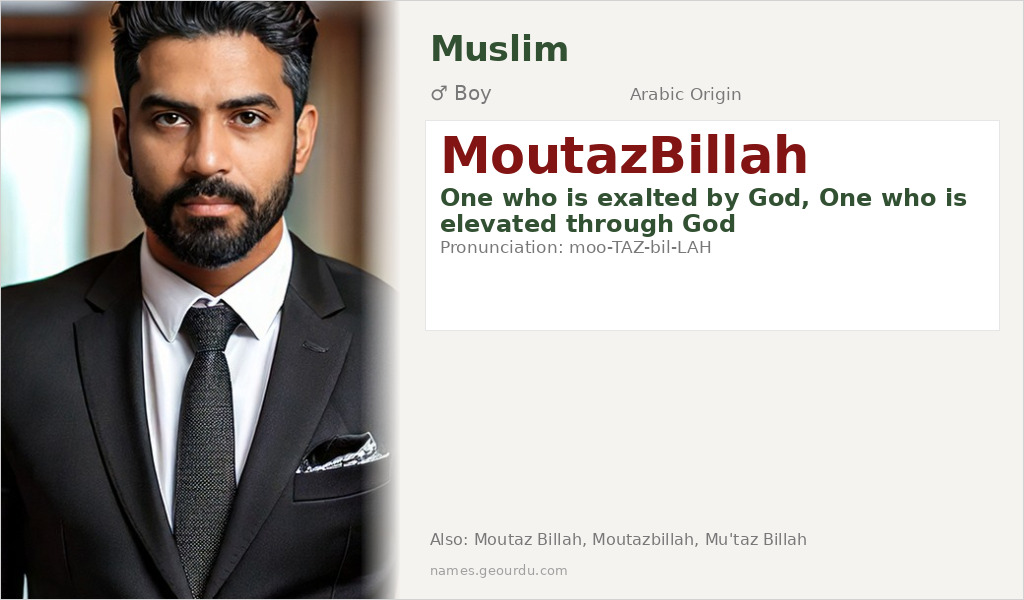
MoutazBillah is a meaningful Arabic name that carries deep spiritual significance for Muslim families. Combining ‘Moutaz’ (exalted) with ‘Billah’ (by God), this name beautifully expresses the concept of divine elevation and honor. While not among the most common Islamic names, it represents a cherished tradition of theophoric naming that connects personal identity to faith. Understanding its linguistic roots reveals why this name has endured in various Muslim cultures.
Meaning of MoutazBillah
MoutazBillah derives from classical Arabic, specifically from the root ع-ز-ز (‘ayn-zay-zay’) which forms the basis for words related to strength, honor, and dignity. The first component ‘Moutaz’ is the passive participle of ‘i’tazza’, meaning ‘to be honored’ or ‘to be exalted’. When combined with ‘Billah’ (by God), the name creates a complete theological statement: one whose honor comes specifically through divine grace rather than worldly means. This construction mirrors other Arabic names like ‘Abdullah’ (servant of God) in its grammatical structure. The name emphasizes that true elevation comes from spiritual connection, making it particularly meaningful in Islamic contexts where humility before God is valued alongside personal dignity.
| 📛 Name | MoutazBillah |
| 💎 Meaning | One who is exalted by God, One who is elevated through God |
| 👤 Gender | Boy |
| 🕌 Religion | Muslim |
| 🌍 Origin | Arabic |
| 🗣 Pronunciation | moo-TAZ-bil-LAH |
| ✍️ Urdu | معتز باللہ |
| ✍️ Arabic | معتز بالله |
| 🔢 Numerology | |
| ✨ Spellings | Moutaz Billah, Moutazbillah, Mu'taz Billah, Mu'tazbillah, Moutazullah |
Origin & Cultural Significance
MoutazBillah originates from Arabic linguistic and Islamic cultural traditions, emerging from the practice of creating compound names that incorporate divine references. While not found in the Quran itself, it follows naming patterns established in early Islamic history where names expressed theological concepts. The name appears primarily in Arabic-speaking regions and among Muslim communities in South Asia, where Arabic names have been adapted into local languages. Unlike some purely descriptive Arabic names, MoutazBillah represents a complete sentence-like construction that makes a declarative statement about the name-bearer’s relationship with the divine. This type of name became particularly popular during periods of Islamic scholarship when theological precision in language was highly valued.
Personality Traits
The name MoutazBillah suggests someone who carries themselves with dignified grace while maintaining spiritual humility. The ‘exalted by God’ meaning implies that the individual’s worth comes from divine recognition rather than earthly achievements. This might manifest as quiet confidence, principled decision-making, and a focus on ethical conduct. While personality isn’t determined by names alone, the theological weight of MoutazBillah could influence how bearers perceive their role in the world—as individuals whose true honor comes through faithful living rather than social status.
Similar Names
If you like MoutazBillah, consider: Abdullah, Izzuddin, Mujtaba, Murtaza, Mustafa
Famous People Named MoutazBillah
- No widely recognized historical or contemporary figures with this exact name found in verified records
- The name appears occasionally in Muslim communities across Arabic-speaking regions and South Asia, but no notable public figures are documented
Frequently Asked Questions About MoutazBillah
What does MoutazBillah mean?
MoutazBillah means 'one who is exalted by God' or 'elevated through God' in Arabic. It's a compound name combining 'Moutaz' (exalted/honored) with 'Billah' (by God).
Is MoutazBillah a boy or girl name?
MoutazBillah is exclusively a boy's name in Arabic and Islamic naming traditions. The grammatical structure and usage history confirm its masculine gender assignment.
What is the origin of MoutazBillah?
MoutazBillah originates from classical Arabic, specifically from Islamic naming traditions that create compound names with divine references. It follows grammatical patterns established in early Arabic linguistics.





