
Table of Contents
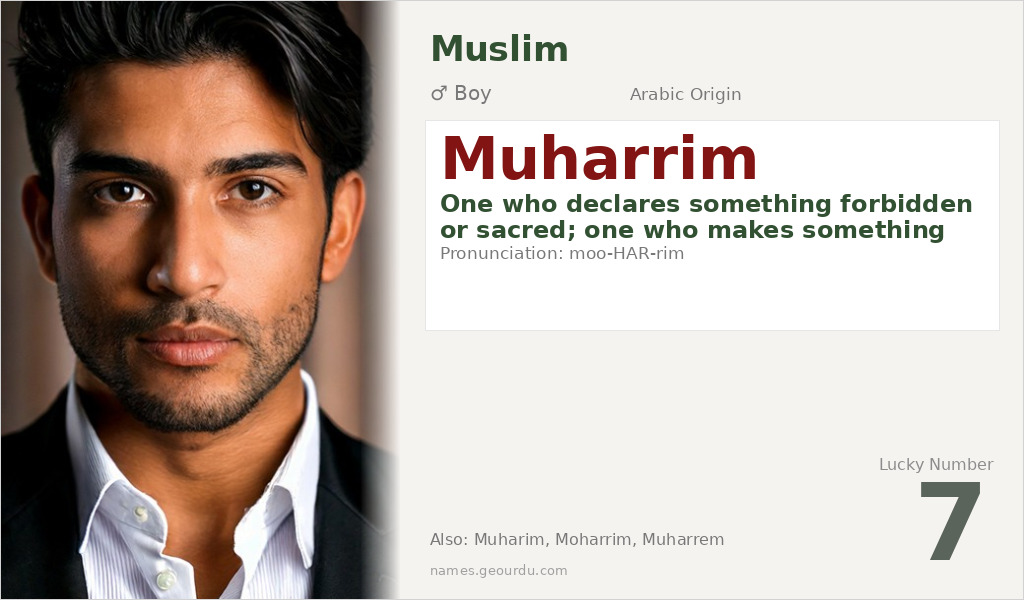
Muharrim is a distinctive Arabic name with deep linguistic and cultural significance in the Muslim world. Derived from a powerful root verb meaning ‘to forbid’ or ‘declare sacred,’ this name carries connotations of moral authority and spiritual protection. While not among the most common Islamic names, Muharrim has been used for centuries across Arabic-speaking regions and Muslim communities worldwide. Its meaningful etymology makes it a thoughtful choice for parents seeking a name with both historical depth and contemporary relevance.
Meaning of Muharrim
Muharrim is an Arabic name with a precise and well-documented meaning. It originates from the triliteral root Ḥ-R-M (ح-ر-م), which forms the basis for numerous important words in Arabic and Islamic terminology. As the active participle of the verb ‘ḥarrama,’ Muharrim literally means ‘one who forbids’ or ‘one who makes something forbidden or sacred.’ This name is linguistically connected to fundamental Islamic concepts: ‘ḥarām’ refers to what is religiously forbidden, ‘ḥaram’ denotes a sacred sanctuary (like the areas around Mecca and Medina), and ‘iḥrām’ describes the consecrated state during Hajj pilgrimage. The name thus embodies the idea of establishing boundaries between the permissible and impermissible, the sacred and the profane.
| 📛 Name | Muharrim |
| 💎 Meaning | One who declares something forbidden or sacred; one who makes something inviolable |
| 👤 Gender | Boy |
| 🕌 Religion | Muslim |
| 🌍 Origin | Arabic |
| 🗣 Pronunciation | moo-HAR-rim |
| ✍️ Urdu | محرم |
| ✍️ Arabic | مُحَرِّم |
| 🔢 Numerology | 7 |
| ✨ Spellings | Muharim, Moharrim, Muharrem |
Origin & Cultural Significance
Muharrim has its origins in classical Arabic language and Islamic culture, with documented usage dating back to the medieval period. The name emerged from the rich linguistic tradition of Arabic, where active participle forms (like Muharrim) are commonly used as personal names to denote characteristics or professions. While not as widespread as names like Muhammad or Ahmad, Muharrim appears in historical records from various Muslim regions including the Arabian Peninsula, North Africa, and the Indian subcontinent. The name reflects the importance of legal and moral boundaries in Islamic tradition, making it particularly meaningful in communities that value religious scholarship and ethical leadership. Its usage has been consistent though not extremely common throughout Islamic history.
Personality Traits
The name Muharrim suggests personality traits associated with moral clarity, discipline, and protective instincts. Those bearing this name are often perceived as individuals with strong principles who naturally assume roles as guardians of tradition and ethical standards. The linguistic roots imply someone who distinguishes clearly between right and wrong, and who may feel called to establish or maintain boundaries in various aspects of life. While these associations stem from the name’s etymology rather than psychological studies, they reflect cultural perceptions that have developed around this meaningful Arabic name over centuries.
Similar Names
If you like Muharrim, consider: Muharram, Muhsin, Muhammad, Muhannad, Muhaymin
Famous People Named Muharrim
- Muharrim Shah – 19th century Islamic scholar from the Indian subcontinent known for his works on Islamic jurisprudence
- Muharrim al-Baghdadi – Historical figure mentioned in medieval Arabic chronicles as a judge in Abbasid-era Baghdad
Frequently Asked Questions About Muharrim
What does Muharrim mean?
Muharrim means 'one who declares something forbidden or sacred' in Arabic. It comes from the root verb 'ḥarrama' meaning to forbid, prohibit, or make inviolable.
Is Muharrim a boy or girl name?
Muharrim is exclusively a masculine name in Arabic naming tradition. The grammatical form (active participle) is masculine, and there is no documented feminine usage in historical or contemporary sources.
What is the origin of Muharrim?
Muharrim originates from classical Arabic language and Islamic culture. It is derived from the Arabic root Ḥ-R-M and has been used as a personal name in Muslim communities for centuries, particularly in Arabic-speaking regions.





