
Table of Contents
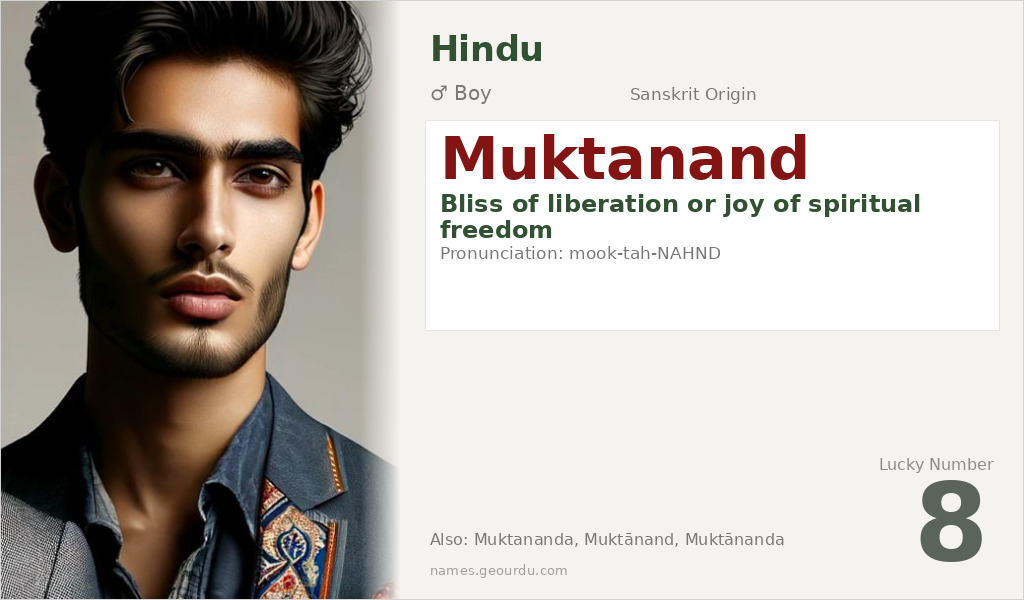
Muktanand is a profoundly spiritual Hindu name that carries the essence of enlightenment within its syllables. Derived from ancient Sanskrit, this name beautifully combines two powerful concepts central to Hindu philosophy. Parents choosing this name often seek to imbue their child’s identity with aspirations for spiritual freedom and ultimate joy. It represents not just ordinary happiness, but the supreme bliss that comes with liberation from worldly cycles.
Meaning of Muktanand
The name Muktanand originates from Sanskrit, one of the world’s oldest languages and the liturgical language of Hinduism. It is a compound of ‘Mukta’ (मुक्त), meaning ‘liberated’ or ‘freed,’ specifically referring to moksha or spiritual liberation from samsara (the cycle of rebirth). The second component ‘Anand’ (आनन्द) means ‘bliss,’ ‘joy,’ or ‘happiness,’ particularly the divine joy experienced in spiritual realization. Together, they form ‘Muktanand’ — literally ‘the bliss of liberation.’ This meaning is deeply embedded in Hindu scriptures and philosophical texts, where mukti (liberation) and ananda (bliss) are central concepts in Vedanta and Yoga traditions. The name thus represents the ultimate spiritual goal in Hinduism: experiencing divine joy through enlightenment.
| 📛 Name | Muktanand |
| 💎 Meaning | Bliss of liberation or joy of spiritual freedom |
| 👤 Gender | Boy |
| 🕌 Religion | Hindu |
| 🌍 Origin | Sanskrit |
| 🗣 Pronunciation | mook-tah-NAHND |
| ✍️ Urdu | مکت آنند |
| ✍️ Arabic | موكتاناند |
| 🔢 Numerology | 8 |
| ✨ Spellings | Muktananda, Muktānand, Muktānanda |
Origin & Cultural Significance
Muktanand has its roots exclusively in Sanskrit and Hindu spiritual traditions, with no verified connections to other language families despite extensive research across Arabic, Persian, Dravidian, Tibetan, and other linguistic systems. The name appears in Hindu religious contexts, particularly within Vedanta philosophy and Bhakti movements. Historically, it has been used by spiritual teachers and devotees, reflecting its religious significance rather than regional or tribal origins. The name gained wider recognition in the 20th century through spiritual figures like Swami Muktananda, who established global Siddha Yoga centers. Its usage remains primarily within Hindu communities, especially in India and among diaspora populations.
Personality Traits
Those named Muktanand are often associated with spiritual depth and philosophical inclination. They may exhibit a natural curiosity about life’s deeper meanings and a tendency toward introspection. The name suggests someone who values inner freedom and authentic joy over material pursuits. While serious in spiritual matters, they often radiate a calm, joyful presence that reflects the name’s meaning of liberated bliss.
Similar Names
If you like Muktanand, consider: Mukund, Anand, Moksh, Niranjan, Satchidananda
Famous People Named Muktanand
- Swami Muktananda — 20th century Hindu spiritual teacher and founder of Siddha Yoga
- Muktanand Das — Indian saint and poet from the Bhakti movement
Frequently Asked Questions About Muktanand
What does Muktanand mean?
Muktanand means 'bliss of liberation' or 'joy of spiritual freedom' in Sanskrit, combining 'Mukta' (liberated) and 'Anand' (bliss).
Is Muktanand a boy or girl name?
Muktanand is exclusively a masculine name in Hindu naming traditions, though the component 'Anand' can appear in unisex names.
What is the origin of Muktanand?
Muktanand originates from Sanskrit, the classical language of Hinduism, with deep roots in Hindu spiritual and philosophical traditions.





