
Table of Contents
Mukunda is a profound Sanskrit name with deep spiritual resonance in Hindu tradition. Meaning ‘Liberator’ or ‘Giver of Freedom,’ this name embodies the divine qualities of Lord Krishna/Vishnu as the bestower of moksha (spiritual liberation). Used for centuries in India and Hindu communities worldwide, Mukunda carries both religious significance and beautiful phonetic qualities. Discover the rich etymology, cultural context, and modern relevance of this timeless name.
Meaning of Mukunda
Mukunda originates from classical Sanskrit, combining the elements ‘mukti’ (liberation, freedom) and ‘da’ (giver). The complete meaning is ‘one who gives liberation’ or ‘bestower of freedom.’ In Hindu scriptures, this is one of the 1,000 names of Vishnu and specifically refers to Krishna’s role as the divine liberator who frees souls from the cycle of rebirth. The name appears in texts like the Bhagavata Purana (10.14.55) where Krishna is praised as ‘Mukunda’ for delivering salvation. Linguistically, it follows standard Sanskrit nominal formation patterns, with the ‘-unda’ suffix indicating agency or possession of the quality described by the root.
| 📛 Name | Mukunda |
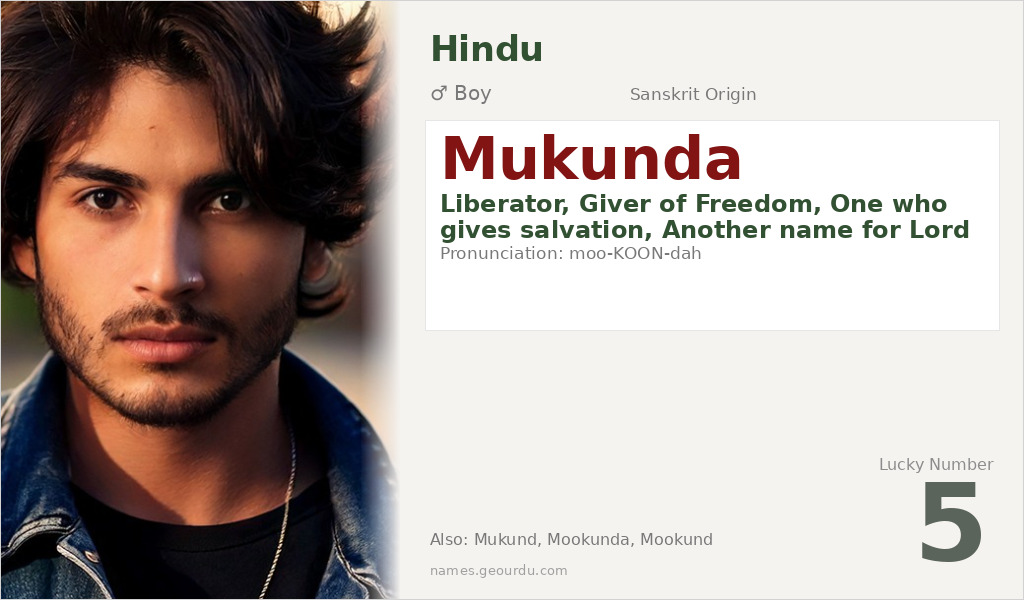
| 💎 Meaning | Liberator, Giver of Freedom, One who gives salvation, Another name for Lord Krishna/Vishnu |
| 👤 Gender | Boy |
| 🕌 Religion | Hindu |
| 🌍 Origin | Sanskrit |
| 🗣 Pronunciation | moo-KOON-dah |
| ✍️ Urdu | موکندا |
| ✍️ Arabic | موكوندا |
| 🔢 Numerology | 5 |
| ✨ Spellings | Mukund, Mookunda, Mookund |
Origin & Cultural Significance
Mukunda has its origins in ancient India’s Sanskrit literary and religious traditions. As a theophoric name, it directly references Lord Krishna/Vishnu’s salvific role in Hinduism. The name gained prominence through Vaishnavism traditions and appears in medieval devotional poetry across India. While primarily used in Hindu communities, the name has spread to Buddhist and Jain contexts in South Asia due to shared Sanskrit heritage. In modern times, it remains popular in India, Nepal, and the Hindu diaspora, maintaining its religious significance while also being appreciated for its melodic sound and positive meaning.
Personality Traits
Those named Mukunda are often perceived as having a liberating presence in others’ lives. They typically exhibit qualities of compassion, wisdom, and a natural inclination toward helping others achieve freedom—whether emotional, intellectual, or spiritual. With a numerology number of 5, they may be adaptable, curious, and value personal freedom highly, while their namesake’s divine associations suggest potential leadership qualities and philosophical depth.
Similar Names
If you like Mukunda, consider: Madhava, Govinda, Keshava, Narayana, Vasudeva
Famous People Named Mukunda
- Mukunda Das — 19th century Bengali poet and independence activist
- Mukunda Goswami — ISKCON spiritual leader and author
Frequently Asked Questions About Mukunda
What does Mukunda mean?
Mukunda means 'Liberator' or 'Giver of Freedom' in Sanskrit. It specifically refers to Lord Krishna/Vishnu as the divine bestower of moksha (spiritual liberation).
Is Mukunda a boy or girl name?
Mukunda is exclusively a boy's name in Hindu naming traditions, as it refers to male deities (Krishna/Vishnu) and follows masculine Sanskrit grammatical forms.
What is the origin of Mukunda?
Mukunda originates from classical Sanskrit language and Hindu religious texts. It is a theophoric name directly referencing Lord Krishna's role as liberator in Vaishnavism traditions.





