
Table of Contents
Myra is an elegant feminine name with a rich history spanning multiple cultures. While often associated with fragrant myrrh from ancient traditions, this name carries a melodic quality that has appealed to parents for centuries. From literary origins to modern usage, Myra maintains its timeless charm across English-speaking countries and beyond. Discover the fascinating journey of this name through different eras and regions.
Meaning of Myra
The meaning of Myra is most reliably traced to the Greek word ‘μύρρα’ (myrrha), referring to the aromatic resin obtained from Commiphora trees. This substance was highly valued in ancient times for perfumes, medicines, and religious rituals. The Latin adaptation ‘Myrrha’ appears in classical mythology as the mother of Adonis. An alternative theory suggests 17th-century poet Fulke Greville coined ‘Myra’ as a poetic name, possibly drawing from Latin ‘mira’ (wonderful) or Greek ‘μυρίος’ (countless). While some connect it to Arabic ‘ميرة’ (provisions), this represents a different etymological path. The name’s association with ‘beloved’ emerges from its phonetic similarity to names like ‘Mira’ and cultural interpretations over time.
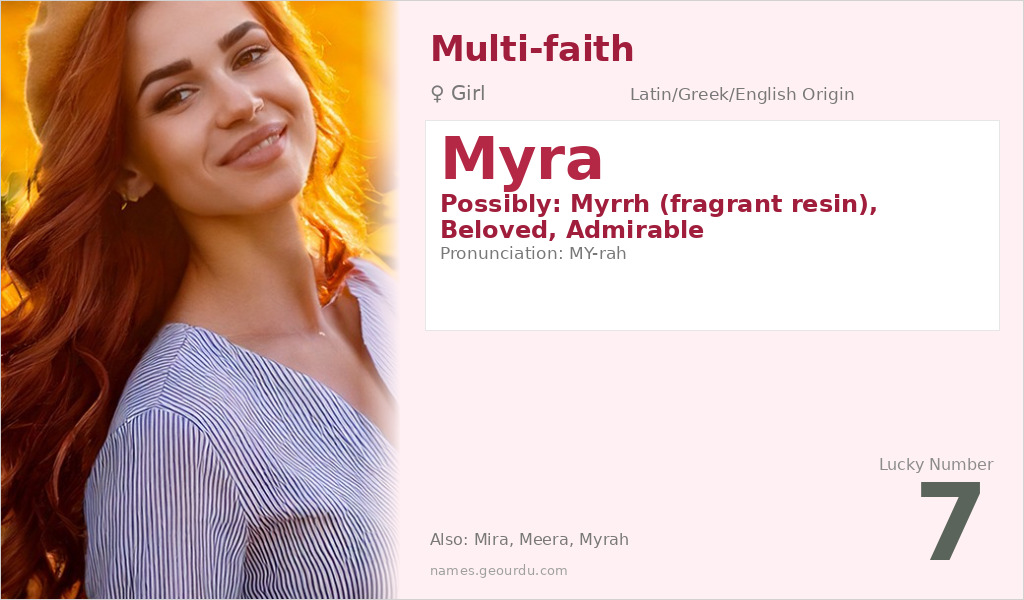
| 📛 Name | Myra |
| 💎 Meaning | Possibly: Myrrh (fragrant resin), Beloved, Admirable |
| 👤 Gender | Girl |
| 🕌 Religion | Multi-faith |
| 🌍 Origin | Latin/Greek/English |
| 🗣 Pronunciation | MY-rah |
| ✍️ Urdu | مائرہ |
| ✍️ Arabic | ميرا |
| 🔢 Numerology | 7 |
| ✨ Spellings | Mira, Meera, Myrah, Maira |
Origin & Cultural Significance
Myra’s origins are primarily European, with the strongest connections to Greek and Latin linguistic traditions. The ancient city of Myra in Lycia (modern-day Turkey) shares the name but represents a geographical rather than personal name origin. The name gained literary prominence in the 17th century through English poetry and saw increased usage during the Victorian era. While occasionally used in various cultures today, Myra has no documented roots in Hindu, Sanskrit, or South Asian naming traditions. Its adoption across English-speaking countries, particularly in the United States and United Kingdom during the 19th and 20th centuries, represents its main cultural trajectory rather than religious-specific usage.
Personality Traits
Those named Myra often exhibit a blend of creativity and practicality that serves them well in both artistic and analytical pursuits. Their connection to the name’s fragrant origins sometimes manifests in an appreciation for beauty, nature, and sensory experiences. With a tendency toward introspection and loyalty, Myras typically form deep, meaningful relationships while maintaining their independent spirit.
Similar Names
If you like Myra, consider: Mira, Maya, Mara, Lyra, Clara
Famous People Named Myra
- Myra Hess (1890-1965) — British pianist known for wartime concerts
- Myra Bradwell (1831-1894) — First American woman to become a licensed attorney
Frequently Asked Questions About Myra
What does Myra mean?
Myra most reliably means 'myrrh' (the fragrant resin) from Greek origins, with alternative connections to Latin 'mira' meaning 'wonderful' or 'admirable'.
Is Myra a boy or girl name?
Myra is exclusively a feminine name across all documented usage, with no historical or contemporary examples of male usage.
What is the origin of Myra?
Myra has primarily Greek and Latin origins, possibly coined in 17th-century English poetry, with no authentic roots in Hindu or Sanskrit naming traditions despite some modern claims.





