
Table of Contents
Naagendra is a powerful Sanskrit name that carries deep mythological significance in Hindu tradition. Meaning ‘king of serpents’ or ‘lord of snakes’, this name connects to ancient stories of divine nagas who protect the cosmos. With roots in India’s rich cultural heritage, Naagendra represents wisdom, protection, and spiritual authority. Parents choosing this name often seek to honor traditional values while bestowing a name with profound symbolic meaning.
Meaning of Naagendra
Naagendra derives from the Sanskrit language, combining ‘naaga’ (serpent) and ‘indra’ (king or lord). This creates the literal meaning ‘king of serpents’, referring specifically to the divine serpent beings in Hindu mythology. The ‘naaga’ element connects to serpent deities who are guardians of treasures, water sources, and the underworld in Hindu and Buddhist traditions. ‘Indra’ originally referred to the king of the Vedic gods, making the combination particularly powerful. In classical Sanskrit literature, this name appears in texts like the Mahabharata and Puranas, often describing Vasuki or Shesha, the cosmic serpents who support the universe. The name’s etymology reflects the importance of serpent symbolism in South Asian spiritual traditions.
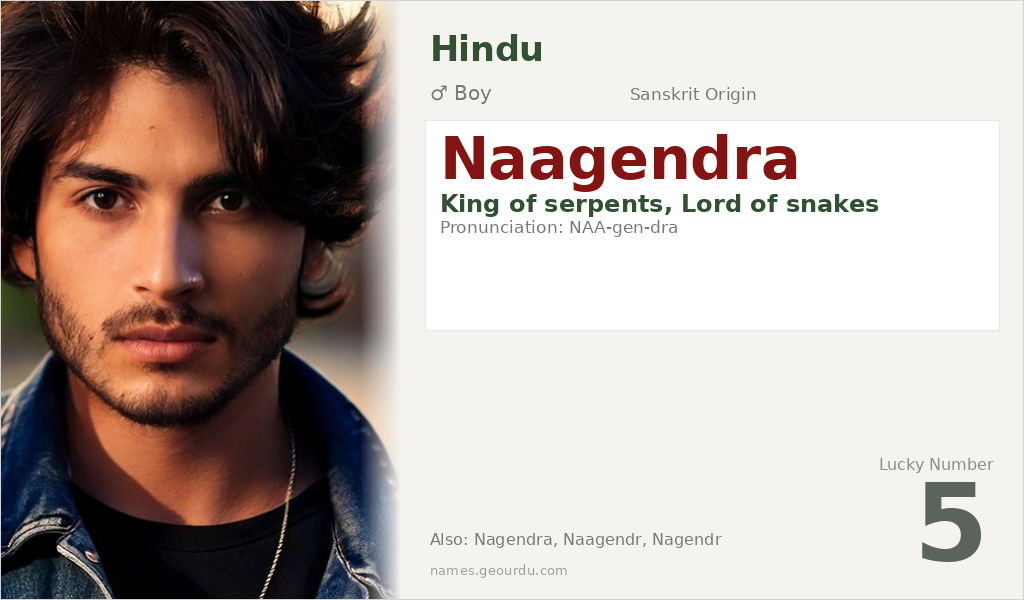
| 📛 Name | Naagendra |
| 💎 Meaning | King of serpents, Lord of snakes |
| 👤 Gender | Boy |
| 🕌 Religion | Hindu |
| 🌍 Origin | Sanskrit |
| 🗣 Pronunciation | NAA-gen-dra |
| ✍️ Urdu | ناگیندرا |
| ✍️ Arabic | ناغيندرا |
| 🔢 Numerology | 5 |
| ✨ Spellings | Nagendra, Naagendr, Nagendr |
Origin & Cultural Significance
Naagendra originates from ancient Sanskrit, the classical language of India that dates back over 3,500 years. The name emerges from Hindu mythology where nagas (serpent deities) play significant roles as protectors, treasure-keepers, and symbols of fertility. Historically, the name appears in Sanskrit epics and religious texts, particularly in reference to Vasuki, the king of serpents who served as the rope during the churning of the ocean of milk. Culturally, the name is predominantly used in Hindu communities across India, Nepal, and the diaspora, though it has also influenced Buddhist traditions in Southeast Asia. The reverence for serpent deities in ancient Indian religions makes this name particularly meaningful in spiritual contexts.
Personality Traits
Those named Naagendra are often perceived as natural leaders with protective instincts and spiritual depth. They may exhibit wisdom beyond their years and a strong connection to tradition and heritage. The serpent symbolism suggests transformation, healing, and hidden knowledge, qualities that might manifest as intuition and adaptability. While grounded in cultural roots, they often demonstrate curiosity about the wider world and ability to navigate different environments.
Similar Names
If you like Naagendra, consider: Vasuki, Shesha, Ananta, Nagraj, Indra
Famous People Named Naagendra
- Nagendra Singh — Indian jurist and former President of the International Court of Justice
- Nagendra Prasad Sarbadhikari — considered the Father of Indian football
Frequently Asked Questions About Naagendra
What does Naagendra mean?
Naagendra means 'king of serpents' or 'lord of snakes' in Sanskrit, combining 'naaga' (serpent) and 'indra' (king).
Is Naagendra a boy or girl name?
Naagendra is exclusively a boy's name in Hindu naming traditions, with no recorded feminine usage in historical or contemporary contexts.
What is the origin of Naagendra?
Naagendra originates from Sanskrit, the ancient classical language of India, and is deeply rooted in Hindu mythology and cultural traditions.





