
Table of Contents
Naagpati is a powerful Sanskrit name steeped in Hindu mythology, meaning ‘King of Serpents’ or ‘Lord of Snakes’. This ancient name specifically references Vasuki, the divine serpent king who plays a crucial role in the churning of the cosmic ocean. As a traditional Hindu boy’s name, Naagpati carries deep symbolic significance, representing protection, wisdom, and sovereignty. The name’s mythological roots connect it to some of Hinduism’s most enduring stories about the Nagas, the semi-divine serpent beings.
Meaning of Naagpati
Naagpati derives from classical Sanskrit, combining ‘Naag’ (नाग) meaning ‘serpent’ or ‘snake’ with ‘pati’ (पति) meaning ‘lord’, ‘master’, or ‘ruler’. In Hindu tradition, Naagpati specifically refers to Vasuki, the king of the Nagas who served as the rope during the Samudra Manthan (churning of the ocean) to obtain the nectar of immortality. The Nagas are semi-divine beings in Hindu and Buddhist mythology, often depicted as having human upper bodies and serpent lower bodies. The term appears in ancient texts like the Mahabharata, where various serpent kings are addressed as Naagpati. This compound name perfectly illustrates how Sanskrit names often combine descriptive elements to create meaningful, theologically significant appellations.
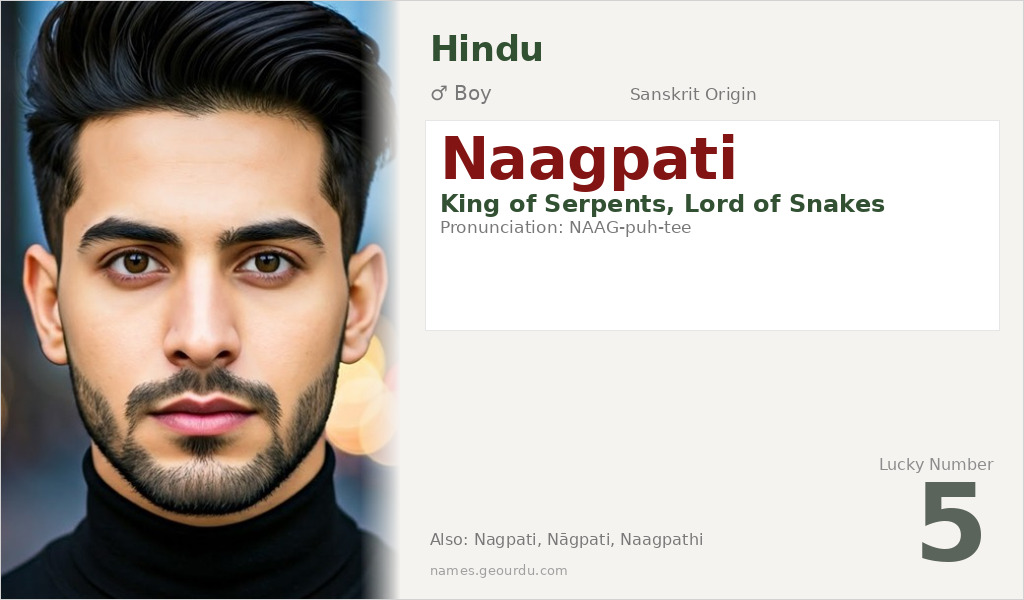
| 📛 Name | Naagpati |
| 💎 Meaning | King of Serpents, Lord of Snakes |
| 👤 Gender | Boy |
| 🕌 Religion | Hindu |
| 🌍 Origin | Sanskrit |
| 🗣 Pronunciation | NAAG-puh-tee |
| ✍️ Urdu | ناگ پتی |
| ✍️ Arabic | ناجباتي |
| 🔢 Numerology | 5 |
| ✨ Spellings | Nagpati, Nāgpati, Naagpathi |
Origin & Cultural Significance
Naagpati originates from ancient Sanskrit literature and Hindu religious texts, particularly the Puranas and the Mahabharata. The name emerges from India’s rich serpent worship traditions, which predate classical Hinduism and connect to indigenous Naga cults. In Hindu cosmology, Nagas occupy an important position as guardians of treasures, waters, and the underworld. The name gained cultural significance through the story of Vasuki, the primary Naagpati, who allowed the devas and asuras to use his body as a churning rope. This mythological context places Naagpati within a specific theological framework where serpent deities mediate between different realms of existence. The name continues to be used in Hindu communities, particularly among those with traditions of Naga worship or mythological naming practices.
Personality Traits
Those named Naagpati are often associated with protective, transformative qualities inspired by serpent symbolism in Hindu culture. The name suggests someone with hidden depths, wisdom, and the ability to navigate between different realms or perspectives. Like the Nagas who guard treasures and knowledge, individuals with this name might be perceived as keepers of secrets or tradition. The ‘pati’ element adds a dimension of natural authority and leadership potential to the personality profile.
Similar Names
If you like Naagpati, consider: Vasuki, Sheshnaag, Ananta, Takshak, Karkotak
Famous People Named Naagpati
- No widely known contemporary figures with this name – it appears primarily in mythological contexts as a title for serpent kings in Hindu scriptures
Frequently Asked Questions About Naagpati
What does Naagpati mean?
Naagpati means 'King of Serpents' or 'Lord of Snakes' in Sanskrit. It specifically refers to Vasuki, the serpent king in Hindu mythology who served as the rope during the churning of the cosmic ocean.
Is Naagpati a boy or girl name?
Naagpati is exclusively a boy's name in Hindu naming tradition. The 'pati' suffix in Sanskrit typically denotes masculine rulership or mastery, and all mythological references to Naagpati are masculine.
What is the origin of Naagpati?
Naagpati originates from Sanskrit and Hindu mythology. It comes from ancient Indian texts like the Mahabharata and Puranas, where it refers to Vasuki, the king of the Nagas (serpent deities) in Hindu cosmology.





