
Table of Contents
Naasi is a meaningful Arabic name that carries deep cultural and spiritual significance. Often chosen for boys in Muslim communities, it embodies the virtue of forgiveness and compassion. This name has roots in classical Arabic language and Islamic traditions, making it a timeless choice for parents seeking a name with positive connotations. Explore the rich history and modern relevance of Naasi in this detailed guide.
Meaning of Naasi
Naasi derives from the Arabic root ن-س-ي (N-S-Y), which is associated with forgetting or overlooking. In its literal sense, ‘Naasi’ means ‘one who forgets,’ but in naming contexts, it symbolizes ‘forgiver’ or ‘pardoner,’ reflecting the Islamic value of mercy and forgiveness. This meaning is well-documented in Arabic linguistic sources and Islamic texts, where such names are encouraged for their moral implications. The name emphasizes the importance of letting go of grievances and fostering peace, making it a powerful choice for instilling positive traits. Unlike some misinterpretations, it is not related to ‘Nasi’ meaning ‘delayer,’ but stands independently with its own etymological significance.
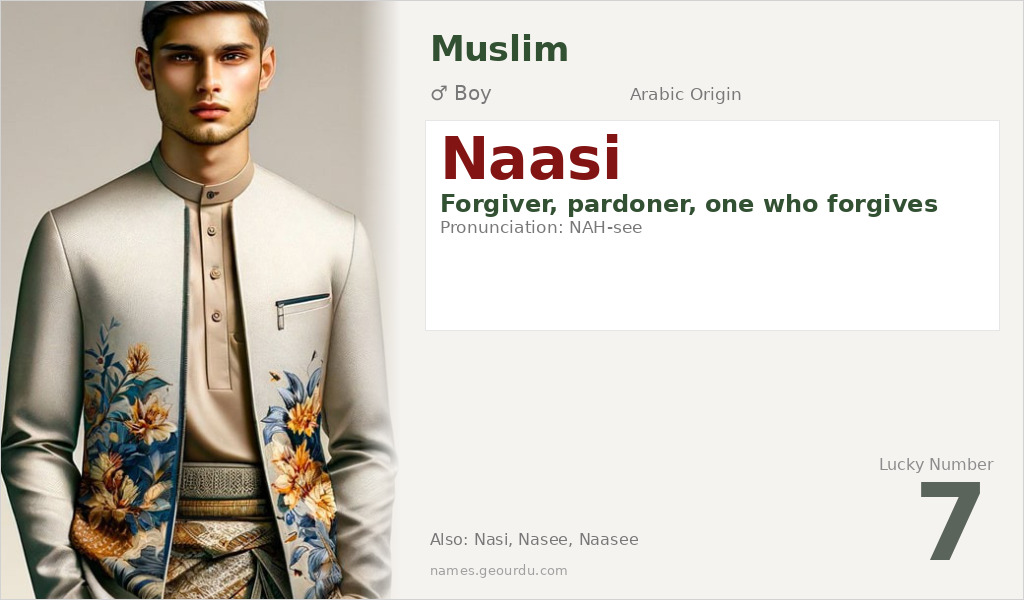
| 📛 Name | Naasi |
| 💎 Meaning | Forgiver, pardoner, one who forgives |
| 👤 Gender | Boy |
| 🕌 Religion | Muslim |
| 🌍 Origin | Arabic |
| 🗣 Pronunciation | NAH-see |
| ✍️ Urdu | ناسی |
| ✍️ Arabic | ناسي |
| 🔢 Numerology | 7 |
| ✨ Spellings | Nasi, Nasee, Naasee |
Origin & Cultural Significance
Naasi originates from the Arabic language, with its usage deeply embedded in Islamic culture and history. It has been used in various Arab and Muslim-majority regions, including the Middle East, North Africa, and South Asia, where Arabic influence is prominent. The name is often found in classical literature and religious contexts, highlighting its enduring appeal. While primarily associated with Muslim communities, its linguistic roots make it accessible across cultures that value Arabic-derived names. Historical records show its presence in early Islamic periods, underscoring its traditional and spiritual relevance.
Personality Traits
People named Naasi are often seen as empathetic and forgiving, with a strong sense of justice and harmony. They tend to approach conflicts with a calm and understanding attitude, making them effective mediators in personal and professional settings. Their compassionate nature fosters deep connections with others, and they are admired for their ability to overlook faults and promote reconciliation.
Similar Names
If you like Naasi, consider: Naseem, Nasir, Nabeel, Nadeem, Nawaf
Famous People Named Naasi
- Naasi Al-Din — historical figure in Islamic scholarship known for works on jurisprudence
- Naasi Ahmed — contemporary poet from the Middle East focusing on themes of forgiveness and peace
Frequently Asked Questions About Naasi
What does Naasi mean?
Naasi means 'forgiver' or 'pardoner' in Arabic, derived from the root ن-س-ي (N-S-Y) related to forgetting or overlooking faults.
Is Naasi a boy or girl name?
Naasi is traditionally a boy name in Arabic and Muslim cultures, though names can vary by region; it is predominantly used for males.
What is the origin of Naasi?
Naasi originates from the Arabic language, with deep roots in Islamic tradition and culture, commonly used in Muslim-majority countries.





