
Table of Contents
Nabil is a timeless Arabic name that has graced generations with its dignified meaning and elegant sound. Meaning ‘noble’ or ‘honorable,’ this name carries centuries of cultural significance across the Arab world and beyond. From historical figures to contemporary artists, the name Nabil represents excellence of character and distinguished lineage. Its simplicity and profound meaning continue to make it a popular choice for parents seeking a name with both tradition and substance.
Meaning of Nabil
The name Nabil originates from the Arabic root ‘n-b-l’ (ن-ب-ل), which forms words related to nobility, excellence, and high status. In classical Arabic, ‘nabil’ (نبيل) specifically describes someone of noble character, honorable birth, or distinguished qualities. This root appears in various Arabic words including ‘nubala’ (نبلاء) meaning ‘nobles’ or ‘elite,’ and ‘nubla’ (نُبْلَة) meaning ‘nobility’ or ‘excellence.’ The name has been used since pre-Islamic times, appearing in early Arabic poetry, and was later embraced within Islamic naming traditions while maintaining its original meaning. It’s distinct from but sometimes confused with the Hebrew name ‘Niv,’ which shares some semantic overlap but has different linguistic roots.
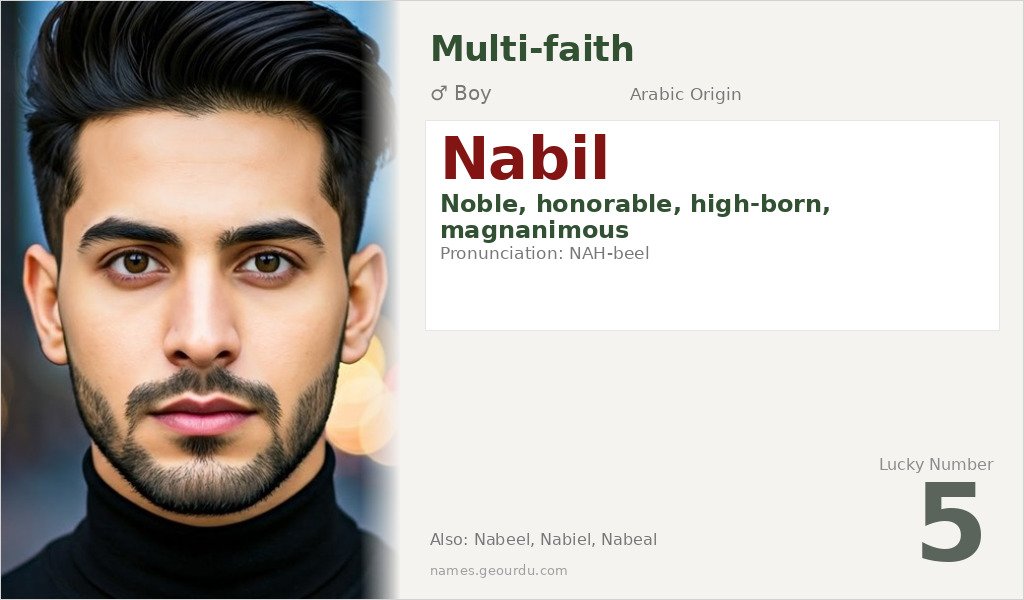
| 📛 Name | Nabil |
| 💎 Meaning | Noble, honorable, high-born, magnanimous |
| 👤 Gender | Boy |
| 🕌 Religion | Multi-faith |
| 🌍 Origin | Arabic |
| 🗣 Pronunciation | NAH-beel |
| ✍️ Urdu | نبیل |
| ✍️ Arabic | نبيل |
| 🔢 Numerology | 5 |
| ✨ Spellings | Nabeel, Nabiel, Nabeal, Nabil |
Origin & Cultural Significance
Nabil has its origins in classical Arabic language and culture, with documented usage dating back to pre-Islamic Arabia. The name was borne by several notable figures in early Islamic history, including companions of the Prophet Muhammad. While particularly popular in Arabic-speaking countries, it has spread throughout the Muslim world and beyond, including North Africa, the Middle East, and South Asia. Interestingly, the name is used by people of various faiths in Arabic-speaking regions, including Christians and Muslims, reflecting its linguistic rather than exclusively religious character. In modern times, it remains a common name in countries like Egypt, Morocco, Lebanon, and among diaspora communities worldwide.
Personality Traits
Those named Nabil are often associated with leadership qualities and strong ethical principles. The meaning ‘noble’ tends to manifest as natural dignity, fairness in dealings with others, and a protective instinct toward family and community. They typically value honesty and integrity, and may demonstrate diplomatic skills in resolving conflicts. While individual personalities vary, the name’s meaning often creates expectations of honorable behavior and moral strength.
Similar Names
If you like Nabil, consider: Karim, Sharif, Aziz, Faris, Amir
Famous People Named Nabil
- Nabil El Zhar — Moroccan professional footballer who played for Liverpool and the Moroccan national team
- Nabil Ayouch — Award-winning Moroccan film director known for 'Ali Zaoua' and 'Much Loved'
Frequently Asked Questions About Nabil
What does Nabil mean?
Nabil means 'noble,' 'honorable,' 'high-born,' or 'magnanimous' in Arabic. It comes from the root word 'n-b-l' which relates to nobility and excellence.
Is Nabil a boy or girl name?
Nabil is traditionally a masculine name in Arabic and is used almost exclusively for boys across all cultures where it appears. There are feminine variants like Nabila, but Nabil itself is male.
What is the origin of Nabil?
Nabil originates from classical Arabic language and culture, with roots in pre-Islamic Arabia. It comes from the Arabic word 'nabil' meaning noble or honorable, derived from the triliteral root n-b-l.





