
Table of Contents
Nagasami is a distinctive Hindu boy name that carries the rich symbolism of serpent mythology. Rooted in ancient Sanskrit traditions, this name evokes images of divine protection and spiritual mastery. While not among the most common names, it holds a unique place in regional naming practices, particularly in South India. Discover the fascinating layers of meaning and cultural context behind Nagasami.
Meaning of Nagasami
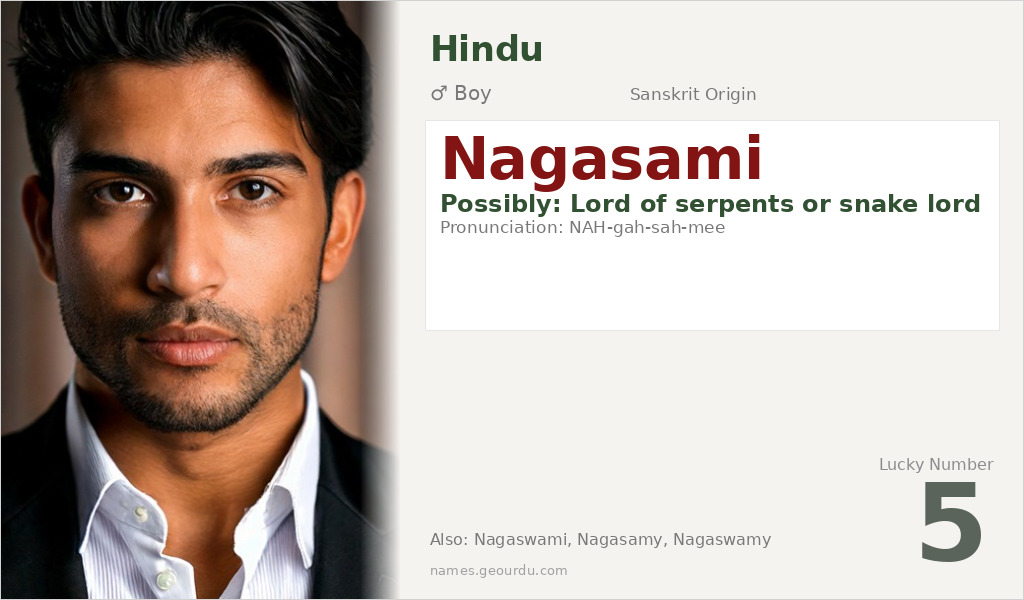
Nagasami is a compound name derived from two Sanskrit elements: ‘Naga’ and ‘Sami.’ ‘Naga’ (नाग) refers to serpents or snakes, which in Hindu and Buddhist mythology are often depicted as divine beings, guardians of treasures, or symbols of wisdom and transformation. ‘Sami’ appears to be a regional variant or contraction of ‘Swami’ (स्वामी), meaning ‘lord,’ ‘master,’ or ‘owner.’ Thus, Nagasami can be interpreted as ‘lord of serpents’ or ‘snake lord,’ suggesting a connection to mythological figures like Sheshnag or serpent deities. This meaning aligns with other Sanskrit names containing ‘Naga,’ such as Nagendra (lord of snakes) or Nagabhushan (adorned with snakes). The name reflects a cultural reverence for serpents as powerful and sacred entities.
| 📛 Name | Nagasami |
| 💎 Meaning | Possibly: Lord of serpents or snake lord |
| 👤 Gender | Boy |
| 🕌 Religion | Hindu |
| 🌍 Origin | Sanskrit |
| 🗣 Pronunciation | NAH-gah-sah-mee |
| ✍️ Urdu | ناگاسامی |
| ✍️ Arabic | ناغاسامي |
| 🔢 Numerology | 5 |
| ✨ Spellings | Nagaswami, Nagasamy, Nagaswamy |
Origin & Cultural Significance
Nagasami originates from Sanskrit, an ancient Indo-Aryan language that has profoundly influenced Hindu culture and religion. It is primarily used within Hindu communities, especially in South India where Dravidian languages have incorporated Sanskrit elements into naming conventions. The name’s components—’Naga’ and ‘Sami’—are rooted in Hindu mythology, where nagas (serpent beings) play significant roles in texts like the Mahabharata and Puranas. While not extensively documented in classical Sanskrit literature, Nagasami appears in regional naming traditions, possibly as a variant of more common names like Nagaswami. Its usage reflects the syncretic nature of Indian cultures, blending linguistic and mythological elements to create meaningful personal names.
Personality Traits
Those named Nagasami are often associated with traits of guardianship, wisdom, and inner strength, inspired by the symbolic serpent. They may be seen as intuitive individuals with a deep connection to spiritual or mystical realms. In social settings, they might exhibit leadership qualities and a protective nature, much like the mythical nagas who are revered as protectors. Their personality can balance serenity with decisive action, reflecting the dual nature of serpents as both feared and revered creatures.
Similar Names
If you like Nagasami, consider: Nagendra, Nagabhushan, Nagapriya, Nagalakshmi, Nagulan
Famous People Named Nagasami
- No widely recognized famous individuals with this exact name found in verifiable records
Frequently Asked Questions About Nagasami
What does Nagasami mean?
Nagasami likely means 'lord of serpents' or 'snake lord,' derived from Sanskrit 'Naga' (serpent) and 'Sami' (a variant of Swami, meaning lord).
Is Nagasami a boy or girl name?
Nagasami is traditionally a boy name in Hindu naming conventions, reflecting masculine endings and mythological associations.
What is the origin of Nagasami?
Nagasami originates from Sanskrit, an ancient Indian language, and is used primarily in Hindu cultures, especially in South India.





