
Table of Contents
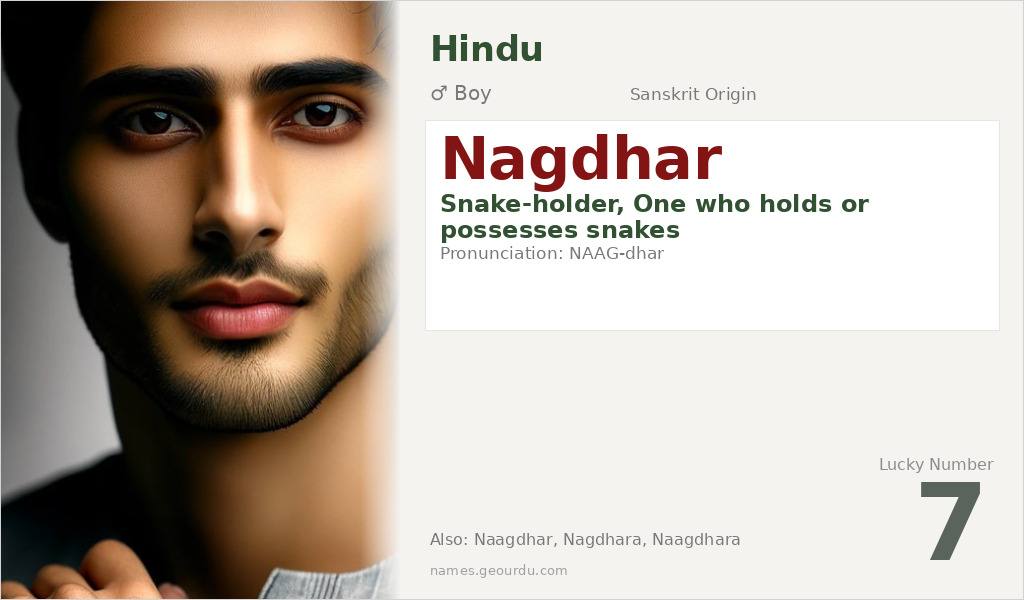
Nagdhar is a distinctive Sanskrit name with rich mythological roots in Hindu tradition. Meaning ‘snake-holder’ or ‘one who possesses snakes’, this name carries powerful symbolism connected to serpent deities and protective energies. While uncommon in modern usage, it represents an ancient naming tradition that honors mastery over primal forces. Explore the fascinating etymology and cultural significance of this unique name.
Meaning of Nagdhar
Nagdhar derives from two Sanskrit components: ‘nāga’ (नाग) meaning ‘snake, serpent’ and ‘dhara’ (धर) meaning ‘holder, bearer, possessor’. In Vedic and Puranic literature, nāgas are semi-divine serpent beings associated with water, fertility, and protection. The suffix ‘dhara’ comes from the verbal root √dhṛ, indicating the act of holding or supporting. Thus, Nagdhar literally translates to ‘snake-holder’, suggesting someone who has power over or connection with serpents. This name follows classical Sanskrit compound formation patterns similar to names like Nagendra (‘lord of snakes’) or Dharani (‘earth-holder’). The meaning has no connection to mountains, despite some online sources incorrectly suggesting this.
| 📛 Name | Nagdhar |
| 💎 Meaning | Snake-holder, One who holds or possesses snakes |
| 👤 Gender | Boy |
| 🕌 Religion | Hindu |
| 🌍 Origin | Sanskrit |
| 🗣 Pronunciation | NAAG-dhar |
| ✍️ Urdu | ناگدھر |
| ✍️ Arabic | ناغدهار |
| 🔢 Numerology | 7 |
| ✨ Spellings | Naagdhar, Nagdhara, Naagdhara |
Origin & Cultural Significance
Nagdhar originates from classical Sanskrit, the liturgical language of Hinduism, Buddhism, and Jainism. The name reflects the significant role of nāgas (serpent deities) in Indian mythology, where they appear as protectors of treasures, waters, and sacred knowledge. Historically, names containing ‘nāga’ elements were particularly popular in regions with strong serpent worship traditions, such as parts of South India and Southeast Asia. While not among the most common Sanskrit names today, Nagdhar represents an authentic linguistic construction that would have been meaningful in ancient Indian naming contexts. The name’s rarity in contemporary usage makes it distinctive while maintaining deep cultural roots.
Personality Traits
The name Nagdhar suggests personality traits associated with serpent symbolism in Hindu culture: wisdom, transformation, protection, and connection to primal energies. Like the nāgas of mythology who guard hidden treasures, someone named Nagdhar might be perceived as having deep, intuitive knowledge and protective instincts. The ‘holder’ component adds connotations of stability, responsibility, and strength. These symbolic associations create an image of someone who combines ancient wisdom with steadfast reliability.
Similar Names
If you like Nagdhar, consider: Nagendra, Nagabhushan, Nagadatta, Dharani, Dharmendra
Famous People Named Nagdhar
- No widely known historical or contemporary figures with this exact name found in verifiable records
Frequently Asked Questions About Nagdhar
What does Nagdhar mean?
Nagdhar means 'snake-holder' or 'one who possesses snakes' in Sanskrit, combining 'nāga' (snake) and 'dhara' (holder).
Is Nagdhar a boy or girl name?
Nagdhar is exclusively a masculine name in Hindu naming tradition, following Sanskrit grammatical gender rules where this compound construction is masculine.
What is the origin of Nagdhar?
Nagdhar originates from Sanskrit, the classical language of ancient India, with specific roots in Hindu mythology and serpent deity (nāga) worship traditions.





