
Table of Contents
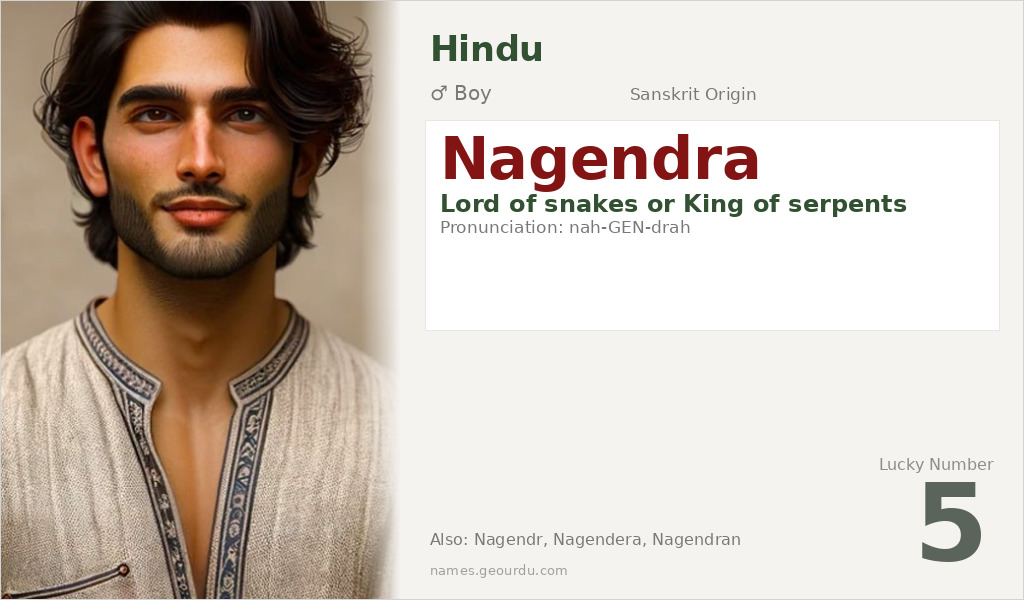
Nagendra is a powerful Sanskrit name that carries deep mythological significance in Hindu tradition. Meaning ‘Lord of Snakes’ or ‘King of Serpents’, this name connects its bearer to the divine world of nagas—serpent deities revered in ancient Indian texts. With roots in one of the world’s oldest languages, Nagendra represents protection, wisdom, and royal authority. Discover the rich cultural heritage and symbolic meaning behind this distinctive name.
Meaning of Nagendra
Nagendra derives from the Sanskrit language, combining ‘naga’ (नाग) meaning ‘snake’ or ‘serpent’ with ‘indra’ (इन्द्र) meaning ‘lord’, ‘king’, or ‘chief’. This creates the compound meaning ‘lord of snakes’ or ‘king of serpents’. In Hindu mythology, nagas are semi-divine serpent beings associated with water, fertility, and protection, often serving as guardians of treasures. The ‘indra’ component references the king of the gods in Vedic tradition, adding a regal dimension. The name appears in various Hindu texts where serpent deities play significant roles, particularly in stories involving Vishnu and Shiva. This etymology reflects the reverence for snakes in Indian culture, where they symbolize both danger and divine protection.
| 📛 Name | Nagendra |
| 💎 Meaning | Lord of snakes or King of serpents |
| 👤 Gender | Boy |
| 🕌 Religion | Hindu |
| 🌍 Origin | Sanskrit |
| 🗣 Pronunciation | nah-GEN-drah |
| ✍️ Urdu | ناگیندرا |
| ✍️ Arabic | ناجيندرا |
| 🔢 Numerology | 5 |
| ✨ Spellings | Nagendr, Nagendera, Nagendran |
Origin & Cultural Significance
Nagendra originates from ancient Sanskrit, the classical language of India that dates back over 3,500 years. The name emerges from Hindu mythology where serpent deities (nagas) occupy important positions in the cosmic order. In traditions across South Asia, nagas are worshipped as nature spirits associated with water bodies, rainfall, and fertility. The name gained prominence through religious texts like the Puranas and Mahabharata, where serpent kings feature in significant narratives. While primarily used in Hindu communities, the name has spread to Buddhist and Jain traditions in South and Southeast Asia due to shared mythological elements. Today, it remains popular in India, Nepal, and among Hindu diaspora communities worldwide.
Personality Traits
Those named Nagendra often embody characteristics associated with serpent symbolism in Eastern traditions. They may display protective instincts toward family and community, much like mythological nagas guarding treasures. The ‘indra’ element suggests leadership qualities and natural authority. Many with this name develop keen intuition and adaptability—traits symbolized by the snake’s ability to shed its skin and transform. Their connection to ancient wisdom traditions often gives them a philosophical outlook on life.
Similar Names
If you like Nagendra, consider: Nagraj, Nagabhushan, Nagaditya, Vasuki, Ananta
Famous People Named Nagendra
- Nagendra Singh — Indian jurist and former President of the International Court of Justice
- Nagendra Prasad Sarbadhikari — Indian footballer considered the 'Father of Indian football'
Frequently Asked Questions About Nagendra
What does Nagendra mean?
Nagendra means 'Lord of Snakes' or 'King of Serpents' in Sanskrit, combining 'naga' (snake) and 'indra' (lord/king).
Is Nagendra a boy or girl name?
Nagendra is exclusively a masculine name in Hindu naming tradition, though similar feminine forms like Nagendraa exist.
What is the origin of Nagendra?
Nagendra originates from Sanskrit, the ancient classical language of India, with deep roots in Hindu mythology and religious texts.





