Table of Contents
Nagini is a captivating name steeped in ancient mythology, evoking images of serpent deities and mystical guardians. Derived from Sanskrit, it means ‘female serpent’ or ‘snake goddess,’ reflecting a rich tapestry of Hindu and Buddhist lore. While not traditionally common as a personal name, it has gained modern interest through literary and pop culture references. This name carries an aura of mystery, protection, and deep connection to natural forces.
Meaning of Nagini
Nagini originates from the Sanskrit word ‘nāgī’ (नागी), the feminine form of ‘nāga’ (नाग), which means ‘serpent’ or ‘snake.’ In Sanskrit etymology, ‘nāga’ is rooted in ancient Indo-European languages, symbolizing powerful, often divine, serpentine beings. Naginis are specifically female nagas, depicted in myths as beautiful, shape-shifting entities associated with water, fertility, and hidden treasures. The name is deeply embedded in religious texts like the Mahabharata and Puranas, where naginis serve as protectors or consorts to gods. Unlike generic terms for snakes, ‘nagini’ conveys a mythological and reverential context, emphasizing divine or semi-divine status rather than ordinary reptiles.
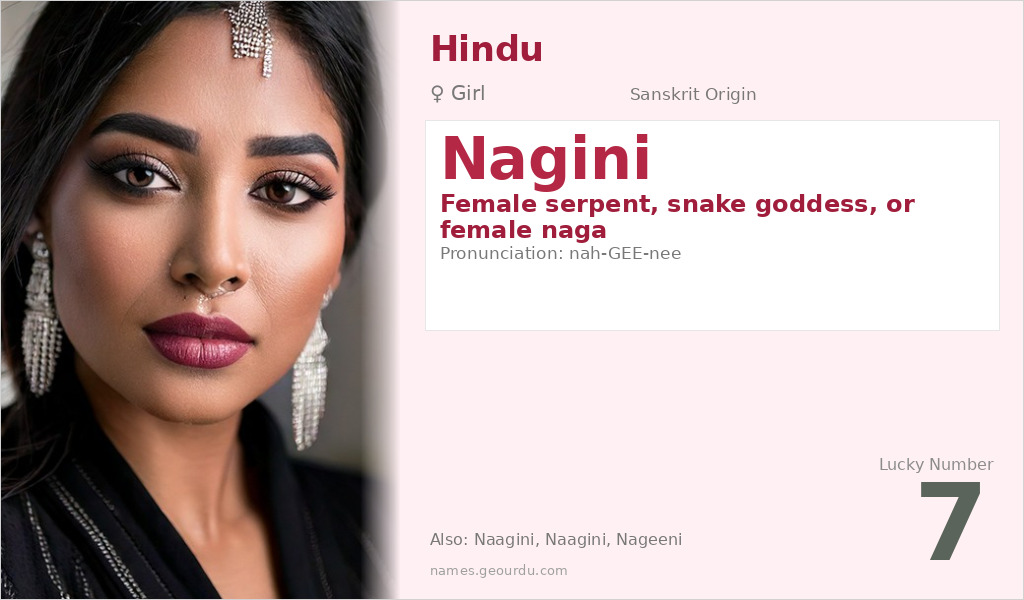
| 📛 Name | Nagini |
| 💎 Meaning | Female serpent, snake goddess, or female naga |
| 👤 Gender | Girl |
| 🕌 Religion | Hindu |
| 🌍 Origin | Sanskrit |
| 🗣 Pronunciation | nah-GEE-nee |
| ✍️ Urdu | ناگنی |
| ✍️ Arabic | ناجيني |
| 🔢 Numerology | 7 |
| ✨ Spellings | Naagini, Naagini, Nageeni |
Origin & Cultural Significance
The name Nagini has its origins in Sanskrit, the classical language of ancient India, and is prominent in Hindu and Buddhist mythology. Historically, nagas and naginis were worshipped as nature deities across South and Southeast Asia, with cultural significance in India, Nepal, Cambodia, and Thailand. In Hinduism, they are often linked to gods like Shiva and Vishnu, while in Buddhism, they appear as protectors of the Dharma. Although rarely used as a personal name in traditional settings, it has been adopted in modern times due to its mythological allure. The name’s resurgence in popular culture, notably through J.K. Rowling’s Harry Potter series, has broadened its recognition beyond its religious roots.
Personality Traits
Those named Nagini are often associated with traits of intuition, mystery, and protective strength, mirroring the serpent’s symbolic roles in mythology. They may possess a deep, transformative nature, able to navigate hidden realms of emotion and wisdom. With a connection to water and earth elements, they can exhibit fluid adaptability and resilience, embodying the naga’s guardianship over life’s sacred treasures.
Similar Names
If you like Nagini, consider: Naga, Vasuki, Shesha, Manasa, Kaliya
Famous People Named Nagini
- Nagini (mythological) — A serpent goddess or female naga in Hindu and Buddhist texts, often associated with protection and water deities
- Nagini (Harry Potter) — A fictional character in J.K. Rowling's series, a Maledictus cursed to transform into a snake
Frequently Asked Questions About Nagini
What does Nagini mean?
Nagini means 'female serpent' or 'snake goddess' in Sanskrit, specifically referring to mythological serpent deities in Hindu and Buddhist traditions.
Is Nagini a boy or girl name?
Nagini is exclusively a girl's name, as it is the feminine form of the Sanskrit 'nāga' (serpent), with 'nāgī' denoting a female naga.
What is the origin of Nagini?
Nagini originates from Sanskrit, an ancient Indian language, and is deeply rooted in Hindu and Buddhist mythology, where naginis are revered as serpent goddesses or protective beings.