
Table of Contents
Naishadh is a distinguished Sanskrit name with deep roots in Indian mythology and literature. Primarily used as a boy’s name in Hindu communities, it carries the noble meaning ‘King of Nishadha’, directly referencing the legendary King Nala from the Mahabharata. This name embodies regal qualities, historical significance, and cultural heritage that has endured for centuries. Parents choosing this name often seek to bestow qualities of leadership, virtue, and resilience upon their child.
Meaning of Naishadh
Naishadh derives from the Sanskrit word ‘Naiṣādha’ (नैषध), which literally means ‘belonging to or pertaining to Nishadha’. Nishadha was an ancient kingdom in Indian mythology, and Naishadh specifically denotes its ruler. The name is most famously associated with King Nala, the virtuous monarch of Nishadha who appears in the Mahabharata and is the protagonist of the classic love story of Nala and Damayanti. Etymologically, it combines references to both the geographical kingdom and royal status. In Sanskrit literature, particularly in Sriharsha’s ‘Naishadha Charita’ (12th century CE), the term is used extensively to describe Nala and his qualities, cementing its cultural significance.
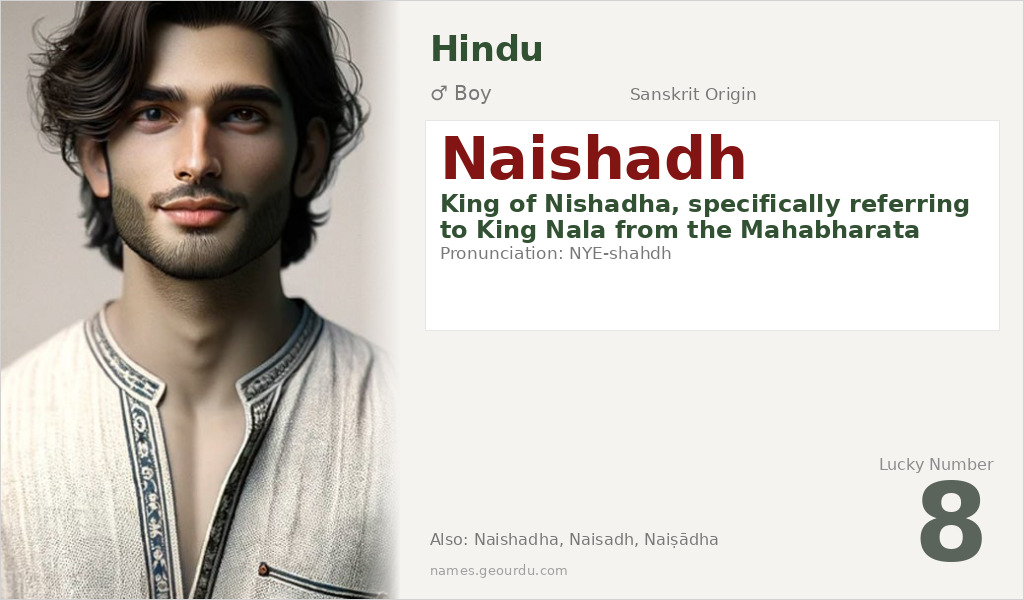
| 📛 Name | Naishadh |
| 💎 Meaning | King of Nishadha, specifically referring to King Nala from the Mahabharata |
| 👤 Gender | Boy |
| 🕌 Religion | Hindu |
| 🌍 Origin | Sanskrit |
| 🗣 Pronunciation | NYE-shahdh |
| ✍️ Urdu | نیشدھ |
| ✍️ Arabic | نايشاد |
| 🔢 Numerology | 8 |
| ✨ Spellings | Naishadha, Naisadh, Naiṣādha |
Origin & Cultural Significance
Naishadh originates from classical Sanskrit literature and Hindu mythology, specifically from the Indian epic Mahabharata. The name is intrinsically linked to King Nala, the ruler of the Nishadha kingdom, whose story is told in the Vanaparva section of the Mahabharata. Culturally, it represents more than just a personal name—it symbolizes kingship, dharma (righteousness), and the ideal ruler in Hindu tradition. The name has been preserved through centuries in religious texts, poetic works like the Naishadha Charita, and regional adaptations across India. While primarily used in Hindu communities, the name’s literary and historical significance gives it cross-cultural recognition in South Asia.
Personality Traits
Those named Naishadh are often associated with the noble characteristics of King Nala from mythology. They tend to exhibit leadership qualities, moral integrity, and strategic thinking. Like Nala, who was exceptionally skilled with horses and faced great adversity with patience, individuals with this name may show resilience in challenges and excellence in specialized skills. The name suggests someone who is principled, capable of deep devotion in relationships, and possesses innate regal bearing that commands respect.
Similar Names
If you like Naishadh, consider: Nala, Nishad, Nakula, Yudhishthira, Arjuna
Famous People Named Naishadh
- King Nala — Legendary king from the Mahabharata, ruler of Nishadha known for his righteousness and skill with horses
- Naishadh — Character in various Indian literary adaptations of the Nala-Damayanti story
Frequently Asked Questions About Naishadh
What does Naishadh mean?
Naishadh means 'King of Nishadha' in Sanskrit, specifically referring to King Nala from the Mahabharata who ruled the Nishadha kingdom.
Is Naishadh a boy or girl name?
Naishadh is exclusively a boy's name in Hindu naming tradition, derived from the masculine title of a legendary king.
What is the origin of Naishadh?
Naishadh originates from Sanskrit and Hindu mythology, specifically from the Mahabharata epic where it refers to King Nala, ruler of the Nishadha kingdom.





