Table of Contents
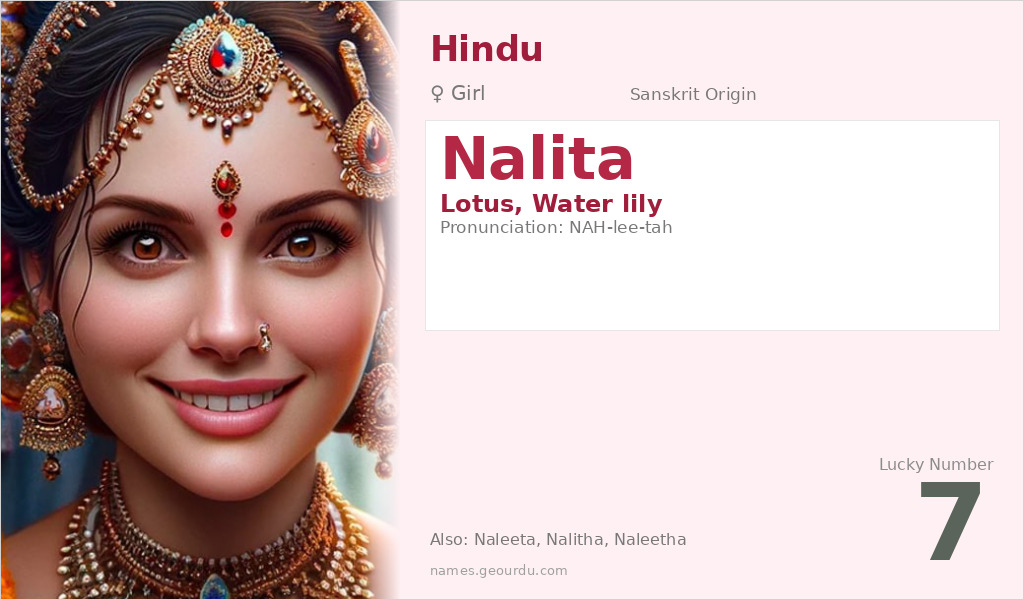
Nalita is a beautiful and meaningful name of Sanskrit origin, primarily used for girls in Hindu communities. It evokes the imagery of the lotus flower, a symbol of purity, spiritual growth, and elegance in Indian culture. This name carries deep cultural resonance, often chosen for its poetic and auspicious connotations. Discover the rich linguistic roots and symbolic layers behind Nalita in this comprehensive guide.
Meaning of Nalita
Nalita derives from the Sanskrit root ‘nala’ (नल), which refers to the stem of the lotus plant (Nelumbo nucifera), combined with the feminine suffix ‘-ita’. In Sanskrit, ‘nala’ is specifically associated with the lotus stem, a vital part of the plant that symbolizes strength and sustenance in water. The name thus translates to ‘lotus-like’ or ‘one resembling a lotus’, emphasizing qualities such as purity, beauty, and spiritual enlightenment. This etymology is firmly established in classical Sanskrit texts, including botanical and poetic works, where the lotus is revered in Hindu and Buddhist traditions. The suffix ‘-ita’ adds a feminine and descriptive quality, making it a common formation for names in Sanskrit-derived languages.
| 📛 Name | Nalita |
| 💎 Meaning | Lotus, Water lily |
| 👤 Gender | Girl |
| 🕌 Religion | Hindu |
| 🌍 Origin | Sanskrit |
| 🗣 Pronunciation | NAH-lee-tah |
| ✍️ Urdu | نلیتا |
| ✍️ Arabic | ناليتا |
| 🔢 Numerology | 7 |
| ✨ Spellings | Naleeta, Nalitha, Naleetha |
Origin & Cultural Significance
Originating from Sanskrit, an ancient Indo-Aryan language of India, Nalita has been used for centuries in Hindu naming traditions. It is particularly popular in India, Nepal, and among diaspora communities, reflecting the cultural importance of the lotus in South Asian symbolism. The lotus appears in Hindu mythology, often associated with deities like Lakshmi and Vishnu, representing creation, purity, and divine beauty. While primarily a Hindu name, its usage may extend to other cultures influenced by Sanskrit, such as Buddhist communities. The name’s spread is largely through literary and oral traditions, maintaining its classical roots without significant variation in core meaning.
Personality Traits
In cultural interpretations, those named Nalita are often seen as embodying the lotus’s traits: serene, resilient, and spiritually attuned. They may possess a natural grace and artistic flair, with a tendency toward introspection and empathy. This name suggests a person who thrives in challenging environments, much like the lotus blooming in muddy waters, symbolizing inner strength and purity of heart.
Similar Names
If you like Nalita, consider: Nalini, Kamala, Padma, Padmini, Sarojini
Famous People Named Nalita
- Nalita (fictional) — a character in some Indian folklore and modern stories, often depicted as graceful and pure
- Nalita Sharma — a common name among Indian women, though no globally renowned public figure is widely documented
Frequently Asked Questions About Nalita
What does Nalita mean?
Nalita means 'Lotus' or 'Water lily', derived from the Sanskrit word 'nala' (lotus stem) with the feminine suffix '-ita', symbolizing purity and beauty in Hindu culture.
Is Nalita a boy or girl name?
Nalita is exclusively a girl name in Hindu naming traditions, formed with a feminine suffix in Sanskrit and commonly used for females in India and related cultures.
What is the origin of Nalita?
Nalita originates from Sanskrit, an ancient Indian language, and is deeply rooted in Hindu culture, where the lotus holds significant religious and symbolic meaning.