
Table of Contents
Napoleon is a name that echoes through history, most famously borne by the French emperor who reshaped Europe. With roots in Italian and Germanic languages, this powerful name carries meanings of strength and leadership. While not traditionally Hindu as sometimes misrepresented, Napoleon has become a globally recognized name with a rich historical legacy.
Meaning of Napoleon
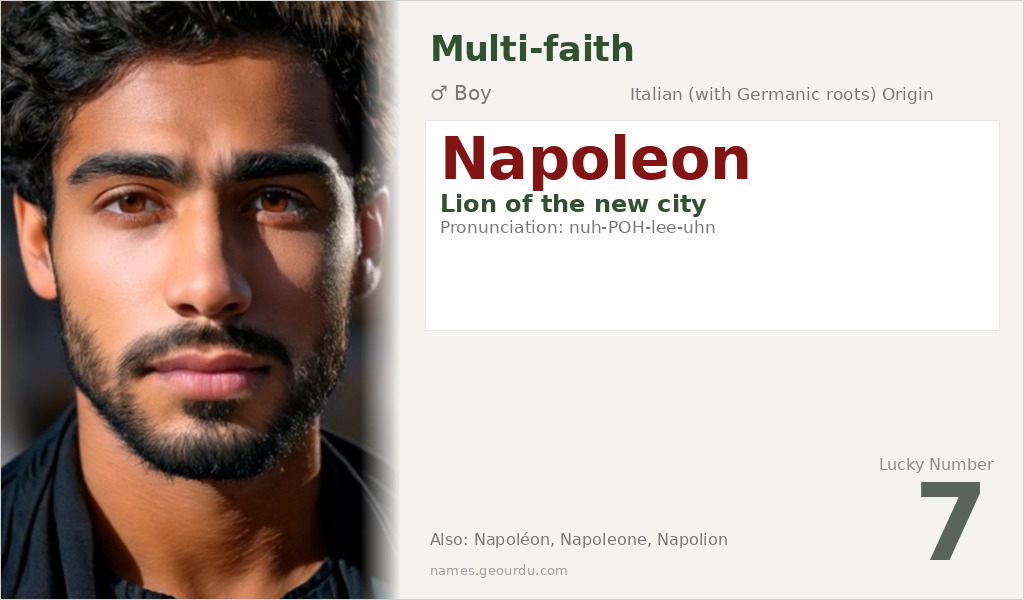
The name Napoleon originates from the Italian Napoleone, which evolved from the Germanic Nibelung. The Germanic elements include ‘nibel’ meaning ‘mist’ or ‘fog’ and a suffix related to strength or people. Through Italian reinterpretation, the name became associated with Naples (from Greek ‘nea polis’ meaning ‘new city’) and ‘leone’ meaning ‘lion’, creating the meaning ‘lion of the new city’. This folk etymology became dominant, especially after Napoleon Bonaparte’s rise to power. The name thus combines imagery of both feline strength and urban sophistication, reflecting its historical bearer’s military genius and imperial ambitions.
| 📛 Name | Napoleon |
| 💎 Meaning | Lion of the new city |
| 👤 Gender | Boy |
| 🕌 Religion | Multi-faith |
| 🌍 Origin | Italian (with Germanic roots) |
| 🗣 Pronunciation | nuh-POH-lee-uhn |
| ✍️ Urdu | نیپولین |
| ✍️ Arabic | نابليون |
| 🔢 Numerology | 7 |
| ✨ Spellings | Napoléon, Napoleone, Napolion |
Origin & Cultural Significance
Napoleon has its origins in medieval Italy as Napoleone, derived from Germanic tribal names brought to Italy during the Migration Period. The name gained immense popularity and recognition through Napoleon Bonaparte (1769-1821), the French military leader who became Emperor of the French. While the name has European roots, it has been adopted in various cultures worldwide due to historical influence. It is not specific to any particular religion but is most associated with Christian-majority European cultures where it originated. The name’s spread was largely due to the historical impact of Napoleon Bonaparte rather than religious or traditional naming practices.
Personality Traits
Those named Napoleon often carry an air of authority and ambition, influenced by the name’s historical associations. They may be perceived as natural leaders with strategic minds and strong determination. The name suggests someone who is confident, influential, and capable of achieving significant goals, though it may also imply a certain intensity or drive that sets them apart from others.
Similar Names
If you like Napoleon, consider: Leon, Leo, Napoleon Bonaparte, Napoleon III, Napoleon Dynamite
Famous People Named Napoleon
- Napoleon Bonaparte — French military leader and emperor who dominated European affairs in the early 19th century
- Napoleon III — First President of France and last French monarch
Frequently Asked Questions About Napoleon
What does Napoleon mean?
Napoleon means 'lion of the new city' through Italian folk etymology, combining references to Naples (from Greek 'nea polis' meaning new city) and 'leone' meaning lion. It originally derived from Germanic elements meaning 'son of mist'.
Is Napoleon a boy or girl name?
Napoleon is exclusively a boy's name, historically borne by male figures including the famous French emperor Napoleon Bonaparte. There are no traditional feminine variants in common usage.
What is the origin of Napoleon?
Napoleon originates from Italian (Napoleone) with Germanic roots (from Nibelung). It became widely known through Napoleon Bonaparte and is associated with European, particularly French and Italian, cultural history.





