Table of Contents
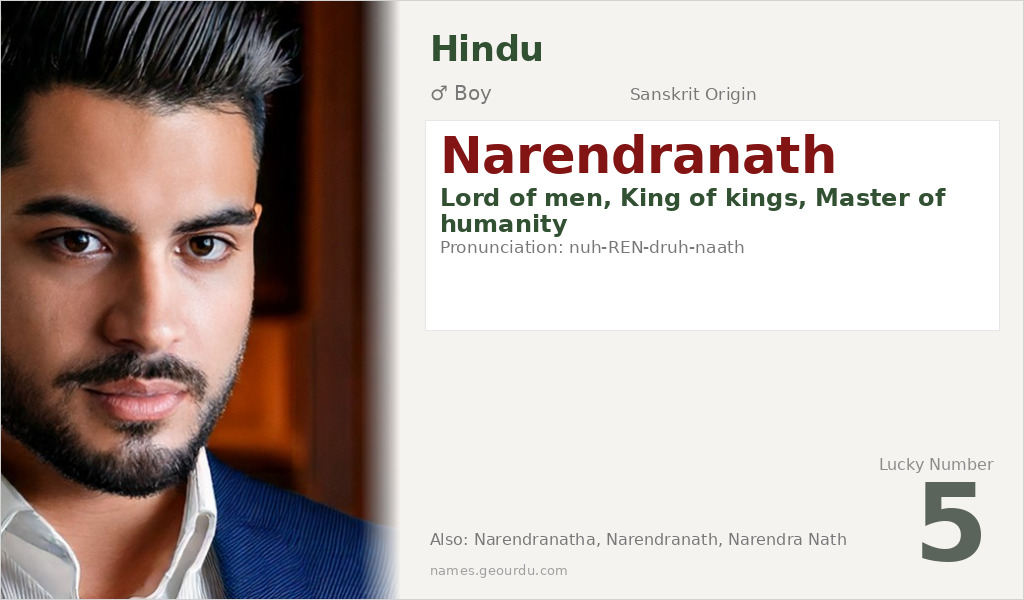
Narendranath is a powerful Sanskrit name that carries centuries of cultural and spiritual significance. Meaning ‘Lord of men’ or ‘Master of kings’, this name embodies leadership, authority, and divine protection. Popular in Hindu communities, it has been borne by influential spiritual figures and continues to be chosen for boys who are expected to demonstrate strength and wisdom. The name’s rich etymology reflects India’s ancient linguistic traditions and royal heritage.
Meaning of Narendranath
Narendranath derives from classical Sanskrit, combining ‘Narendra’ (नरेन्द्र) and ‘nath’ (नाथ). ‘Narendra’ itself is a compound of ‘nara’ (नर), meaning ‘man’ or ‘human’, and ‘indra’ (इन्द्र), the name of the king of gods in Hindu mythology, meaning ‘lord’ or ‘ruler’. Thus, ‘Narendra’ translates to ‘lord of men’ or ‘king’. The suffix ‘nath’ adds another layer of mastery, meaning ‘lord’, ‘master’, or ‘protector’. The complete name therefore signifies ‘Lord of the lord of men’ or ‘Master of kings’, suggesting supreme authority. This construction follows common Sanskrit naming patterns where compound elements amplify the meaning, often used for royal or divine figures. The name appears in historical texts and continues to be used in modern Hindu naming traditions.
| 📛 Name | Narendranath |
| 💎 Meaning | Lord of men, King of kings, Master of humanity |
| 👤 Gender | Boy |
| 🕌 Religion | Hindu |
| 🌍 Origin | Sanskrit |
| 🗣 Pronunciation | nuh-REN-druh-naath |
| ✍️ Urdu | نریندر ناتھ |
| ✍️ Arabic | ناريندرانات |
| 🔢 Numerology | 5 |
| ✨ Spellings | Narendranatha, Narendranath, Narendra Nath |
Origin & Cultural Significance
Narendranath originates from Sanskrit, the ancient liturgical language of Hinduism that has influenced numerous Indian languages. As a compound name, it reflects the sophisticated naming conventions of classical India, where names often conveyed virtues, divine attributes, or social roles. The name has been particularly significant in Hindu culture, where it symbolizes both temporal and spiritual leadership. Historically, it has been associated with rulers and spiritual teachers, most notably Swami Vivekananda (born Narendranath Datta), who globalized Hindu philosophy in the late 19th century. While primarily used in India and among Hindu diaspora communities, the name’s components appear in various Indian languages including Hindi, Bengali, and Marathi.
Personality Traits
Those named Narendranath are often expected to embody leadership qualities and spiritual depth. The name suggests a person who is authoritative yet protective, with a natural inclination toward guiding others. They may display philosophical thinking, ambition, and a sense of responsibility toward their community. In cultural context, the name carries expectations of wisdom, strength, and moral integrity, reflecting its royal and divine connotations.
Similar Names
If you like Narendranath, consider: Narendra, Rajendra, Mahendra, Devendra, Bhavendra
Famous People Named Narendranath
- Narendranath Datta (Swami Vivekananda) — 19th-century Indian Hindu monk, philosopher, and spiritual leader who introduced Vedanta and Yoga to the Western world
- Narendranath Mitra — Bengali writer and journalist known for his contributions to Bengali literature
Frequently Asked Questions About Narendranath
What does Narendranath mean?
Narendranath means 'Lord of men' or 'King of kings' in Sanskrit. It is a compound name from 'Narendra' (lord of men) and 'nath' (lord/master).
Is Narendranath a boy or girl name?
Narendranath is exclusively a boy's name in Hindu naming tradition. The masculine elements 'indra' and 'nath' make it gender-specific.
What is the origin of Narendranath?
Narendranath originates from Sanskrit, the classical language of ancient India. It is deeply rooted in Hindu culture and has been used for centuries in Indian royal and spiritual contexts.