
Table of Contents
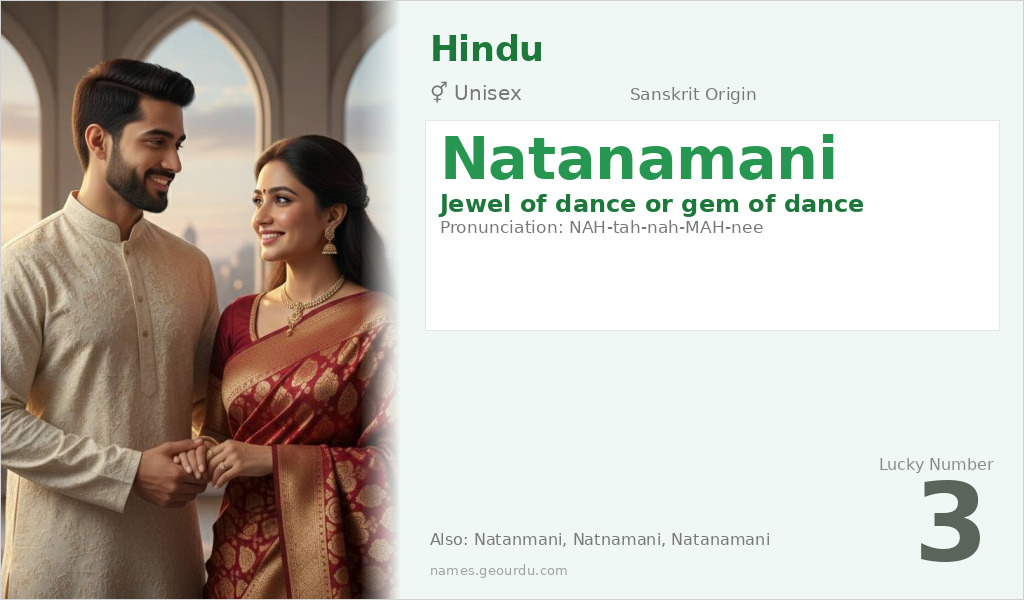
Natanamani is a beautiful Sanskrit name that combines artistic grace with inherent value. Meaning ‘jewel of dance’ or ‘gem of dance’, this name celebrates both movement and preciousness. While often associated with Hindu traditions, its linguistic roots make it a meaningful choice across cultures that appreciate Sanskrit heritage. Discover the rich etymology and cultural significance of this distinctive name.
Meaning of Natanamani
Natanamani is a compound Sanskrit name with clear etymological roots. The first component ‘Natana’ (नटन) derives from the Sanskrit root ‘nṛt’ (नृत्), which means ‘to dance’ and appears in numerous classical texts describing dance, drama, and performance arts. The second component ‘Mani’ (मणि) is a common Sanskrit word for ‘jewel, gem, or precious stone’, frequently used in names to denote something valuable or excellent. When combined, Natanamani literally translates to ‘jewel of dance’, suggesting not just a dancer but someone who embodies the precious, refined qualities of dance. This construction follows the classical Sanskrit pattern of using ‘Mani’ as a suffix to indicate excellence in the preceding quality, similar to names like Ratnamani (jewel among gems) or Jyotirmani (jewel of light).
| 📛 Name | Natanamani |
| 💎 Meaning | Jewel of dance or gem of dance |
| 👤 Gender | Unisex |
| 🕌 Religion | Hindu |
| 🌍 Origin | Sanskrit |
| 🗣 Pronunciation | NAH-tah-nah-MAH-nee |
| ✍️ Urdu | نتن مانی |
| ✍️ Arabic | ناتاناماني |
| 🔢 Numerology | 3 |
| ✨ Spellings | Natanmani, Natnamani, Natanamani |
Origin & Cultural Significance
Natanamani originates from classical Sanskrit, the ancient liturgical language of Hinduism, Buddhism, and Jainism. Sanskrit has been used for millennia in religious texts, poetry, and philosophical works across South Asia. Names with the ‘Mani’ suffix appear in various Sanskrit literary traditions, including the Puranas and classical kavya literature. While the exact name Natanamani may not appear in ancient texts, its components are well-documented in Sanskrit lexicons and grammatical works. The name reflects the high cultural value placed on both dance (natya) as a sacred art form and jewels (mani) as symbols of purity and value in Hindu tradition. It represents a synthesis of artistic and spiritual ideals.
Personality Traits
The name Natanamani suggests a personality that blends artistic sensitivity with inner worth. Those bearing this name are often perceived as graceful, expressive, and appreciative of beauty in motion and form. The ‘jewel’ component implies someone who values refinement, quality, and preciousness in both artistic pursuits and personal character. There’s an inherent suggestion of someone who shines through their artistic expressions while maintaining a core of genuine value and integrity.
Similar Names
If you like Natanamani, consider: Nataraja, Natwar, Manik, Maniratna, Nritya
Famous People Named Natanamani
- No widely known contemporary public figures with this exact name found in records
- Historical and literary references to similar compound names with 'Mani' suffix in Sanskrit texts
Frequently Asked Questions About Natanamani
What does Natanamani mean?
Natanamani means 'Jewel of dance' or 'Gem of dance'. It's a compound Sanskrit name where 'Natana' means dance and 'Mani' means jewel or precious stone.
Is Natanamani a boy or girl name?
Natanamani is traditionally a unisex name in Sanskrit naming conventions. While it may be used for any gender, it carries artistic and graceful connotations that appeal across genders.
What is the origin of Natanamani?
Natanamani originates from Sanskrit, the ancient classical language of India. It combines two Sanskrit words: 'Natana' (dance) and 'Mani' (jewel), following traditional Sanskrit compound naming patterns.