
Table of Contents
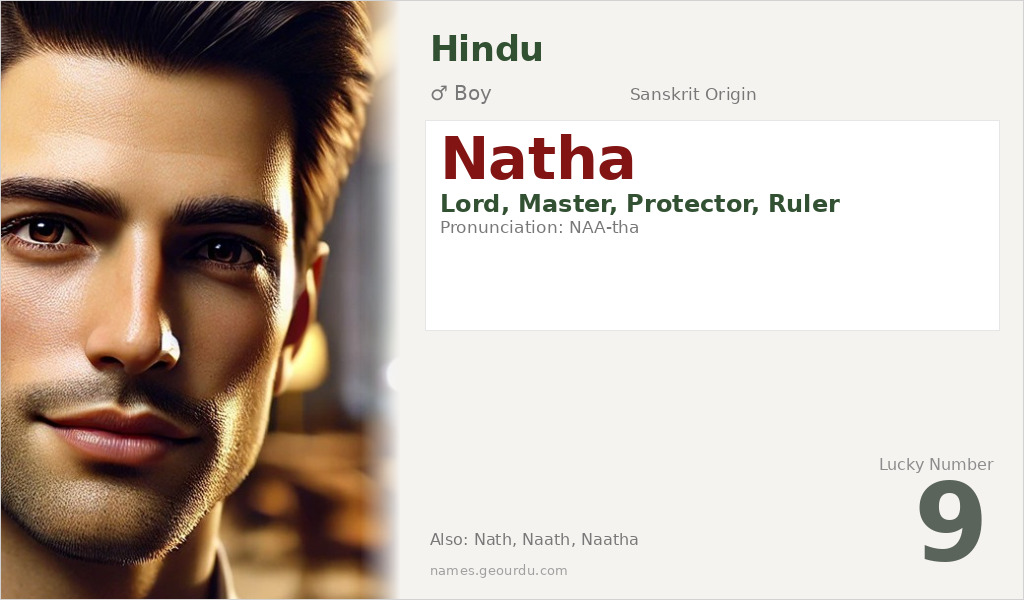
Natha is a classic Sanskrit name for boys that carries profound spiritual and leadership connotations. Rooted in ancient Hindu traditions, this name symbolizes protection, mastery, and divine authority. Often associated with deities and revered figures, Natha continues to be a meaningful choice for parents seeking a name with historical depth and cultural resonance. Its strong phonetic structure and rich heritage make it both timeless and powerful.
Meaning of Natha
The name Natha originates from the Sanskrit word ‘नाथ’ (nātha), which fundamentally means ‘lord’, ‘master’, ‘protector’, or ‘ruler’. Etymologically, it derives from the Sanskrit root ‘nāth’, conveying the actions of protecting, governing, or having power over something. In Hindu philosophy and texts, Natha is frequently used as an honorific for gods, particularly Shiva in the Nath tradition, emphasizing their role as supreme protectors and guides. The name also appears in various Indian languages like Hindi, Bengali, and Marathi, retaining its core meaning. Compound names such as ‘Natharam’ (lord Rama) further illustrate its usage in devotional contexts, highlighting the name’s enduring spiritual significance.
| 📛 Name | Natha |
| 💎 Meaning | Lord, Master, Protector, Ruler |
| 👤 Gender | Boy |
| 🕌 Religion | Hindu |
| 🌍 Origin | Sanskrit |
| 🗣 Pronunciation | NAA-tha |
| ✍️ Urdu | نتھا |
| ✍️ Arabic | ناثا |
| 🔢 Numerology | 9 |
| ✨ Spellings | Nath, Naath, Naatha |
Origin & Cultural Significance
Natha has its origins in ancient Sanskrit, the classical language of India, and is deeply embedded in Hindu culture and religion. Historically, it has been used in religious scriptures, epics, and poetry to denote divine or respected figures, such as in the Nath sect of Hinduism, which reveres Shiva as Adinath (the first lord). The name spread through Indian subcontinent languages, including Hindi, Urdu, Bengali, and Marathi, often as a standalone name or in compounds. While it is primarily a Hindu name, its linguistic roots are purely Sanskrit, with no verified origins in Arabic, Persian, or other non-Indian languages despite regional adaptations. This cultural specificity underscores its strong association with Hindu traditions and values.
Personality Traits
People named Natha are often perceived as natural leaders with a protective and authoritative demeanor. They tend to exhibit qualities of responsibility, decisiveness, and a strong moral compass, making them reliable figures in personal and professional settings. Their name’s meaning influences a personality that is spiritually aware and inclined toward guiding others, embodying the traits of a ruler or guardian in their interactions.
Similar Names
If you like Natha, consider: Natharam, Nathanael, Nathan, Nathu, Nathiya, Nathania
Famous People Named Natha
- Natha Singh — Indian freedom fighter and revolutionary
- Natha Khan — historical figure in Sindhi folklore
Frequently Asked Questions About Natha
What does Natha mean?
Natha means 'Lord', 'Master', 'Protector', or 'Ruler' in Sanskrit, derived from the root 'nāth' meaning to protect or govern.
Is Natha a boy or girl name?
Natha is traditionally a boy's name in Hindu culture, though it is rarely used for girls and is not considered unisex in its primary context.
What is the origin of Natha?
Natha originates from Sanskrit, an ancient Indian language, and is deeply rooted in Hindu religion and culture, with no verified origins in other languages like Arabic or Persian.





