
Table of Contents
Nitendra is a distinguished Sanskrit name that carries profound meaning rooted in ancient Indian wisdom. Combining elements of ethical governance and divine authority, this name has been cherished in Hindu families for generations. With its powerful connotations of principled leadership, Nitendra represents more than just a name—it embodies an ideal of righteous rulership. Let’s explore the rich linguistic and cultural heritage behind this meaningful appellation.
Meaning of Nitendra
The name Nitendra originates from classical Sanskrit, composed of two significant components: ‘Niti’ and ‘Indra’. ‘Niti’ (नीति) refers to policy, conduct, ethics, moral principles, or wise guidance—encompassing both personal morality and statecraft. ‘Indra’ (इन्द्र) denotes lord, king, ruler, or chief, famously representing the king of the gods in Hindu mythology. When combined, Nitendra literally means ‘Lord of Policy’ or ‘Ruler of Principles’, suggesting someone who governs with ethical wisdom and moral authority. This compound formation follows traditional Sanskrit naming patterns where divine or royal titles are combined with virtues or domains of expertise. The name reflects the ancient Indian ideal of ‘Rajadharma’—the righteous duties of a ruler who maintains order through just policies.
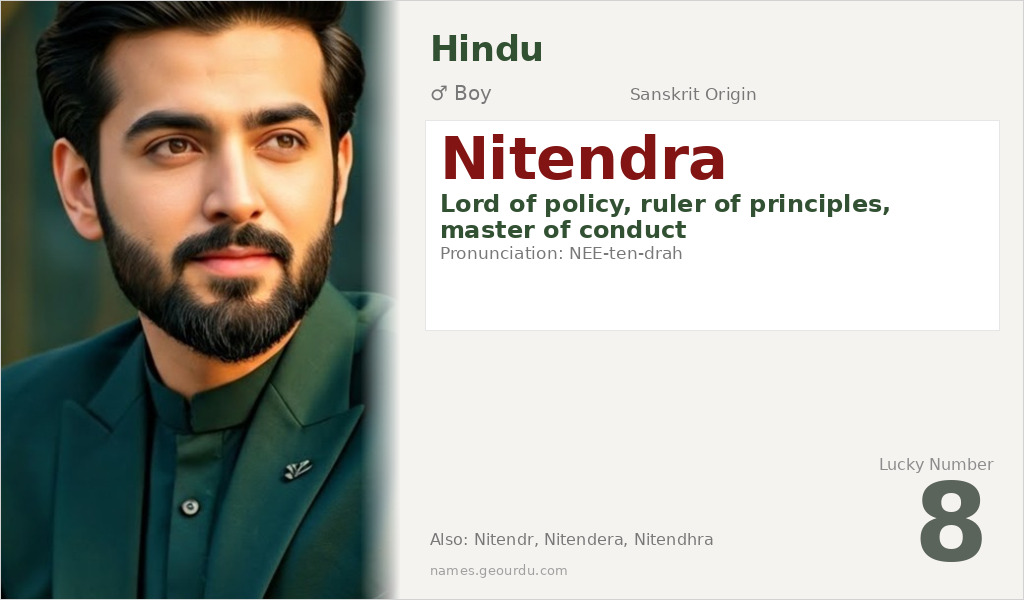
| 📛 Name | Nitendra |
| 💎 Meaning | Lord of policy, ruler of principles, master of conduct |
| 👤 Gender | Boy |
| 🕌 Religion | Hindu |
| 🌍 Origin | Sanskrit |
| 🗣 Pronunciation | NEE-ten-drah |
| ✍️ Urdu | نیتندر |
| ✍️ Arabic | نيتيندرا |
| 🔢 Numerology | 8 |
| ✨ Spellings | Nitendr, Nitendera, Nitendhra |
Origin & Cultural Significance
Nitendra has its roots exclusively in Sanskrit, the classical language of ancient India that has profoundly influenced Hindu culture, philosophy, and naming traditions for millennia. As a compound Sanskrit name, it follows established patterns seen in other names like Devendra (Lord of Gods) or Mahendra (Great Indra). While primarily used within Hindu communities, the name’s Sanskrit origin means it could theoretically be adopted by anyone appreciating its meaning, though it remains predominantly associated with Hindu cultural contexts. The name gained popularity in modern times as part of a broader revival of classical Sanskrit names in India, particularly among families valuing traditional wisdom and ethical leadership ideals. Unlike some names that have cross-cultural adaptations, Nitendra maintains its original Sanskrit form and meaning without significant variation across regions.
Personality Traits
The name Nitendra suggests personality traits aligned with its meaning of ‘Lord of Policy’. Those bearing this name are often perceived as natural leaders who approach decisions with careful consideration and ethical grounding. They tend to value structure, principles, and thoughtful planning in both personal and professional spheres. The combination of ‘Niti’ (ethics) and ‘Indra’ (leadership) in their name implies someone who balances wisdom with authority, making them potentially effective in roles requiring governance, management, or moral guidance.
Similar Names
If you like Nitendra, consider: Nitin, Nitesh, Indrajit, Indraneel, Nityananda
Famous People Named Nitendra
- Nitendra Singh Rawat — Indian long-distance runner who represented India in the 2016 Summer Olympics marathon
- Nitendra Nath — Indian classical vocalist specializing in Dhrupad and Khayal styles
Frequently Asked Questions About Nitendra
What does Nitendra mean?
Nitendra means 'Lord of Policy' or 'Ruler of Principles' in Sanskrit. It combines 'Niti' (policy/ethics) and 'Indra' (lord/ruler) to create a name denoting ethical leadership and wise governance.
Is Nitendra a boy or girl name?
Nitendra is exclusively a boy's name in Hindu naming tradition. The '-endra' suffix, derived from the masculine deity Indra, and the name's meaning related to rulership make it traditionally masculine in all cultural contexts where it's used.
What is the origin of Nitendra?
Nitendra originates from Sanskrit, the classical language of ancient India. It's a compound name formed from 'Niti' (policy/ethics) and 'Indra' (lord/ruler), reflecting Hindu cultural values of ethical leadership and divine authority.





