
Table of Contents
Noble is a distinguished name that carries the weight of its meaning directly in its sound. As both a virtue name and a reflection of aristocratic heritage, it has been used for centuries to denote excellence of character. This name transcends religious boundaries while maintaining its powerful English linguistic roots. Discover the rich history and modern significance of this timeless name.
Meaning of Noble
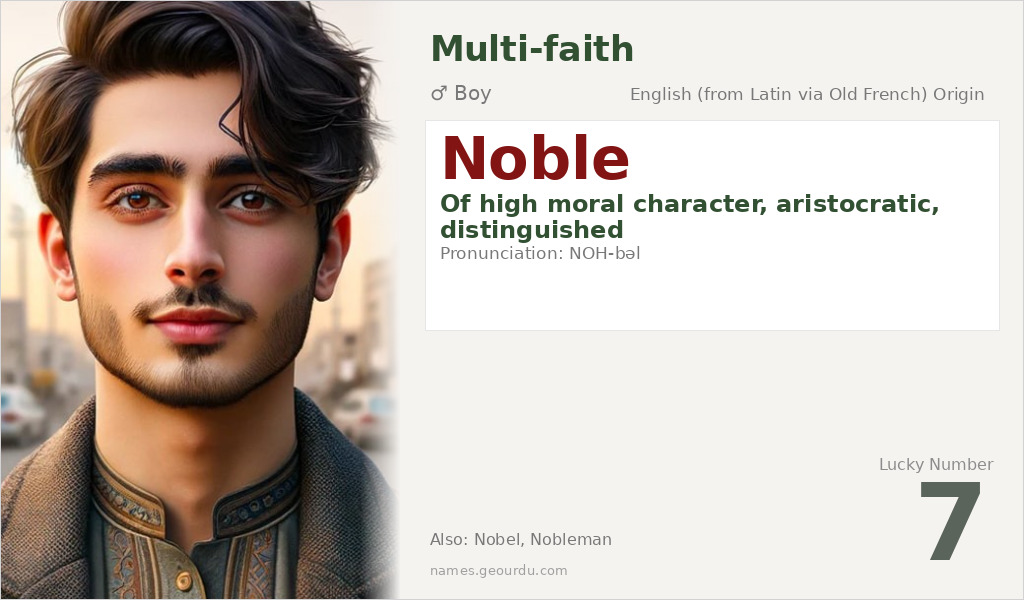
The name Noble comes directly from the English word meaning ‘of high moral character, aristocratic, or distinguished.’ Its etymology traces back through Old French ‘noble’ to Latin ‘nobilis,’ which means ‘well-known, famous, excellent, or high-born.’ The Latin root ‘nobilis’ itself derives from ‘noscere’ (to know) or ‘gnoscere’ (to come to know), indicating someone who is known or renowned in society. This linguistic journey reflects how the name evolved from describing social status to encompassing moral excellence. Unlike many names that have been adapted across languages, Noble remains remarkably consistent in its form and meaning across English-speaking cultures.
| 📛 Name | Noble |
| 💎 Meaning | Of high moral character, aristocratic, distinguished |
| 👤 Gender | Boy |
| 🕌 Religion | Multi-faith |
| 🌍 Origin | English (from Latin via Old French) |
| 🗣 Pronunciation | NOH-bəl |
| ✍️ Urdu | نوبل |
| ✍️ Arabic | نوبل |
| 🔢 Numerology | 7 |
| ✨ Spellings | Nobel, Nobleman |
Origin & Cultural Significance
Noble originated as an English surname and given name, emerging from the medieval practice of using occupational or descriptive terms as personal identifiers. While it has Latin roots through Old French influence following the Norman Conquest, it developed as a distinctly English name. The name gained popularity during the Victorian era when virtue names were fashionable. Unlike names tied to specific religious traditions, Noble has been used across Christian, secular, and multi-faith contexts without particular denominational association. Its usage reflects English naming conventions rather than religious tradition, though it appears in various Christian communities due to its virtuous connotations.
Personality Traits
Those named Noble often embody the characteristics suggested by their name—dignity, integrity, and leadership. They tend to approach life with a sense of responsibility and moral purpose, valuing fairness and principle in their interactions. The name carries expectations of honorable behavior, which can influence both self-perception and how others perceive them. While personality varies individually, the name Noble suggests someone who naturally commands respect through their conduct.
Similar Names
If you like Noble, consider: Royal, King, Duke, Earl, Lord
Famous People Named Noble
- Noble Johnson — American actor and film producer (1881–1978)
- Noble Sissle — American jazz composer and lyricist (1889–1975)
Frequently Asked Questions About Noble
What does Noble mean?
Noble means 'of high moral character, aristocratic, or distinguished.' It comes from the English word with Latin roots via Old French, from 'nobilis' meaning 'well-known, excellent, or high-born.'
Is Noble a boy or girl name?
Noble is primarily a boy's name, though it can occasionally be used for girls. Historically and statistically, it has been overwhelmingly masculine in usage across English-speaking cultures.
What is the origin of Noble?
Noble originates from English, derived from the English word 'noble' which came via Old French from Latin 'nobilis.' It developed as both a surname and given name in English-speaking countries, particularly England and America.





