
Table of Contents
Oberon is a name that carries centuries of literary and mythological weight, most famously as the fairy king in Shakespeare’s enchanting comedy. With Germanic roots meaning ‘noble bear’, this name combines strength and royalty in a distinctive package. While often associated with fantasy and folklore, Oberon has a real historical etymology that predates its theatrical fame. This guide explores the true meaning, origin, and cultural significance of this powerful name.
Meaning of Oberon
The name Oberon derives from Germanic linguistic roots, specifically from the Old High German name ‘Auberon’ or ‘Alberich’. It combines two elements: ‘adal’ meaning ‘noble’ and ‘beraht’ meaning ‘bright’ or ‘famous’. Through folk etymology and linguistic evolution, the name became associated with ‘bern’ meaning ‘bear’, leading to the interpretation ‘noble bear’. This connection to bears symbolizes strength, protection, and wilderness in Germanic culture. The name appears in medieval French literature as ‘Auberon’ before being anglicized to Oberon. Shakespeare’s use of the name in ‘A Midsummer Night’s Dream’ cemented its association with fairy mythology, though this is a literary invention rather than etymological reality.
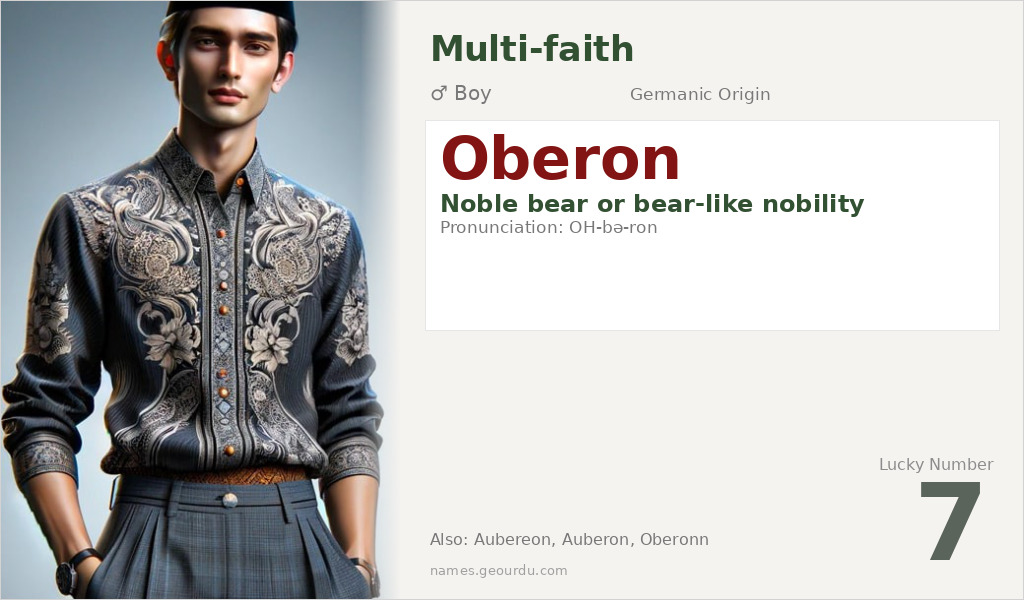
| 📛 Name | Oberon |
| 💎 Meaning | Noble bear or bear-like nobility |
| 👤 Gender | Boy |
| 🕌 Religion | Multi-faith |
| 🌍 Origin | Germanic |
| 🗣 Pronunciation | OH-bə-ron |
| ✍️ Urdu | اوبرون |
| ✍️ Arabic | أوبيرون |
| 🔢 Numerology | 7 |
| ✨ Spellings | Aubereon, Auberon, Oberonn, Oberone |
Origin & Cultural Significance
Oberon originates from Germanic languages, with its earliest forms appearing in Old High German as names like Alberich. The name traveled through medieval French literature as Auberon before entering English. Its most famous appearance is in William Shakespeare’s 1595 play ‘A Midsummer Night’s Dream’, where Oberon rules as king of the fairies alongside his queen Titania. This literary association has made the name particularly popular in English-speaking countries for its magical connotations. Historically, the name has no specific religious affiliation and predates Christian influence in Germanic regions. In modern times, Oberon remains relatively rare but has seen increased usage due to its distinctive sound and literary heritage.
Personality Traits
Those named Oberon often carry an air of nobility and strength, reflecting the name’s meaning of ‘noble bear’. They tend to be natural leaders with creative minds and imaginative spirits. The Shakespearean association adds a layer of magical charm and theatrical flair to their personality. While they may appear reserved or mysterious at first, Oberons typically possess deep loyalty and protective instincts toward those they care about.
Similar Names
If you like Oberon, consider: Alberich, Orion, Orson, Osborn, Bernard
Famous People Named Oberon
- Oberon (King of the Fairies) — Shakespearean character from 'A Midsummer Night's Dream'
- Oberon Zell-Ravenheart — American writer and founder of the Church of All Worlds
Frequently Asked Questions About Oberon
What does Oberon mean?
Oberon means 'noble bear' or 'bear-like nobility', derived from Germanic roots combining elements meaning 'noble' and 'bear'.
Is Oberon a boy or girl name?
Oberon is traditionally and almost exclusively a boy's name, with its usage historically and culturally masculine across all contexts.
What is the origin of Oberon?
Oberon originates from Germanic languages, specifically Old High German names like Alberich, and was popularized in English through Shakespeare's 'A Midsummer Night's Dream'.





