
Table of Contents
Ohileshwar is a profound Sanskrit name with deep roots in Hindu tradition and mythology. As one of the many names of Lord Shiva, this name carries spiritual weight and historical significance across Indian culture. Parents choosing this name often seek to honor Shiva’s supreme qualities of transformation, strength, and divine consciousness. Let’s explore the rich meaning and background of this distinctive name.
Meaning of Ohileshwar
Ohileshwar is a compound Sanskrit name with clear etymological roots. The name combines ‘Ohila’ (a variant of Uchila, meaning supreme, elevated, or highest) with ‘Ishwar’ (ईश्वर), which translates to lord, god, or master. Thus, Ohileshwar literally means ‘Supreme Lord’ or ‘Highest God,’ specifically referring to Shiva in his most transcendent form. This name appears in various Hindu scriptures and regional traditions, particularly in areas with strong Shiva worship traditions. The ‘Ohila’ component emphasizes Shiva’s position beyond ordinary deities, representing the ultimate reality in Shaivism. Unlike some Shiva names that reference specific attributes or stories, Ohileshwar focuses on Shiva’s supreme, all-encompassing nature.
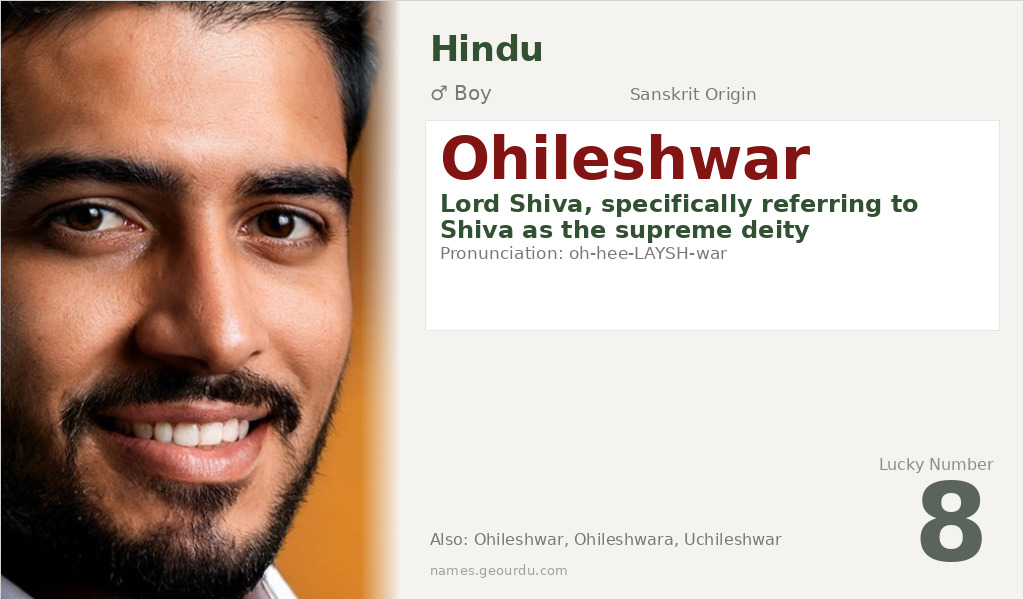
| 📛 Name | Ohileshwar |
| 💎 Meaning | Lord Shiva, specifically referring to Shiva as the supreme deity |
| 👤 Gender | Boy |
| 🕌 Religion | Hindu |
| 🌍 Origin | Sanskrit |
| 🗣 Pronunciation | oh-hee-LAYSH-war |
| ✍️ Urdu | اوہلیشور |
| ✍️ Arabic | أوهيليشوار |
| 🔢 Numerology | 8 |
| ✨ Spellings | Ohileshwar, Ohileshwara, Uchileshwar, Uchileshwara |
Origin & Cultural Significance
Ohileshwar originates from classical Sanskrit, the ancient liturgical language of Hinduism. The name has been used for centuries in India, particularly in regions with strong Shiva devotional traditions like Maharashtra, Madhya Pradesh, and parts of South India. Several important Shiva temples across India bear this name, including the historic Ohileshwar Temple in Maharashtra. The name reflects the philosophical concept in Shaivism of Shiva as the supreme consciousness (Parashiva) beyond all limitations. While less common than other Shiva names like Maheshwar or Shankar, Ohileshwar maintains cultural significance in specific regional and temple traditions.
Personality Traits
The name Ohileshwar suggests qualities associated with Lord Shiva: spiritual depth, inner strength, and transformative energy. Those named Ohileshwar are often perceived as thoughtful, disciplined individuals with strong principles. The name’s connection to the supreme deity implies leadership potential and philosophical inclination. While personality varies by individual, the name carries expectations of integrity, devotion, and a contemplative nature.
Similar Names
If you like Ohileshwar, consider: Maheshwar, Rameshwar, Someshwar, Vishveshwar, Bhuvaneshwar
Famous People Named Ohileshwar
- Ohileshwar Temple — a famous Shiva temple in Maharashtra, India dating back centuries
- Ohileshwar Mahadev — a historical Shiva temple complex in Madhya Pradesh mentioned in regional records
Frequently Asked Questions About Ohileshwar
What does Ohileshwar mean?
Ohileshwar means 'Lord Shiva' or 'Supreme Lord' in Sanskrit. It's a compound name combining 'Ohila' (supreme/elevated) and 'Ishwar' (lord/god).
Is Ohileshwar a boy or girl name?
Ohileshwar is exclusively a boy's name in Hindu tradition, as it refers to the male deity Lord Shiva.
What is the origin of Ohileshwar?
Ohileshwar originates from Sanskrit, the ancient language of Hindu scriptures. It has been used for centuries in India, particularly in regions with strong Shiva worship traditions.





