
Table of Contents
Osmond is a distinguished masculine name with deep roots in Norse mythology and European history. Meaning ‘divine protector’ or ‘God’s protection,’ this name carries centuries of cultural heritage from Viking settlers to medieval saints. While popular in English-speaking countries, its origins trace back to Old Norse warriors and deities. Today, Osmond remains a classic choice for parents seeking a name with historical depth and spiritual significance.
Meaning of Osmond
The name Osmond derives from the Old Norse compound name Ásmundr, composed of two elements: ‘áss’ meaning ‘god’ or ‘deity’ (referring specifically to the Æsir, the principal pantheon in Norse mythology) and ‘mundr’ meaning ‘protection,’ ‘guardian,’ or ‘hand.’ This combination literally translates to ‘divine protector’ or ‘protected by the gods.’ The name entered the English language through Old English as Ōsmund, adapted by Anglo-Saxons from Norse settlers during the Viking Age (8th-11th centuries). Throughout medieval Europe, the name evolved through various forms including the Norman French Osmont and Middle English Osmund before stabilizing in its modern spelling. The meaning reflects the warrior culture of Norse society where divine protection was sought in battle and daily life.
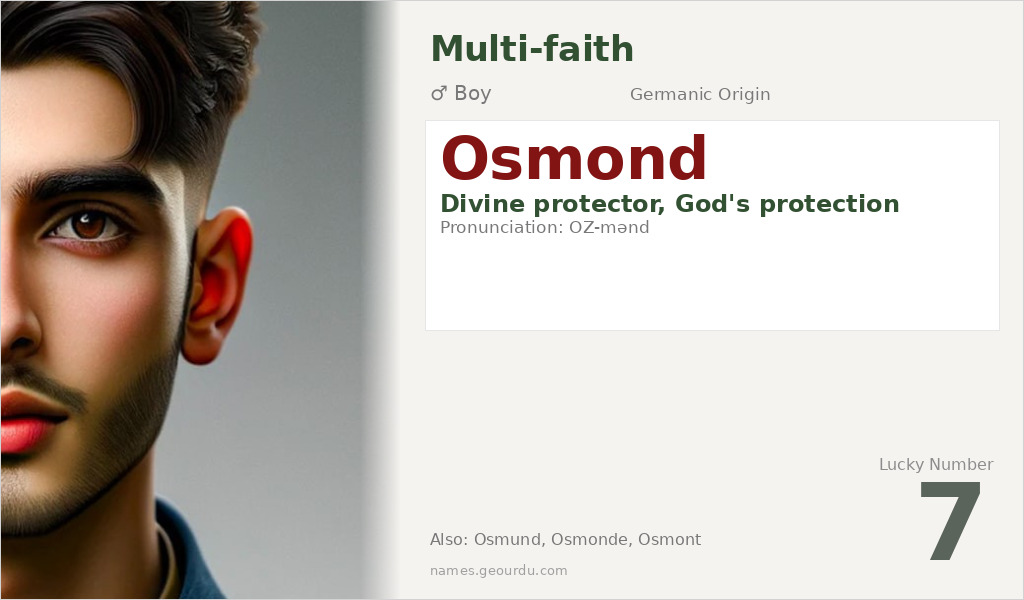
| 📛 Name | Osmond |
| 💎 Meaning | Divine protector, God's protection |
| 👤 Gender | Boy |
| 🕌 Religion | Multi-faith |
| 🌍 Origin | Germanic |
| 🗣 Pronunciation | OZ-mənd |
| ✍️ Urdu | ازمنڈ |
| ✍️ Arabic | أوزموند |
| 🔢 Numerology | 7 |
| ✨ Spellings | Osmund, Osmonde, Osmont, Asmund, Ásmundr |
Origin & Cultural Significance
Osmond originates from Germanic languages, specifically Old Norse, and spread throughout Europe via Viking expansion and Norman conquests. The name appears in historical records as early as the 9th century in Scandinavia and was brought to England by Norse settlers. It gained prominence in medieval England through Saint Osmund, a Norman bishop of Salisbury who served under William the Conqueror and contributed to the Domesday Book compilation. While the name has Christian associations through saints like Osmund of Salisbury, its fundamental origins are pre-Christian Norse pagan, relating to the worship of Æsir gods like Odin and Thor. The name has been used across various European cultures without exclusive religious affiliation, appearing in English, Scandinavian, and Norman French contexts throughout history.
Personality Traits
Those named Osmond often embody the protective qualities suggested by their name’s meaning. Drawing from its Norse warrior origins, Osmonds may display strength, loyalty, and a sense of duty toward those they care about. The spiritual element of ‘divine’ in the name’s etymology can manifest as philosophical depth or interest in metaphysical matters. Historically, bearers of this name have often been leaders, religious figures, or artists, suggesting creative and authoritative potential.
Similar Names
If you like Osmond, consider: Oswald, Osmund, Osman, Osmondson, Asmund
Famous People Named Osmond
- Osmond Brothers — American family singing group popular in the 1970s, including Donny and Marie Osmond
- Saint Osmund — Norman bishop of Salisbury (c. 1078-1099) who helped compile the Domesday Book
Frequently Asked Questions About Osmond
What does Osmond mean?
Osmond means 'divine protector' or 'God's protection,' originating from Old Norse Ásmundr, combining 'áss' (god) and 'mundr' (protection).
Is Osmond a boy or girl name?
Osmond is traditionally and historically a masculine name, though modern usage occasionally sees creative adaptations. Its Norse origins and historical bearers are exclusively male.
What is the origin of Osmond?
Osmond originates from Old Norse (Germanic language family) as Ásmundr, brought to England by Viking settlers and adapted into Old English as Ōsmund, with historical spread through Norman and medieval European cultures.





