
Table of Contents
Osric is a distinguished name with deep historical roots in early medieval England. Meaning ‘divine ruler’ or ‘god-ruler’, this Old English name carries the weight of Anglo-Saxon nobility and Germanic tradition. While less common today, Osric represents a fascinating piece of naming history that connects modern parents to England’s pre-Norman past. Its strong, regal sound and meaningful etymology make it an intriguing choice for those seeking a name with historical significance.
Meaning of Osric
The name Osric derives from Old English, specifically from the Germanic elements ‘os’ meaning ‘god’ or ‘divine being’ and ‘ric’ meaning ‘ruler’, ‘king’, or ‘power’. This compound structure follows a common pattern in Germanic names where two meaningful elements combine to create a name with specific significance. The ‘os’ element appears in other Old English names like Oswald (‘god-power’) and Osmund (‘god-protector’). The ‘ric’ element is equally widespread, appearing in names like Richard (‘brave ruler’) and Frederick (‘peaceful ruler’). Linguistically, Osric belongs to the West Germanic branch of the Indo-European language family and represents a naming tradition that predates the Christianization of England.
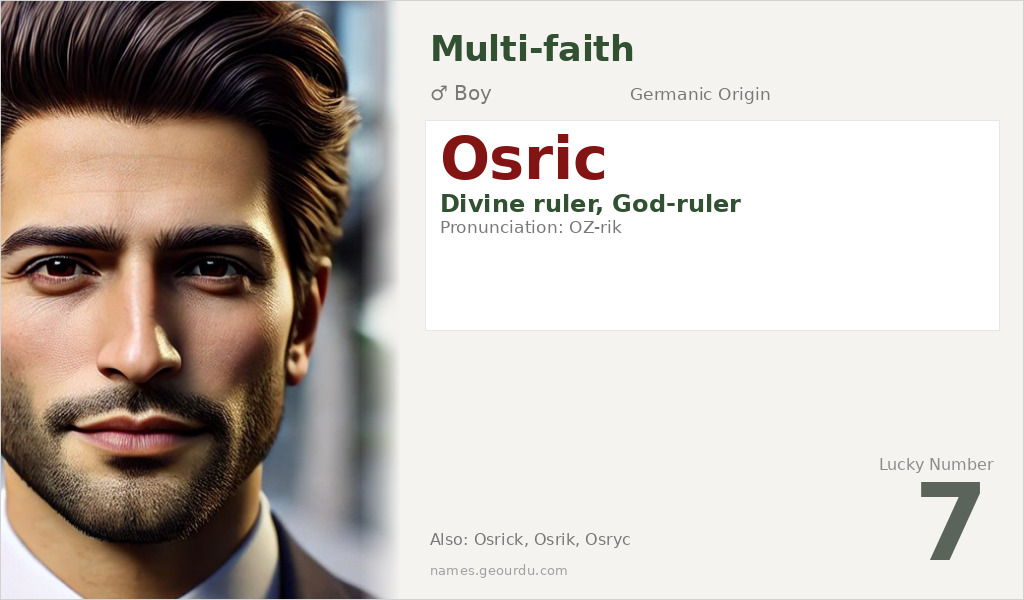
| 📛 Name | Osric |
| 💎 Meaning | Divine ruler, God-ruler |
| 👤 Gender | Boy |
| 🕌 Religion | Multi-faith |
| 🌍 Origin | Germanic |
| 🗣 Pronunciation | OZ-rik |
| ✍️ Urdu | ازرک |
| ✍️ Arabic | أوسريك |
| 🔢 Numerology | 7 |
| ✨ Spellings | Osrick, Osrik, Osryc |
Origin & Cultural Significance
Osric originated among the Anglo-Saxon peoples who settled in England following the Roman withdrawal in the 5th century. The name appears in historical records from the 7th century onward, most notably borne by two kings: Osric of Northumbria (ruled 634-642) and Osric of Deira. These historical figures demonstrate the name’s association with nobility and leadership in early medieval England. While the name declined after the Norman Conquest in 1066, it represents an important part of England’s pre-Norman cultural heritage. Today, Osric is occasionally revived by parents interested in historical names or those with Anglo-Saxon heritage.
Personality Traits
The meaning ‘divine ruler’ suggests someone with natural authority and spiritual depth. People named Osric are often perceived as thoughtful leaders who combine wisdom with decisive action. They may value tradition and history while also possessing the vision to innovate and adapt. The name’s historical connections to Anglo-Saxon kings adds a layer of regal dignity and strength to its personality associations.
Similar Names
If you like Osric, consider: Oswald, Osmond, Alaric, Eric, Frederick
Famous People Named Osric
- Osric of Northumbria — 7th-century King of Northumbria who ruled from 634 to 642 AD
- Osric of Deira — 7th-century King of Deira, a sub-kingdom of Northumbria
Frequently Asked Questions About Osric
What does Osric mean?
Osric means 'divine ruler' or 'god-ruler', derived from the Old English elements 'os' (god) and 'ric' (ruler).
Is Osric a boy or girl name?
Osric is exclusively a masculine name with historical usage only for males, particularly among Anglo-Saxon nobility.
What is the origin of Osric?
Osric originates from Old English, specifically from the Germanic language tradition of the Anglo-Saxon peoples who settled in England in the early medieval period.





