Table of Contents
Padmamukhi is a beautiful and meaningful Sanskrit name for girls, deeply rooted in Hindu culture and spirituality. Meaning ‘lotus-faced,’ it evokes imagery of purity, divine beauty, and spiritual awakening. This name carries the elegance of classical Indian naming traditions while offering a timeless connection to nature’s symbolism. Discover the rich etymology and cultural significance behind this distinctive name.
Meaning of Padmamukhi
Padmamukhi derives from Sanskrit, one of the world’s oldest languages and the liturgical language of Hinduism. The name is a compound of ‘padma’ (पद्म), meaning ‘lotus,’ and ‘mukhi’ (मुखी), meaning ‘faced’ or ‘having a face.’ In Hindu philosophy, the lotus represents purity, beauty, and spiritual enlightenment because it blooms immaculately from muddy waters. Thus, Padmamukhi literally translates to ‘lotus-faced,’ describing someone with a countenance as pure and beautiful as a lotus flower. This naming pattern is common in Sanskrit, where descriptive compounds create poetic and meaningful names. The lotus also holds sacred associations with deities like Lakshmi and Vishnu, adding divine connotations to the name.
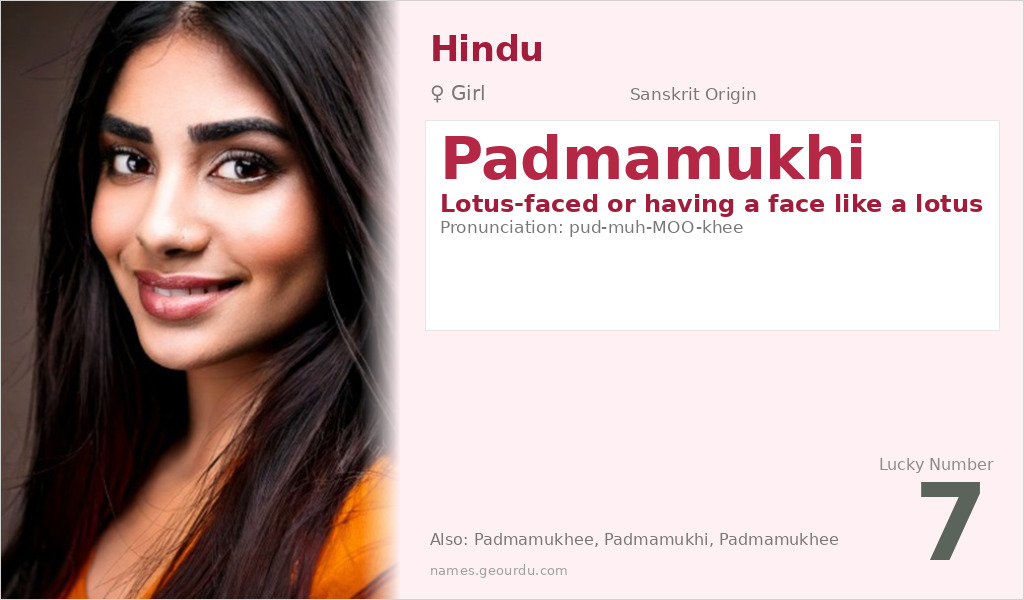
| 📛 Name | Padmamukhi |
| 💎 Meaning | Lotus-faced or having a face like a lotus |
| 👤 Gender | Girl |
| 🕌 Religion | Hindu |
| 🌍 Origin | Sanskrit |
| 🗣 Pronunciation | pud-muh-MOO-khee |
| ✍️ Urdu | پدم مکھی |
| ✍️ Arabic | بادما موخي |
| 🔢 Numerology | 7 |
| ✨ Spellings | Padmamukhee, Padmamukhi, Padmamukhee |
Origin & Cultural Significance
Padmamukhi originates from Sanskrit, the classical language of ancient India, and is primarily used within Hindu communities. It reflects the rich tradition of nature-inspired names in Indian culture, where flowers like the lotus carry deep symbolic weight. The name appears in Hindu mythology and temple art, often describing goddesses or celestial beings with lotus-like beauty. While most common in India, particularly among Sanskrit-speaking and Hindu populations, it maintains a niche presence globally due to diaspora communities. Its usage underscores the enduring appeal of Sanskrit names that convey both aesthetic and spiritual qualities.
Personality Traits
Those named Padmamukhi are often perceived as graceful, serene, and spiritually inclined individuals. The lotus symbolism suggests they possess inner strength and purity, able to navigate life’s challenges with poise. They may have a natural affinity for beauty, art, and harmony, reflecting the lotus’s aesthetic appeal. Their calm demeanor and reflective nature can make them thoughtful and compassionate companions.
Similar Names
If you like Padmamukhi, consider: Padmavati, Kamalamukhi, Padmalaya, Padmasri, Muktalata
Famous People Named Padmamukhi
- Padmamukhi — A character in Hindu mythology and temple iconography, often depicted as a goddess or celestial being with lotus-like features
- Padmamukhi Srinivasan — A noted Indian classical dancer and choreographer specializing in Bharatanatyam
Frequently Asked Questions About Padmamukhi
What does Padmamukhi mean?
Padmamukhi means 'lotus-faced' or 'having a face like a lotus' in Sanskrit, symbolizing purity, beauty, and spiritual enlightenment.
Is Padmamukhi a boy or girl name?
Padmamukhi is exclusively a girl's name in Hindu naming traditions, with the feminine suffix 'mukhi' indicating this gender specificity.
What is the origin of Padmamukhi?
Padmamukhi originates from Sanskrit, the classical language of ancient India, and is deeply embedded in Hindu culture and mythology.