
Table of Contents
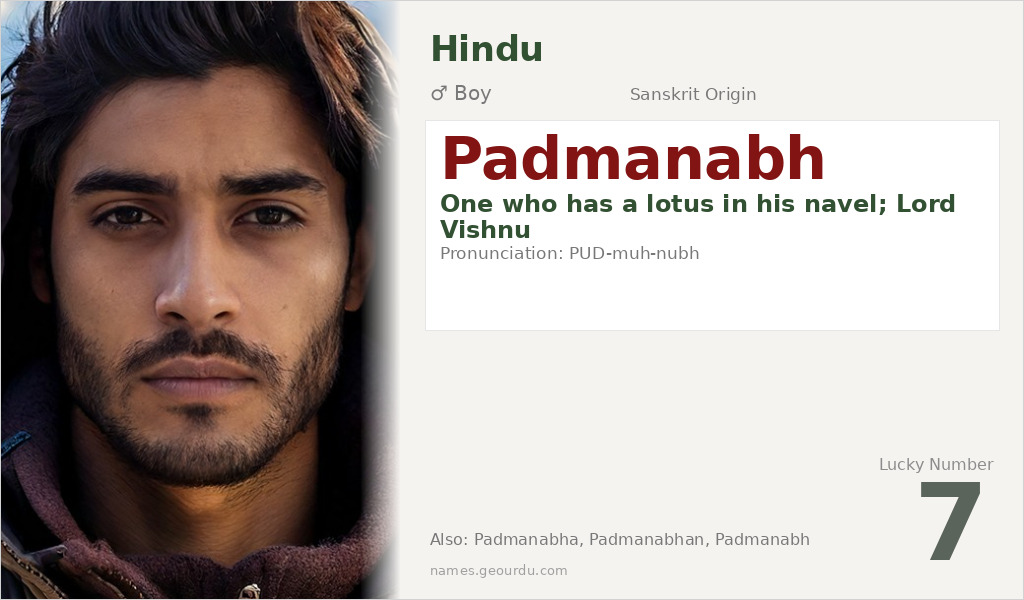
Padmanabh is a profound Sanskrit name steeped in Hindu mythology and spirituality. Primarily given to boys, it carries the beautiful imagery of a lotus emerging from the navel, symbolizing divine creation and purity. This name is directly associated with Lord Vishnu, one of the principal deities in Hinduism, making it both culturally significant and spiritually resonant. Parents choosing this name often seek to imbue their child with qualities of wisdom, serenity, and cosmic connection.
Meaning of Padmanabh
Padmanabh is a compound Sanskrit name with two clear components: ‘padma’ (पद्म) meaning ‘lotus’ and ‘nabh’ (नाभि) meaning ‘navel’. Together, they translate to ‘one who has a lotus in his navel’, a direct reference to Lord Vishnu’s depiction in Hindu iconography where a lotus stem emerges from his navel, with Brahma seated upon it. This imagery symbolizes the universe’s creation, with Vishnu as the sustainer from whom all life originates. The lotus represents purity, beauty, and spiritual enlightenment, while the navel signifies the center or source. Linguistically, it follows classical Sanskrit compounding rules (samāsa) and appears in ancient scriptures like the Vishnu Sahasranama, where it is listed as one of Vishnu’s thousand names.
| 📛 Name | Padmanabh |
| 💎 Meaning | One who has a lotus in his navel; Lord Vishnu |
| 👤 Gender | Boy |
| 🕌 Religion | Hindu |
| 🌍 Origin | Sanskrit |
| 🗣 Pronunciation | PUD-muh-nubh |
| ✍️ Urdu | پدمنابھ |
| ✍️ Arabic | بادمانابه |
| 🔢 Numerology | 7 |
| ✨ Spellings | Padmanabha, Padmanabhan, Padmanabh |
Origin & Cultural Significance
The name Padmanabh originates from ancient Sanskrit texts and Hindu religious traditions, dating back to Vedic and Puranic literature. It is deeply embedded in Indian culture, particularly within Vaishnavism (the worship of Vishnu), where it is used both as a divine epithet and a given name. Historically, it has been popular in regions with strong Hindu influence, including India, Nepal, and parts of Southeast Asia. The name reflects the rich mythological narrative of Vishnu reclining on the cosmic serpent Shesha, with a lotus growing from his navel representing the birth of the universe. Its usage as a personal name signifies devotion to Vishnu and a desire to invoke his protective, creative energies.
Personality Traits
Those named Padmanabh are often associated with traits of serenity, wisdom, and a nurturing disposition, mirroring the qualities of Vishnu. They may exhibit a calm and composed demeanor, with a natural inclination toward spirituality and philosophical thinking. Their creative and supportive nature makes them reliable leaders or caregivers, often inspiring others through their integrity and inner strength. Like the lotus that rises unstained from muddy waters, they tend to maintain purity of purpose and resilience in challenging situations.
Similar Names
If you like Padmanabh, consider: Padmanabhan, Padman, Nabhendra, Kamalnayan, Vishnu
Famous People Named Padmanabh
- Padmanabh Singh — Maharaja of Jaipur, born 1998, current head of the Jaipur royal family
- Padmanabha Tirtha — 14th century Hindu philosopher and saint in the Dvaita Vedanta tradition
Frequently Asked Questions About Padmanabh
What does Padmanabh mean?
Padmanabh means 'one who has a lotus in his navel' in Sanskrit, specifically referring to Lord Vishnu in Hindu mythology.
Is Padmanabh a boy or girl name?
Padmanabh is exclusively a boy's name in Hindu naming traditions, as it is a masculine epithet of Lord Vishnu.
What is the origin of Padmanabh?
Padmanabh originates from Sanskrit, an ancient Indian language, and is deeply rooted in Hindu religious texts and mythology.





