
Table of Contents
Padmanetra is a beautiful Sanskrit name that evokes imagery of lotus flowers and spiritual beauty. With roots in ancient Indian traditions, this name carries deep symbolic meaning and cultural resonance. Whether you’re considering it for a child or exploring its linguistic heritage, Padmanetra offers a connection to classical Sanskrit literature and Hindu symbolism.
Meaning of Padmanetra
Padmanetra derives from the Sanskrit words ‘padma’ (lotus) and ‘netra’ (eye), creating the literal meaning ‘lotus-eyed’. In Sanskrit tradition, the lotus represents purity, divine beauty, and spiritual awakening—growing from muddy waters to bloom immaculately. The eyes are considered windows to the soul in many cultures, making this combination particularly poetic. This name appears in Hindu scriptures as an epithet for deities, especially Vishnu and Lakshmi, who are described as having lotus-like eyes. The lotus (Nelumbo nucifera) holds sacred status in Hinduism, Buddhism, and Jainism, symbolizing detachment, enlightenment, and rebirth.
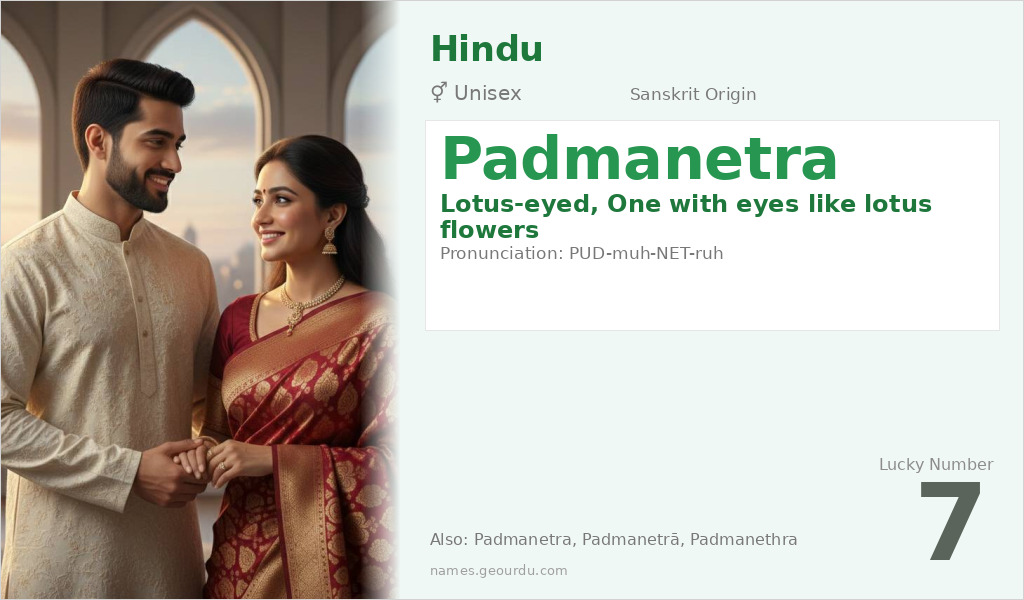
| 📛 Name | Padmanetra |
| 💎 Meaning | Lotus-eyed, One with eyes like lotus flowers |
| 👤 Gender | Unisex |
| 🕌 Religion | Hindu |
| 🌍 Origin | Sanskrit |
| 🗣 Pronunciation | PUD-muh-NET-ruh |
| ✍️ Urdu | پدمنیترا |
| ✍️ Arabic | بادمانيترا |
| 🔢 Numerology | 7 |
| ✨ Spellings | Padmanetra, Padmanetrā, Padmanethra |
Origin & Cultural Significance
Padmanetra originates from classical Sanskrit, the ancient liturgical language of Hinduism, Buddhism, and Jainism. As a compound name, it follows the traditional Sanskrit naming pattern where meaningful elements combine to create descriptive names. The name appears in various Hindu texts, including the Puranas and poetic works, where it describes both divine beings and beautiful mortals. While primarily associated with Hindu culture due to its Sanskrit roots and religious symbolism, the name’s aesthetic appeal has made it appreciated across Indian communities. Sanskrit names like Padmanetra continue to be used in modern India, often chosen for their spiritual connotations and classical heritage.
Personality Traits
Those named Padmanetra are often associated with qualities of observation, aesthetic appreciation, and spiritual depth. The lotus symbolism suggests an ability to maintain purity and beauty despite challenging circumstances. They may possess a contemplative nature and artistic sensibility, with eyes that metaphorically see beyond surface appearances. The name’s connection to divine epithets also implies a certain grace and dignity in character.
Similar Names
If you like Padmanetra, consider: Padmavati, Padmalochan, Kamalnayan, Pushpanetra, Indranetra
Famous People Named Padmanetra
- Padmanetra — Mythological figure in Hindu texts, often used as an epithet for deities like Vishnu and Lakshmi
- Padmanetra — Historical name found in Sanskrit literature and inscriptions
Frequently Asked Questions About Padmanetra
What does Padmanetra mean?
Padmanetra means 'lotus-eyed' in Sanskrit, combining 'padma' (lotus) and 'netra' (eye). It describes someone with beautiful, lotus-like eyes and carries spiritual symbolism.
Is Padmanetra a boy or girl name?
Padmanetra is historically unisex in Sanskrit tradition, though in modern usage it may be given to both genders. In classical texts, it appears as an epithet for both male and female deities.
What is the origin of Padmanetra?
Padmanetra originates from Sanskrit, the ancient language of India. It's a compound name with roots in Hindu culture and appears in religious texts and classical literature.