Table of Contents
Padmavathi is a beautiful and spiritually significant name with deep roots in Hindu tradition. Derived from classical Sanskrit, this name evokes images of divine grace and natural beauty through its lotus symbolism. As an epithet of Goddess Lakshmi, it carries profound religious meaning for Hindu families. This comprehensive guide explores the etymology, cultural context, and modern relevance of this timeless name.
Meaning of Padmavathi
Padmavathi is a Sanskrit compound name combining ‘padma’ (lotus) and ‘vati’ (possessing). The lotus holds immense symbolic value in Hindu philosophy, representing purity, spiritual enlightenment, and divine beauty that rises above worldly attachments. As a name for Goddess Lakshmi, it specifically denotes her association with prosperity, fertility, and auspiciousness. In classical Indian literature, Padmavathi appears in texts like the Padma Purana and various regional adaptations of the Padmavati legend. The name’s linguistic construction follows standard Sanskrit feminine noun formation patterns, making it grammatically and culturally authentic.
| 📛 Name | Padmavathi |
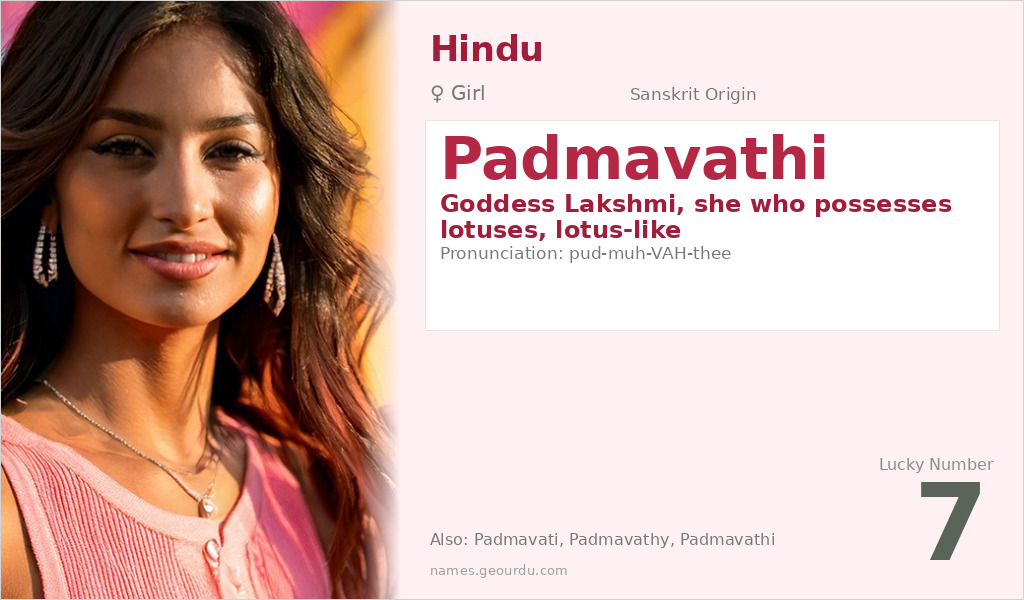
| 💎 Meaning | Goddess Lakshmi, she who possesses lotuses, lotus-like |
| 👤 Gender | Girl |
| 🕌 Religion | Hindu |
| 🌍 Origin | Sanskrit |
| 🗣 Pronunciation | pud-muh-VAH-thee |
| ✍️ Urdu | پدماوتھی |
| ✍️ Arabic | بادمافاتي |
| 🔢 Numerology | 7 |
| ✨ Spellings | Padmavati, Padmavathy, Padmavathi, Padmavatie |
Origin & Cultural Significance
Originating from classical Sanskrit, Padmavathi has been used in Hindu religious and literary contexts for over a millennium. The name gained particular prominence through the legendary figure of Rani Padmavati, a 13th-14th century Rajput queen whose story has been celebrated in Indian folklore, poetry, and more recently in cinematic adaptations. While primarily associated with Hindu tradition, the name’s appeal transcends religious boundaries in South Asia due to its aesthetic qualities and cultural resonance. Regional variations like Padmavati (Hindi), Padmavathy (Malayalam/Tamil), and Padmavathi (Telugu/Kannada) demonstrate its widespread adoption across Indian linguistic communities.
Personality Traits
The lotus symbolism inherent in Padmavathi suggests personality traits of resilience, inner beauty, and spiritual depth. Those bearing this name are often perceived as graceful, compassionate, and artistically inclined individuals. The connection to Goddess Lakshmi further associates the name with qualities of generosity, prosperity, and nurturing energy. While personality associations vary culturally, the name generally conveys positive attributes of purity and elegance.
Similar Names
If you like Padmavathi, consider: Padma, Kamala, Padmini, Lakshmi, Sarojini, Pushpa, Neeraja, Indira, Vasundhara, Jalaja
Famous People Named Padmavathi
- Padmavati — legendary 13th-14th century Rajput queen celebrated in Indian folklore and literature
- Padmavathi (actress) — Indian actress known for her work in Telugu and Tamil cinema during the 1950s-1970s
Frequently Asked Questions About Padmavathi
What does Padmavathi mean?
Padmavathi means 'Goddess Lakshmi' or 'she who possesses lotuses' in Sanskrit. It's a compound of 'padma' (lotus) and 'vati' (possessing).
Is Padmavathi a boy or girl name?
Padmavathi is exclusively a feminine name in all cultural contexts where it's used, particularly in Hindu naming traditions.
What is the origin of Padmavathi?
Padmavathi originates from classical Sanskrit and is deeply rooted in Hindu mythology as an epithet of Goddess Lakshmi, with historical usage dating back centuries in Indian literature and folklore.