
Table of Contents
Pagan is a distinctive boy’s name with deep historical roots in medieval Europe. Derived from the Latin word for ‘country dweller’, this name carries a rustic charm that transcends its modern religious associations. While uncommon today, Pagan offers a unique choice for parents seeking a name with classical etymology and historical resonance. Discover the fascinating journey of this name from ancient Rome to contemporary usage.
Meaning of Pagan
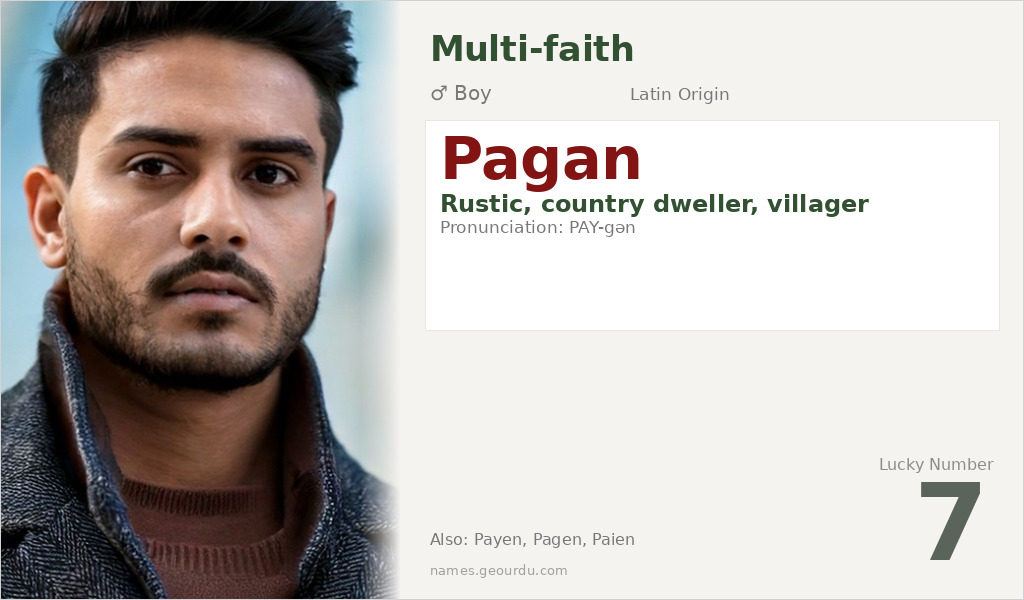
The name Pagan originates from the Latin term ‘paganus’, which literally meant ‘rustic, country dweller, or villager’. In classical Latin, it distinguished rural inhabitants from urban citizens, and later in military context, it referred to civilians as opposed to soldiers. During the Christianization of the Roman Empire, the term evolved to mean ‘heathen’ or ‘non-Christian’ because rural areas maintained traditional beliefs longer than cities. This linguistic shift explains why ‘pagan’ later acquired religious connotations, though the personal name predates this usage and maintains its original meaning of ‘country dweller’.
| 📛 Name | Pagan |
| 💎 Meaning | Rustic, country dweller, villager |
| 👤 Gender | Boy |
| 🕌 Religion | Multi-faith |
| 🌍 Origin | Latin |
| 🗣 Pronunciation | PAY-gən |
| ✍️ Urdu | پیگن |
| ✍️ Arabic | بيجان |
| 🔢 Numerology | 7 |
| ✨ Spellings | Payen, Pagen, Paien |
Origin & Cultural Significance
Pagan emerged as a given name in medieval France and England during the 11th-13th centuries, often appearing in historical records as ‘Payen’ or ‘Paien’. It was particularly common among Norman nobility following the Norman Conquest of England. The name reflects the social structure of medieval Europe where rural life was central to identity. Notable bearers include Pagan of Le Puiset, a French Crusader lord. While the name declined after the Middle Ages due to changing religious attitudes, it has seen occasional revival as a unique historical name choice in modern times.
Personality Traits
Those named Pagan often embody qualities associated with their name’s meaning—groundedness, connection to nature, and independence. They may possess a practical, down-to-earth approach to life while maintaining a distinctive individuality. The historical weight of the name can inspire a sense of tradition and resilience, making Pagans often appear as thoughtful individuals who value authenticity over conformity.
Similar Names
If you like Pagan, consider: Pascal, Piers, Percy, Peregrine, Rustic
Famous People Named Pagan
- Pagan of Le Puiset — 12th century French nobleman and Crusader
- Pagan Kidwell — American musician and composer
Frequently Asked Questions About Pagan
What does Pagan mean?
Pagan means 'rustic, country dweller, or villager' originating from the Latin word 'paganus'. It refers to rural inhabitants, not religious beliefs.
Is Pagan a boy or girl name?
Pagan is traditionally a masculine name with historical usage for boys in medieval Europe, though modern usage could be unisex.
What is the origin of Pagan?
Pagan originates from Latin and was used as a given name in medieval France and England, particularly among Norman nobility after the 11th century.





