
Table of Contents
Paladin is a name that evokes images of heroic knights and chivalrous warriors from medieval European legends. With roots stretching back to ancient Rome, this name carries centuries of historical and literary significance. While occasionally used in various cultures today, its true origins tell a fascinating story of palace officials who became legendary champions. Explore the rich etymology and cultural journey of this distinctive name.
Meaning of Paladin
Paladin derives from the Latin word ‘palatinus,’ which originally meant ‘of the palace’ or ‘pertaining to the Palatine Hill’ in ancient Rome, where imperial palaces were located. These palatini were high-ranking officials in the Roman imperial court. During the Middle Ages, the term evolved through Old French as ‘paladin,’ specifically referring to the Twelve Peers—the legendary knights of Charlemagne’s court in chivalric romances like The Song of Roland. By the Renaissance, ‘paladin’ had come to mean any heroic knight or champion known for exceptional bravery, combat skills, and adherence to chivalric codes. This linguistic journey from Roman bureaucrat to medieval warrior hero gives the name its layered meaning of both courtly authority and martial excellence.
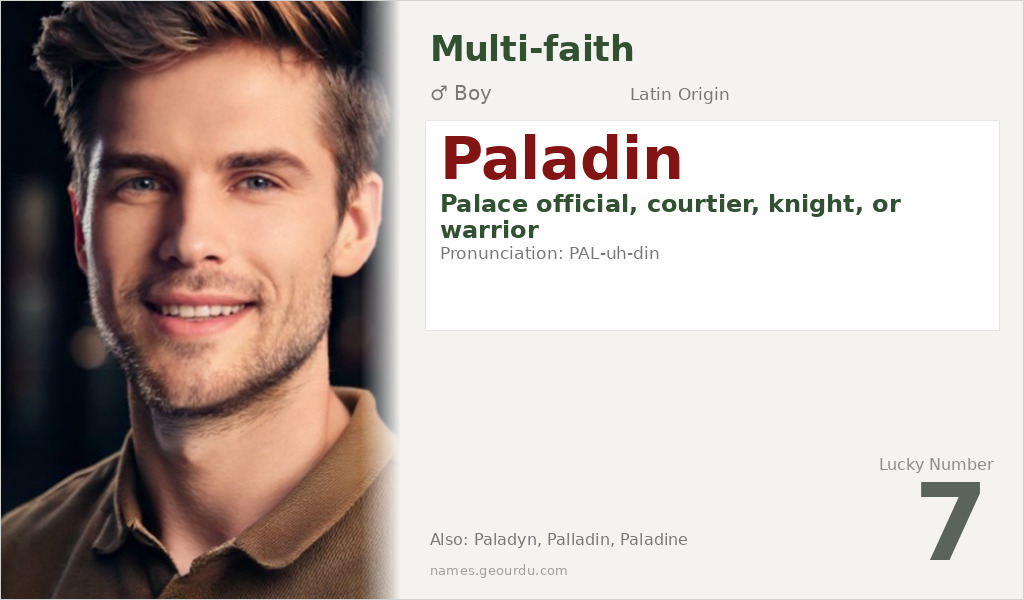
| 📛 Name | Paladin |
| 💎 Meaning | Palace official, courtier, knight, or warrior |
| 👤 Gender | Boy |
| 🕌 Religion | Multi-faith |
| 🌍 Origin | Latin |
| 🗣 Pronunciation | PAL-uh-din |
| ✍️ Urdu | پالاڈن |
| ✍️ Arabic | بالادين |
| 🔢 Numerology | 7 |
| ✨ Spellings | Paladyn, Palladin, Paladine |
Origin & Cultural Significance
The name Paladin has exclusively European origins, beginning with Latin during the Roman Empire when ‘palatinus’ described officials serving in the imperial palace on Rome’s Palatine Hill. It gained legendary status in medieval French literature (12th-13th centuries) through the chansons de geste, epic poems celebrating Charlemagne and his knights. These stories spread across Europe, entering English by the 16th century through translations and adaptations. While the name has been adopted in various modern contexts worldwide, including occasional use in South Asia, it has no historical or etymological connection to Hindu, Sanskrit, or Indian traditions. Its cultural significance remains firmly rooted in Western chivalric literature and historical linguistics.
Personality Traits
Those named Paladin often embody the noble qualities associated with medieval knights: courage, honor, and a strong sense of justice. They tend to be protective individuals who stand up for others and champion worthy causes. With natural leadership abilities and strategic thinking, they approach challenges with both principle and practicality. The name suggests someone who values tradition while being decisive in action, much like the legendary warriors from whom the name derives.
Similar Names
If you like Paladin, consider: Roland, Lancelot, Gawain, Tristan, Percival
Famous People Named Paladin
- Paladin (fictional character) — The gunfighter protagonist from the TV series 'Have Gun – Will Travel' (1957-1963)
- Paladins of Charlemagne — Historical/legendary figures including Roland, Oliver, and other knights from medieval European literature
Frequently Asked Questions About Paladin
What does Paladin mean?
Paladin means 'palace official' or 'knight' originating from Latin 'palatinus.' It specifically refers to the legendary knights of Charlemagne's court in medieval European literature.
Is Paladin a boy or girl name?
Paladin is traditionally a masculine name, reflecting its historical association with male knights and warriors in European chivalric traditions.
What is the origin of Paladin?
Paladin originates from Latin, specifically from 'palatinus' meaning 'of the palace.' It gained prominence through medieval French literature about Charlemagne's knights before spreading to other European languages.





