
Table of Contents
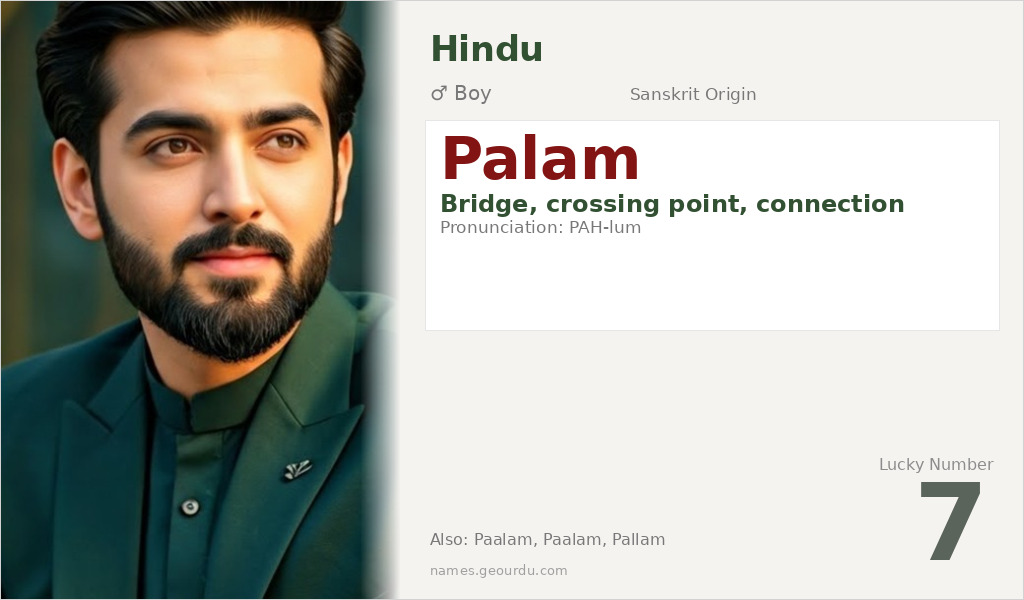
Palam is a distinctive Sanskrit name for boys that carries deep cultural and linguistic significance. Meaning ‘bridge’ or ‘crossing point’, this name symbolizes connection, transition, and the ability to link different worlds together. With roots in ancient Indian languages, Palam represents both physical and metaphorical bridges in Hindu tradition. This guide explores the complete meaning, origin, and cultural context of this meaningful name.
Meaning of Palam
Palam derives from the Sanskrit root word ‘पुल’ (pula), which specifically means ‘bridge’. In Sanskrit grammar and literature, ‘palam’ refers to a structure that connects two separated points, whether physical locations or abstract concepts. The name appears in classical Sanskrit texts and has been preserved in modern Indian languages including Hindi, Tamil, and Telugu. Beyond its literal meaning, Palam carries metaphorical significance representing connections between people, ideas, or spiritual states. The name embodies the concept of transition and the ability to overcome obstacles through connection.
| 📛 Name | Palam |
| 💎 Meaning | Bridge, crossing point, connection |
| 👤 Gender | Boy |
| 🕌 Religion | Hindu |
| 🌍 Origin | Sanskrit |
| 🗣 Pronunciation | PAH-lum |
| ✍️ Urdu | پلام |
| ✍️ Arabic | پالام |
| 🔢 Numerology | 7 |
| ✨ Spellings | Paalam, Paalam, Pallam |
Origin & Cultural Significance
Palam originates from Sanskrit, one of the world’s oldest languages and the liturgical language of Hinduism. The name has been used in Indian culture for centuries, appearing in both literary and geographical contexts. In Hindu tradition, bridges hold symbolic importance, representing connections between earthly and divine realms, as seen in the Ramayana’s account of the bridge to Lanka. The name is particularly associated with South Indian regions where Sanskrit-derived names remain popular. While primarily used as a personal name, ‘Palam’ also appears in place names across India, reflecting its geographical significance.
Personality Traits
Those named Palam often exhibit qualities of connection and mediation, much like the bridge their name represents. They tend to be natural problem-solvers who can see multiple perspectives and find common ground. With their analytical minds and thoughtful approach, they excel in situations requiring diplomacy and strategic thinking. Their personality often reflects stability and reliability, making them trusted figures in both personal and professional relationships.
Similar Names
If you like Palam, consider: Pulak, Pulakeshi, Setu, Pulastya, Puloma
Famous People Named Palam
- Palam Kalyanasundaram — Indian social worker and former IAS officer known for his philanthropy
- Palamadai — Notable place name in Tamil Nadu, India, meaning 'bridge town'
Frequently Asked Questions About Palam
What does Palam mean?
Palam means 'bridge' or 'crossing point' in Sanskrit, the ancient Indian language. It refers to both physical bridges and metaphorical connections.
Is Palam a boy or girl name?
Palam is traditionally a masculine name in Hindu naming traditions, though naming conventions can vary by region and family preference.
What is the origin of Palam?
Palam originates from Sanskrit, an ancient Indo-European language that is the liturgical language of Hinduism and has influenced many South Asian languages.





