
Table of Contents
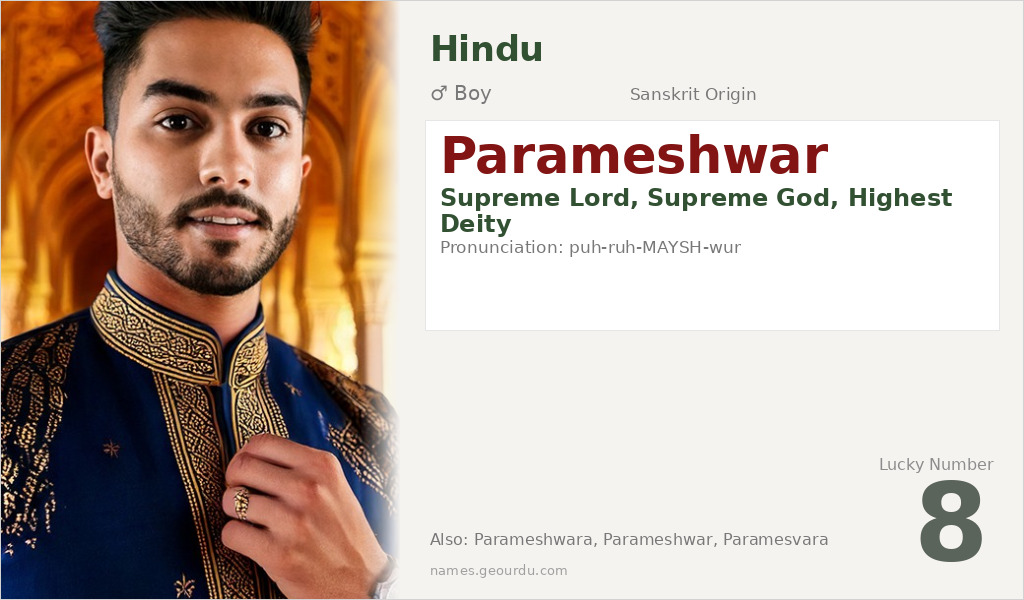
Parameshwar is a profoundly meaningful Sanskrit name that carries centuries of spiritual and philosophical weight. Primarily used in Hindu communities, this name embodies the concept of the ultimate divine authority. With its roots in ancient Indian scriptures, Parameshwar represents more than just a personal identifier—it connects the bearer to a rich tradition of theological thought. Parents choosing this name often seek to instill values of spiritual leadership and reverence for the divine.
Meaning of Parameshwar
Parameshwar derives from the Sanskrit language, combining two significant elements: ‘parama’ (परम) meaning ‘supreme, highest, or ultimate’ and ‘īśvara’ (ईश्वर) meaning ‘lord, god, or ruler’. This compound formation creates a term that specifically denotes the highest divine being in Hindu cosmology. The name appears in foundational Hindu texts including the Upanishads, where it refers to the absolute reality or Brahman, and in Puranic literature where it often identifies Shiva as the supreme deity. In philosophical contexts, particularly in Shaivism and Vaishnavism, Parameshwar represents the transcendent God who is both immanent in creation and beyond it. The linguistic construction follows classical Sanskrit compounding rules, creating a term that has remained consistent in meaning across millennia of religious and philosophical discourse.
| 📛 Name | Parameshwar |
| 💎 Meaning | Supreme Lord, Supreme God, Highest Deity |
| 👤 Gender | Boy |
| 🕌 Religion | Hindu |
| 🌍 Origin | Sanskrit |
| 🗣 Pronunciation | puh-ruh-MAYSH-wur |
| ✍️ Urdu | پرمیشور |
| ✍️ Arabic | باراميشوار |
| 🔢 Numerology | 8 |
| ✨ Spellings | Parameshwara, Parameshwar, Paramesvara, Parameshvar |
Origin & Cultural Significance
Parameshwar originates from ancient Sanskrit, the classical language of India that dates back to at least 1500 BCE. The name has deep roots in Hindu religious texts, particularly the Upanishads (circa 800-200 BCE) where terms like ‘Parameshvara’ appear in discussions of ultimate reality. It gained prominence in medieval Hindu theology, especially within Shaivism where Shiva is worshipped as Parameshwar, the supreme lord of the universe. The name spread through South Asia alongside Sanskrit literature and Hindu religious traditions, maintaining its theological significance while becoming a personal name. Today, it remains most common among Hindu communities in India, Nepal, and the diaspora, though its philosophical concept has influenced other Indian religions including Jainism, where it also appears in theological contexts.
Personality Traits
Those named Parameshwar are often associated with qualities of spiritual leadership, wisdom, and authority. The name’s meaning suggests someone who may naturally assume responsible positions and demonstrate principled decision-making. Culturally, the name carries expectations of ethical conduct, philosophical contemplation, and respect for tradition. While individual personalities vary, the name’s profound meaning often influences how bearers are perceived within their communities as individuals with potential for spiritual depth and moral guidance.
Similar Names
If you like Parameshwar, consider: Paramesh, Ishwar, Maheshwar, Parameshwari, Parameshwaran
Famous People Named Parameshwar
- Parameshwar Godrej — Indian businesswoman and philanthropist, vice-chairperson of Godrej Group
- Parameshwar Lal — Indian physicist and former director of the National Physical Laboratory of India
Frequently Asked Questions About Parameshwar
What does Parameshwar mean?
Parameshwar means 'Supreme Lord' or 'Highest Deity' in Sanskrit. It is a compound of 'parama' (supreme) and 'īśvara' (lord/god), specifically referring to the ultimate divine being in Hindu theology.
Is Parameshwar a boy or girl name?
Parameshwar is exclusively a masculine name in all cultural contexts where it is used. It has no feminine usage in Sanskrit or Hindu naming traditions.
What is the origin of Parameshwar?
Parameshwar originates from Sanskrit, the ancient classical language of India. It has been used for millennia in Hindu religious texts and philosophy before becoming a personal name in Hindu communities.





