Table of Contents
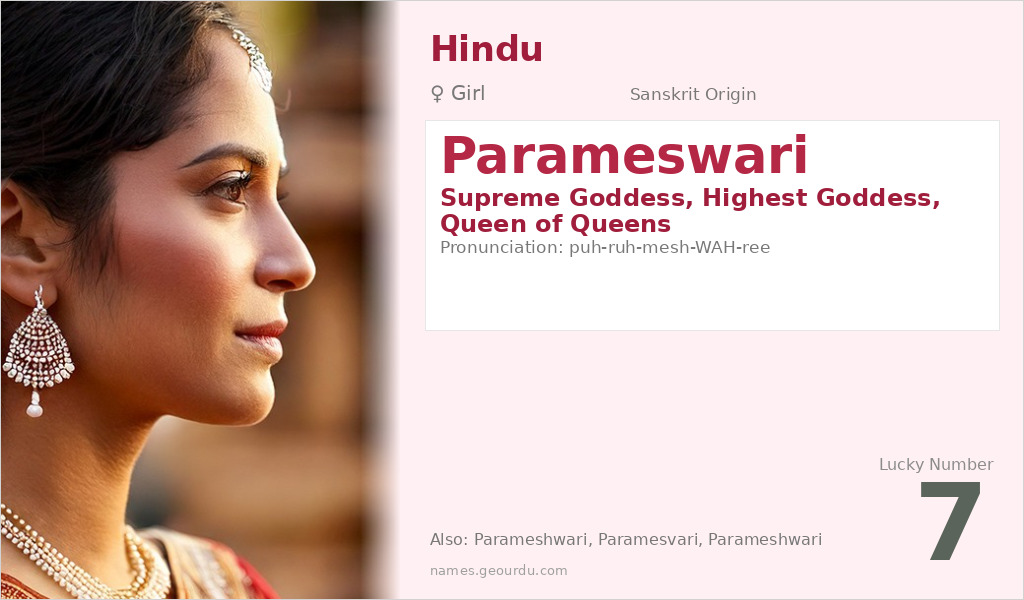
Parameswari is a profoundly spiritual name that resonates with divine feminine energy in Hindu tradition. Meaning ‘Supreme Goddess’ or ‘Highest Goddess’, this Sanskrit name carries centuries of religious and cultural significance. Primarily used in India and Hindu communities worldwide, it represents the ultimate manifestation of Shakti. Parents choosing this name often seek to honor both cultural heritage and spiritual values.
Meaning of Parameswari
Parameswari is a Sanskrit compound name with precise etymological roots. ‘Parama’ (परम) translates to ‘supreme, highest, or ultimate’, while ‘Ishwari’ (ईश्वरी) means ‘goddess, queen, or female ruler’. Combined, they create ‘Supreme Goddess’—a title reserved for the highest feminine divine principle in Hindu theology. This name appears in ancient texts like the Devi Mahatmya and temple inscriptions across India and Southeast Asia. It specifically refers to Goddess Durga as the ultimate form of feminine power, but also appears in Jain and some Buddhist contexts. The linguistic construction follows classical Sanskrit compounding rules for creating honorific titles.
| 📛 Name | Parameswari |
| 💎 Meaning | Supreme Goddess, Highest Goddess, Queen of Queens |
| 👤 Gender | Girl |
| 🕌 Religion | Hindu |
| 🌍 Origin | Sanskrit |
| 🗣 Pronunciation | puh-ruh-mesh-WAH-ree |
| ✍️ Urdu | پرمیشوری |
| ✍️ Arabic | باراميشواري |
| 🔢 Numerology | 7 |
| ✨ Spellings | Parameshwari, Paramesvari, Parameshwari, Parameshwari |
Origin & Cultural Significance
Originating from classical Sanskrit, Parameswari has been used for millennia in the Indian subcontinent. The name appears in temple architecture from the Gupta period (4th-6th century CE) and medieval South Indian inscriptions. It spread through Hindu and Buddhist traditions to Southeast Asia, particularly Indonesia and Cambodia, where goddess statues bear this title. In contemporary usage, it remains popular among Hindu communities in India, Nepal, Sri Lanka, and the diaspora. The name reflects the Shakta tradition’s reverence for the divine feminine as the supreme reality. Regional variations in pronunciation and spelling exist across different Indian languages while maintaining the core Sanskrit meaning.
Personality Traits
Those named Parameswari are often associated with qualities of strength, dignity, and spiritual depth. The name suggests a person who embodies both authority and nurturing energy, potentially showing leadership with compassion. Cultural expectations may include traditional values balanced with inner resilience. While personality varies individually, the name’s meaning can influence perceptions of someone as spiritually connected and morally grounded.
Similar Names
If you like Parameswari, consider: Parvati, Lakshmi, Saraswati, Mahadevi, Bhuvaneswari
Famous People Named Parameswari
- Parameswari Nambudripad — Renowned Indian classical dancer and Kathakali artist from Kerala
- Parameswari — Character in ancient Sanskrit literature and temple mythology across India
Frequently Asked Questions About Parameswari
What does Parameswari mean?
Parameswari means 'Supreme Goddess' or 'Highest Goddess' in Sanskrit. It is a compound of 'Parama' (supreme) and 'Ishwari' (goddess), specifically referring to the ultimate feminine divine principle in Hinduism.
Is Parameswari a boy or girl name?
Parameswari is exclusively a feminine name. In Sanskrit grammar and Hindu tradition, the '-Ishwari' suffix indicates feminine gender, and the name is used for girls and as an epithet for goddesses.
What is the origin of Parameswari?
Parameswari originates from classical Sanskrit, the ancient liturgical language of India. It has been used for centuries in Hindu religious texts, temple inscriptions, and naming traditions across the Indian subcontinent and Southeast Asia.