
Table of Contents
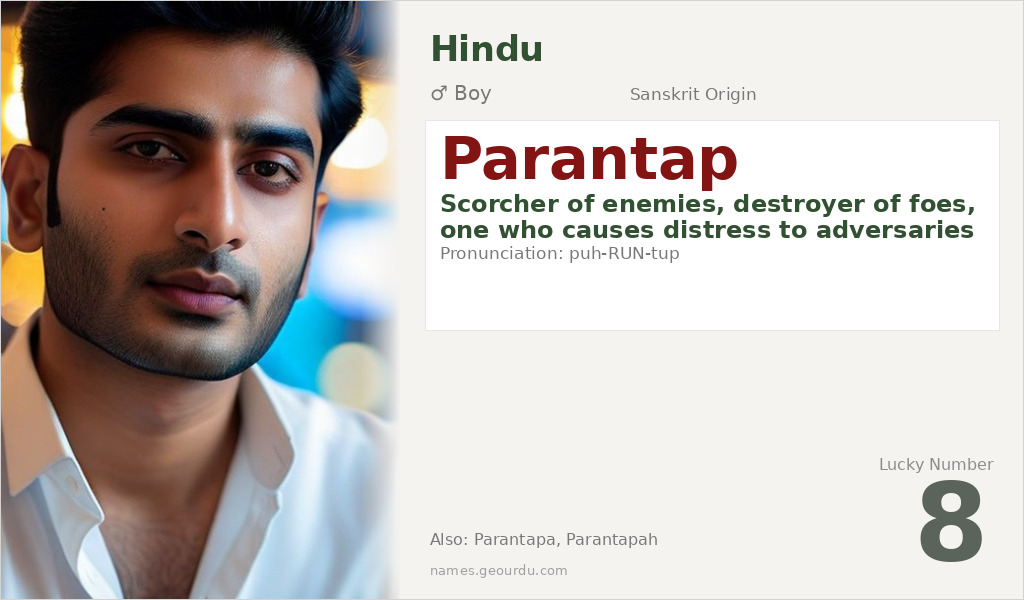
Parantap is a powerful Sanskrit name with deep roots in Hindu tradition and ancient Indian literature. Meaning ‘scorcher of enemies’ or ‘destroyer of foes’, this name carries connotations of strength, protection, and victory over adversity. Used historically as an epithet for warriors and kings in texts like the Mahabharata, Parantap represents the ideal of righteous defense and strategic prowess. Today, it remains a meaningful choice for parents seeking a name with historical significance and heroic qualities.
Meaning of Parantap
Parantap derives from the Sanskrit language, specifically from the compound of two elements: ‘para’ (पर) meaning ‘enemy, foe, or other’ and ‘tap’ (तप्) meaning ‘to burn, scorch, torment, or cause distress’. The complete meaning is ‘one who scorches enemies’ or ‘tormentor of foes’. This etymology reflects the warrior ethos prevalent in ancient Indian epics where names often described qualities or actions. In linguistic context, ‘tap’ shares roots with words for heat and austerity (tapas), suggesting both destructive and purifying aspects. The name appears in classical Sanskrit literature as both a proper name and an honorific title for those who successfully overcome adversaries through strength and strategy.
| 📛 Name | Parantap |
| 💎 Meaning | Scorcher of enemies, destroyer of foes, one who causes distress to adversaries |
| 👤 Gender | Boy |
| 🕌 Religion | Hindu |
| 🌍 Origin | Sanskrit |
| 🗣 Pronunciation | puh-RUN-tup |
| ✍️ Urdu | پرنتپ |
| ✍️ Arabic | بارانتاب |
| 🔢 Numerology | 8 |
| ✨ Spellings | Parantapa, Parantapah |
Origin & Cultural Significance
Parantap originates from ancient Sanskrit texts, most notably appearing in the Mahabharata and various Puranas. In Hindu cultural context, it was used as an epithet for warriors, kings, and sometimes divine figures who demonstrated the ability to defeat enemies and protect their people. The name reflects the kshatriya (warrior) values of duty, protection, and righteous combat. Historically, such names were not just identifiers but declarations of character and expected destiny. While primarily associated with Hindu tradition due to its Sanskrit origins and appearance in Hindu scriptures, the name carries cultural significance across Indian communities familiar with classical literature.
Personality Traits
The name Parantap suggests personality traits aligned with its meaning of ‘enemy-scorcher’. Individuals with this name are often perceived as protective, courageous, and determined. They tend to be natural defenders who stand firm against opposition and injustice. The name implies strategic thinking, resilience in facing challenges, and a strong sense of duty toward protecting what they value.
Similar Names
If you like Parantap, consider: Arjun, Yudhishthir, Bheem, Karna, Abhimanyu
Famous People Named Parantap
- Parantap — Character in the Mahabharata, a name used for several warriors and kings
- Parantap — Historical figures in Indian literature bearing this name as an epithet for rulers
Frequently Asked Questions About Parantap
What does Parantap mean?
Parantap means 'scorcher of enemies' or 'destroyer of foes' in Sanskrit. It comes from 'para' (enemy) and 'tap' (to burn/scorch), describing someone who torments adversaries.
Is Parantap a boy or girl name?
Parantap is exclusively a boy's name in Hindu tradition. In Sanskrit literature and historical usage, it has always been masculine, typically given to warriors, kings, and male figures.
What is the origin of Parantap?
Parantap originates from Sanskrit, the ancient language of India. It appears in Hindu scriptures like the Mahabharata as an epithet for heroic figures who defeat enemies through strength and strategy.





