
Table of Contents
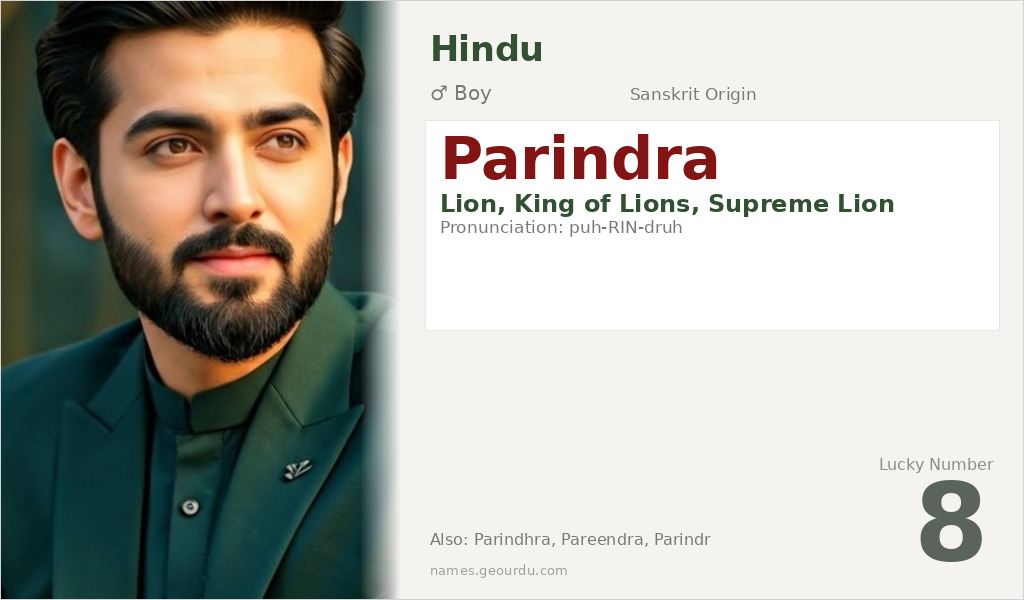
Parindra is a powerful Sanskrit name for boys that carries regal significance in Hindu culture. Meaning ‘supreme lion’ or ‘king of lions’, this name embodies strength, leadership, and royal authority. With roots in classical Indian literature and mythology, Parindra has been used for centuries to denote exceptional power and nobility. Today, it remains a distinctive choice for parents seeking a name with deep cultural resonance and majestic connotations.
Meaning of Parindra
Parindra is a compound Sanskrit name with profound etymological significance. It combines ‘परि’ (pari), meaning ‘supreme’, ‘highest’, or ‘around’, with ‘इन्द्र’ (indra), the name of the king of gods in Hindu mythology. Literally translated, Parindra means ‘supreme king’ or ‘king of kings’, with the lion serving as a powerful metaphor for this royal authority. In Vedic and Puranic texts, lions were symbols of sovereignty, courage, and divine power, making this name particularly auspicious. The name appears in classical Sanskrit literature as both a proper name and an epithet for rulers and deities. Modern interpretations emphasize the ‘lion’ aspect due to the animal’s cultural association with leadership and protection in Indian tradition.
| 📛 Name | Parindra |
| 💎 Meaning | Lion, King of Lions, Supreme Lion |
| 👤 Gender | Boy |
| 🕌 Religion | Hindu |
| 🌍 Origin | Sanskrit |
| 🗣 Pronunciation | puh-RIN-druh |
| ✍️ Urdu | پرندر |
| ✍️ Arabic | باريندرا |
| 🔢 Numerology | 8 |
| ✨ Spellings | Parindhra, Pareendra, Parindr |
Origin & Cultural Significance
Parindra originates from classical Sanskrit, the ancient liturgical language of Hinduism that has influenced numerous South Asian languages. As a compound name, it follows traditional Sanskrit naming conventions where meaningful elements are combined to create auspicious names. The name reflects the importance of royal and divine symbolism in Hindu culture, where lions represent Dharma (righteousness) and protection. Historically, names containing ‘Indra’ were particularly popular among ruling classes and warrior communities. While primarily used in Hindu communities across India, the name has also appeared in Buddhist texts and Jain literature with similar connotations of leadership and strength. Its usage spans from ancient scriptures to modern times, maintaining its association with power and nobility.
Personality Traits
Those named Parindra are often expected to embody the qualities of their namesake—the lion. They typically display natural leadership abilities, courage in facing challenges, and a protective nature toward their community. Like the regal animal, they may possess a dignified presence that commands respect while maintaining a sense of responsibility. Their personality often combines strategic wisdom with decisive action, making them effective in positions where authority and judgment are required.
Similar Names
If you like Parindra, consider: Simha, Kesari, Narasimha, Singh, Rajendra, Mahendra, Indrajit, Bhupendra, Surendra, Vikramaditya
Famous People Named Parindra
- Parindra Dutta — Early 20th century Indian nationalist and social reformer from Bengal
- Parindra Singh — Fictional character in some modern Indian literature representing strength and leadership
Frequently Asked Questions About Parindra
What does Parindra mean?
Parindra means 'supreme lion' or 'king of lions' in Sanskrit. It's a compound name combining 'pari' (supreme) and 'indra' (king), with the lion symbolizing royal power and strength.
Is Parindra a boy or girl name?
Parindra is exclusively a boy's name in Hindu naming tradition. Sanskrit grammatical structure and cultural usage consistently assign masculine gender to this name.
What is the origin of Parindra?
Parindra originates from classical Sanskrit, the ancient language of Hindu scriptures. It has been used in Indian culture for centuries, particularly in contexts emphasizing leadership, royalty, and divine power.





